

July 14th is "World Chimpanzee Day"
July 14, 2026
July 14th is World Chimpanzee Day. This day was established to raise awareness of Chimpanzee and to encourage people to think about their protection and habitat conservation. It was established in 2018 to commemorate the fact that Dr. Jane Goodall, a leading expert in wild Chimpanzee research who passed away in October 2025, first set foot in Gombe, Tanzania, on July 14, 1960, 66 years ago, and began her research.
The professor entered the forest with binoculars and a notebook and spent several days observing wild Chimpanzee. During his observations, he saw them insert stems with the leaves removed into anthills to fish out and eat termites. This was a groundbreaking discovery: "Chimpanzee use tools." At the time, it was believed that the difference between animals and humans was "the ability to make and use tools," but this observation overturned that established theory.
The scene the professor witnessed can be observed in a similar way at Tama Zoo. Ants insert tree branches and plant vines into artificial ant mounds set up in their enclosure and lick up the juice inside. You can also observe them removing leaves from the branches with their hands or mouths to make them easier to insert, or gnawing on the tips of the branches to make them like brushes, in order to help the juice soak in more easily.
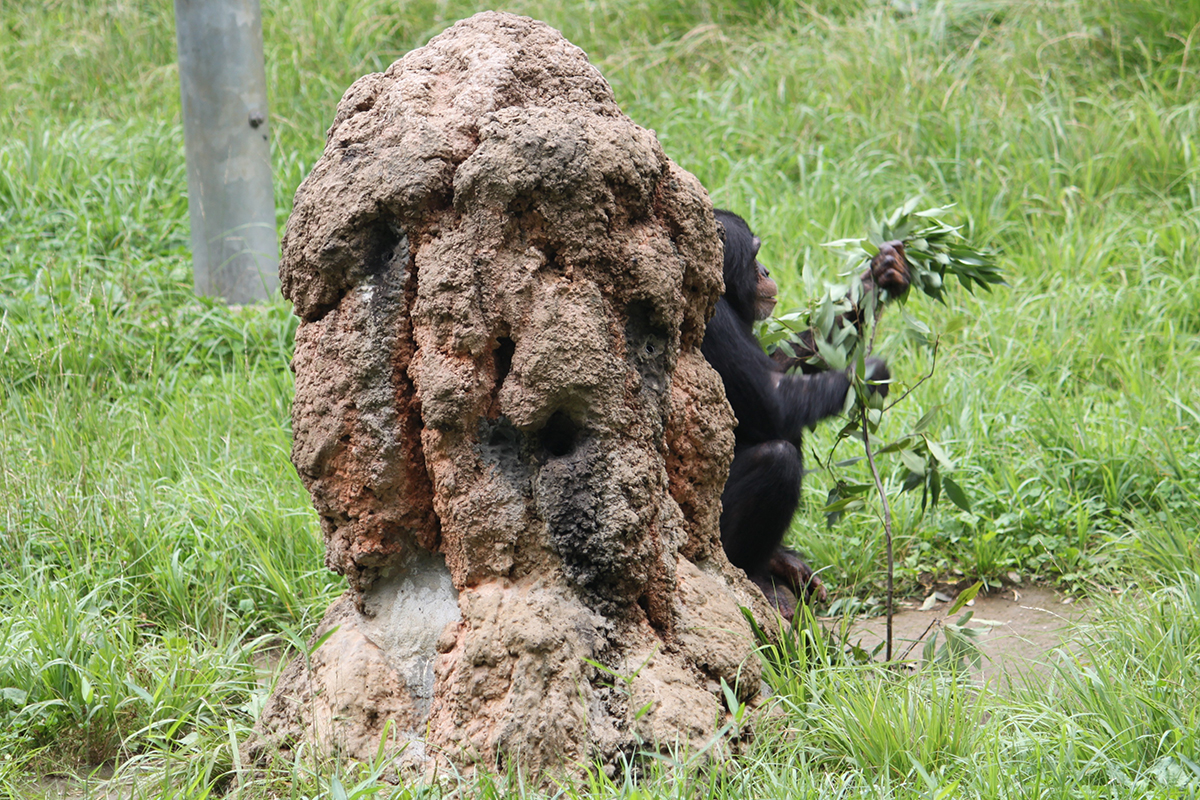
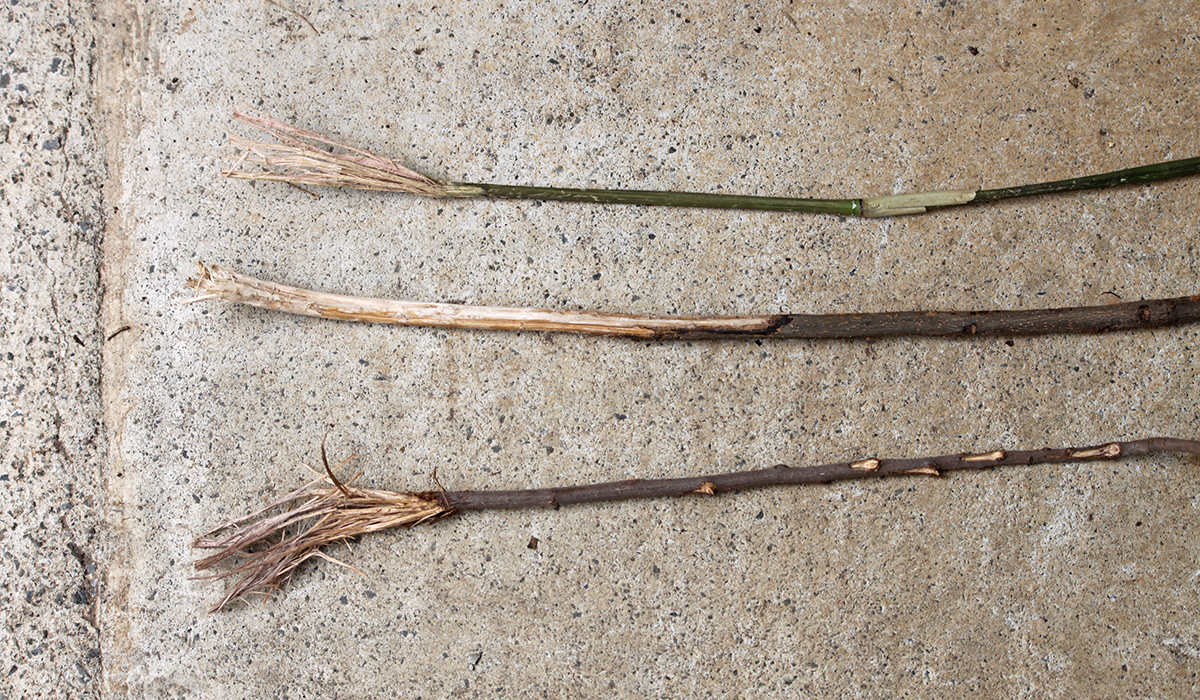
These behaviors are not innate; chimpanzees learn by observing individuals using tools to obtain juice, and gradually become able to do so. Young Chimpanzee may struggle to insert branches properly and can be seen trying different approaches.
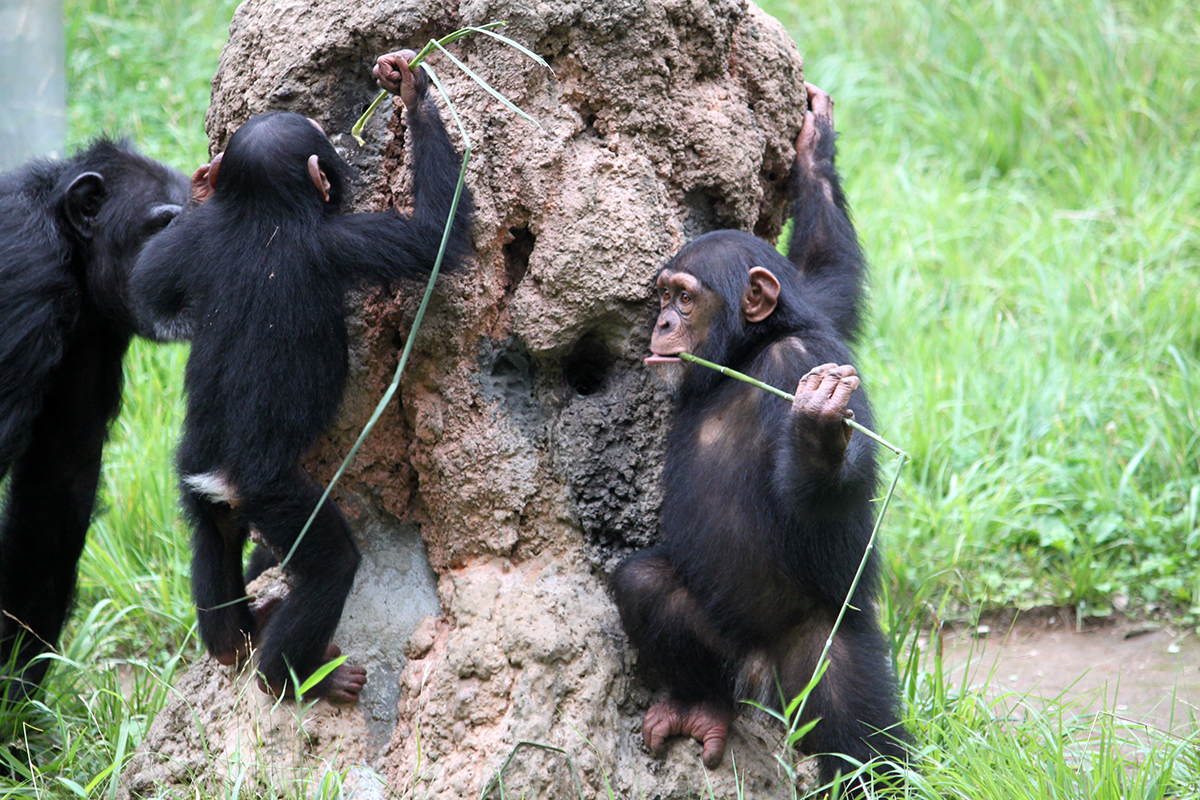
Chimpanzees are intelligent Chimpanzee are adept at using tools, but in recent years their population has declined due to deforestation and other factors, and they are classified as EN (Endangered) on the IUCN Red List. While it is difficult for us to directly help them living in distant regions, there are many things we can do indirectly in our daily lives, such as choosing environmentally friendly products.
Why not take this opportunity to think about what you can do in your daily life to protect Chimpanzee?
[Morioka, Animal Care and Exhibition Staff, Tama Zoo North Garden]