

African Bush Elephant high-altitude feeder
April 17, 2026
At Tama Zoo, African Bush Elephant enclosure has artificial objects installed that might make you wonder, "Why are they here?" at first glance, such as nets, gas pipes, scaffolding pipes, and fishing buoys. These are called "feeders," and in addition to their function as food dispensers, they also play a role in extending foraging time and bringing out the unique behaviors and abilities of each animal species.
Wild African Bush Elephant spend most of their day on the move, searching for and foraging for food.
However, in captivity, elephants don't need to wander around searching for food, and they are often fed in batches at set times, so they finish foraging in a short amount of time. Furthermore, they don't need to fully utilize the abilities that elephants naturally possess, such as using their long trunks to reach branches and leaves from high places, or using their keen sense of smell and hearing to find food.
Therefore, the zookeepers are making and installing various feeders to extend the feeding time as much as possible, allowing the elephants to exhibit their natural behaviors and abilities.
This time, we'll focus on feeders that are installed at high locations.
There are several advantages to placing food in high places, one of which is that it encourages exercise.
When elephants lift their trunks or heads to forage, they need to shift their weight to their hind legs, brace their forelimbs, and engage their core muscles, such as their back muscles. In the wild, this is a movement unique to elephants when foraging for branches and fruits at high positions, but by reproducing this in captivity, we can promote muscle development and encourage the elephant's natural behavior, thereby extending foraging time.
Introduction to the main feeders
Introduction to the main feeders
Haynett
This is a horse net designed for holding hay. Horses can use their noses to retrieve and eat the food through the gaps in the net. It also encourages them to use their noses to gather up fallen and scattered hay.
Buoy, gas pipe
This feeder is made from fishing buoys and city gas supply pipes. Holes are drilled in it and sweet potatoes, carrots, pellets, etc. are placed inside. The animals use their noses to shake and turn the feeder, using their ingenuity to get it out.
Fire hose
It is used when feeding with branches and leaves. They use their noses to tear off leaves or break off branches to forage for food.
Automatic pet feeder
This is a nighttime feeding device that uses electromagnets. Haynets, buoys, gas pipes, etc., can be hung from it and dropped at any set time. Changing the time setting can vary the feeding schedule, and the sound of the dropping device can also stimulate the animals to search for food.
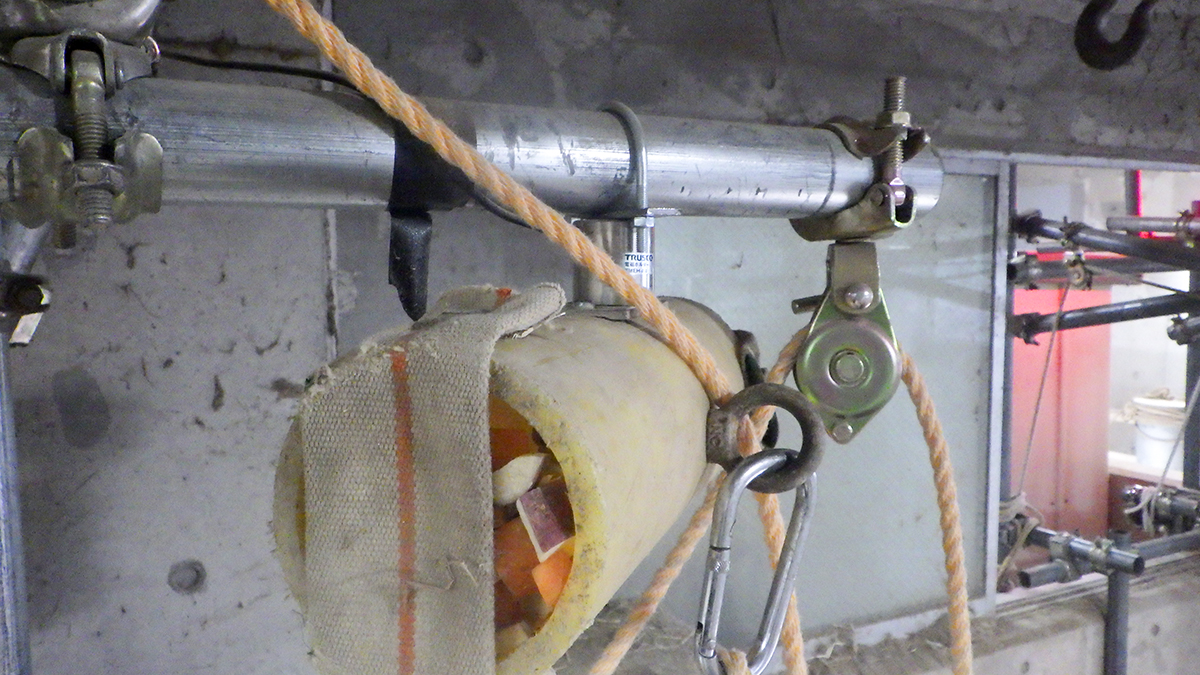
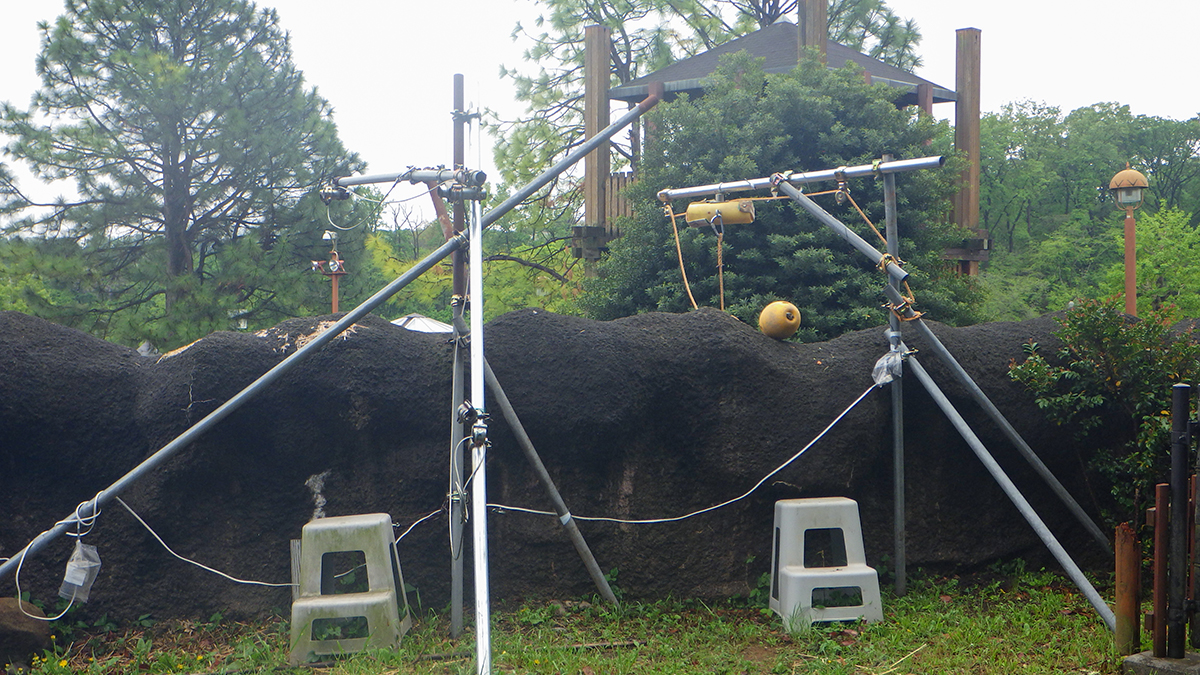
By installing these feeders, we aim to extend the feeding time of elephants in captivity and encourage their natural behaviors as much as possible. As they are homemade, malfunctions sometimes occur, and there is still room for improvement, but we will continue to do our best to enrich the lives of the elephants.
[Tama Zoo, Tama Zoological Park]