

Is it "ordinary"? Collecting water striders.
April 10, 2026
Near the exit of Insectarium at Tama Zoo, in the "Creatures of village forest" corner, we exhibit creatures that live near water, such as frogs and fireflies. Last summer (2025), we came up with the idea of adding water striders (also known as common water striders; hereafter referred to as common water striders) to the exhibit. We thought that common water striders would be suitable for the exhibit because they are insects that many people are familiar with, and they are relatively easy to collect and keep.
First, I needed to collect some common water striders. However, with my regular work to do, I couldn't bring myself to do it, and time just passed by. Autumn deepened, and it was late October, and before I knew it, I hardly saw any water striders in the water's edge of the park. Common water striders leave the water's surface in winter and spend the winter on land, such as under fallen leaves or the bark of fallen trees, which makes them difficult to find.
So, first I went to Nanao Park, which is next to Tama Zoo. There is a relatively large pond there, but there were no water striders at all. I was a little flustered by this unexpected turn of events, but next I looked for a stream inside the zoo. There were water striders there, but the ones I caught were a species called striped water striders, which live in flowing water.
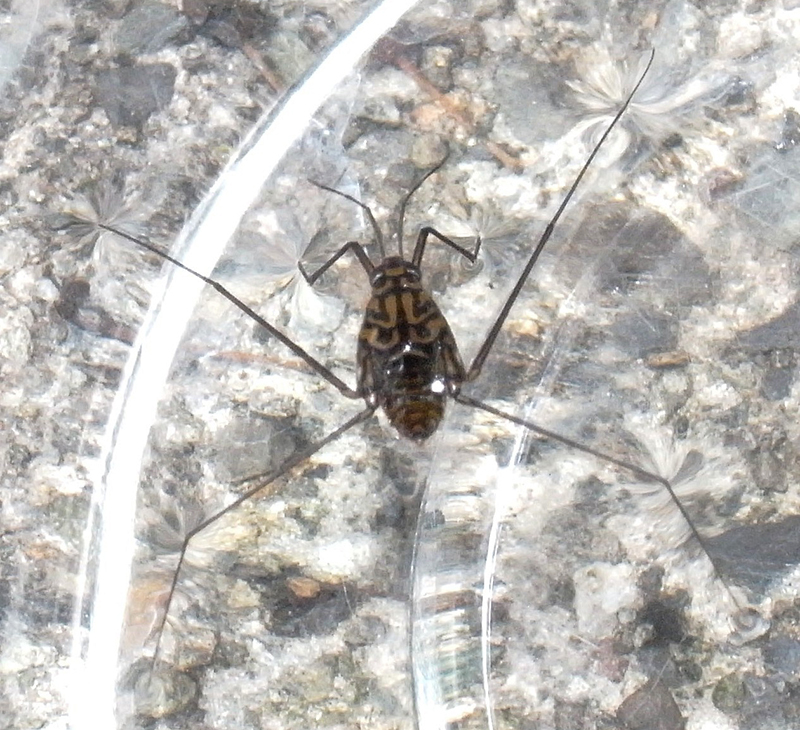
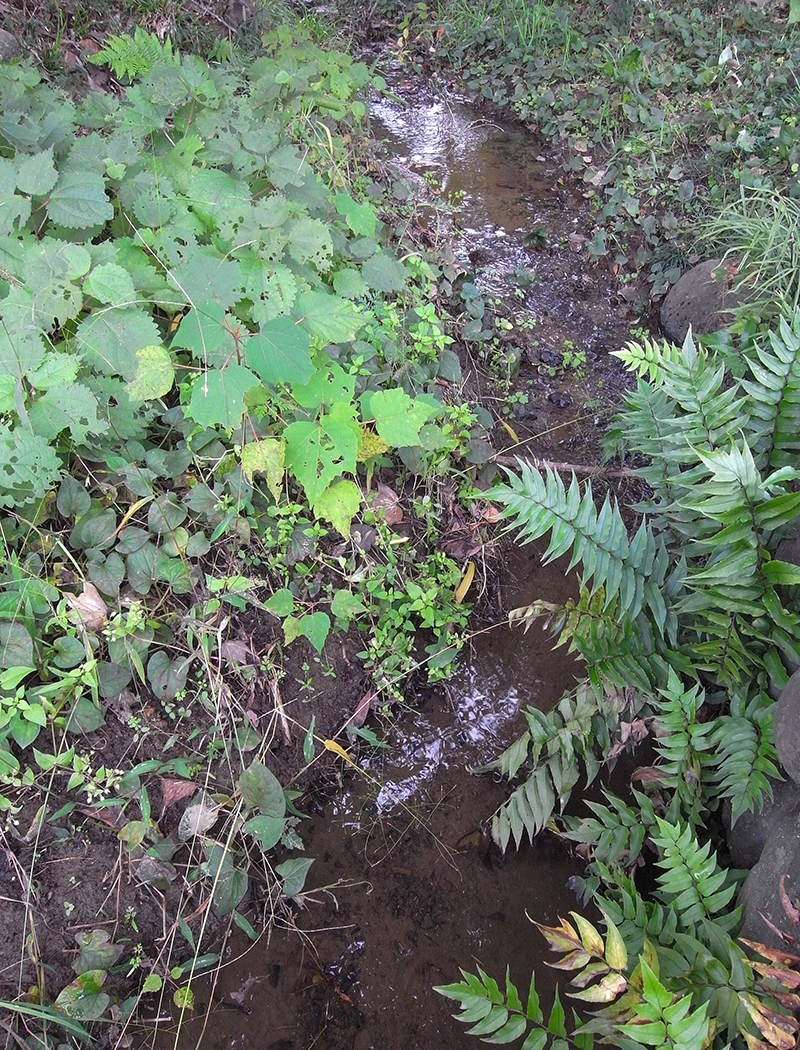
I almost gave up, thinking that the common water striders had already overwintered, but in the end, I was able to collect about 15 individuals that appeared to be common water striders in a pond in a non-public area behind the insectarium and in a pond adjacent to Insectarium Center.
Just when I thought I could finally put them on display, I opened a field guide to look up the scientific name and distribution to create labels for the exhibit, and discovered that there are several similar species of water strider. Upon closer inspection of the collected specimens, it seems they can be divided into two types.
To identify the species, we used a stereomicroscope to examine the presence or absence of small markings or indentations on the abdomen. To avoid harming the living individuals and to immobilize them, we placed them in transparent plastic bags and gently pressed them down for observation. The identification revealed that the collected individuals were a mixture of two species: common water strider and Kawakawa water strider. Although we only found three common water striders, they bred in captivity and the population increased, allowing us to put them on display from December.
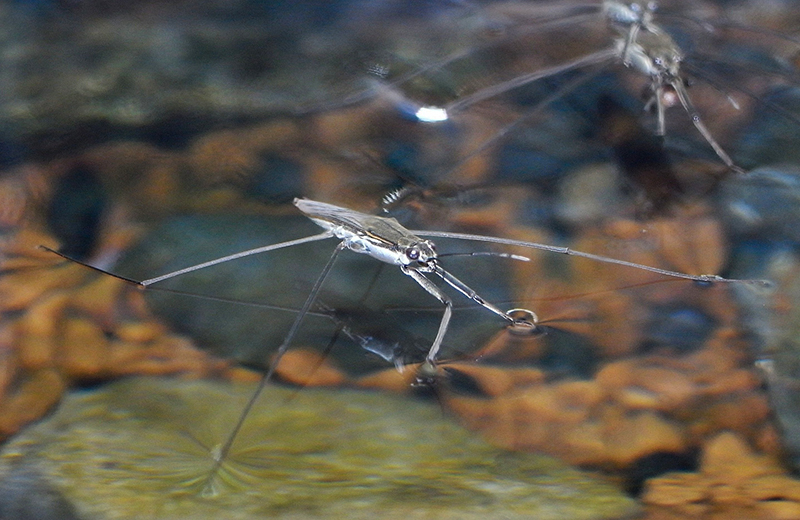
It seems that the common water strider prefers open bodies of water, while the Kawakawa water strider prefers small ponds surrounded by trees. The pond behind the insectarium where we collected many specimens appeared to be an environment that Kawakawa water strider would prefer.
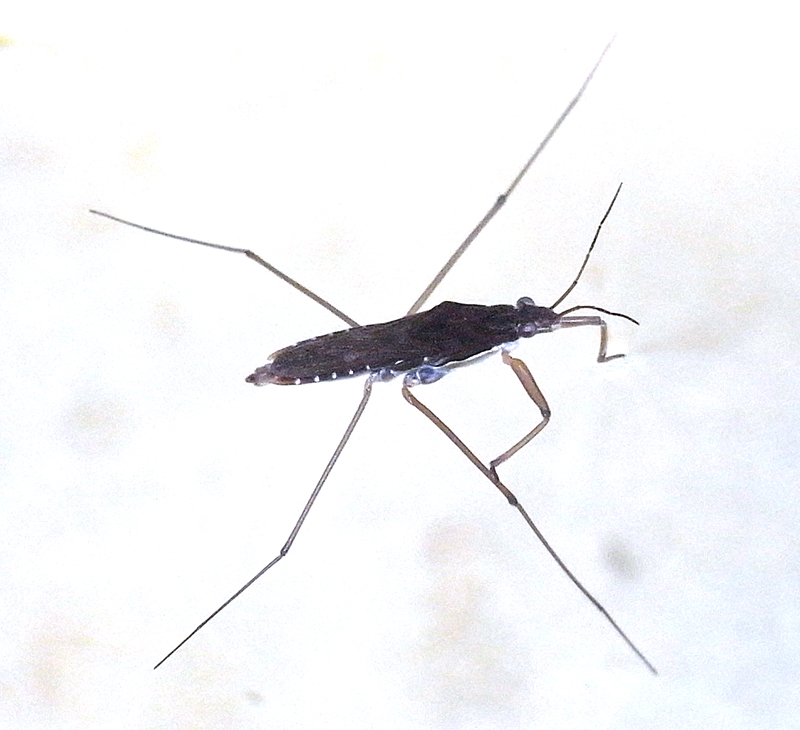
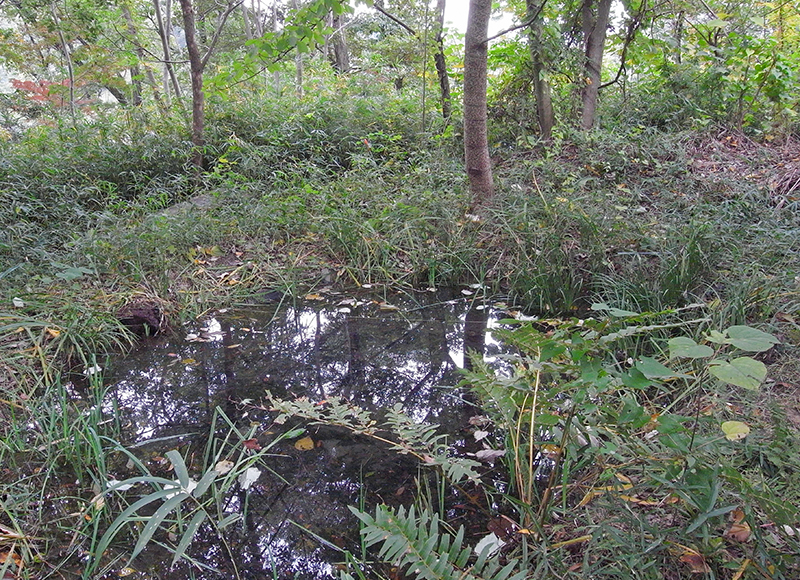
Through this collecting trip, I realized that various types of water striders inhabit even familiar places, depending on the environment. The next time I see water striders in the wild, I'll try not to lump them all together as "water striders," but to carefully observe what kind of species they are while also considering their habitat.
[Tanaka, Animal Care and Exhibition Staff, Insectarium Tama Zoo]