

A report on the beginner's birdwatching event and answers to the question, "How far can migratory birds fly?"
April 2, 2026
On Sunday, March 8, 2026, under clear, sunny skies of early spring, we held a birdwatching event for beginners at Tama Zoo. 42 people who had applied in advance participated in the event, and together with zoo staff, they observed the wild birds in the park.

After guidance on how to use binoculars and how to observe wild birds, the group split into four smaller groups and spent about two hours observing wild birds in the park, starting around 8:40 a.m. before the park opened. Thanks to the favorable weather, each group was able to observe approximately 20 species of birds, with the largest group seeing up to 25 species, including sparrows, grosbeaks, and Daurian redstarts.
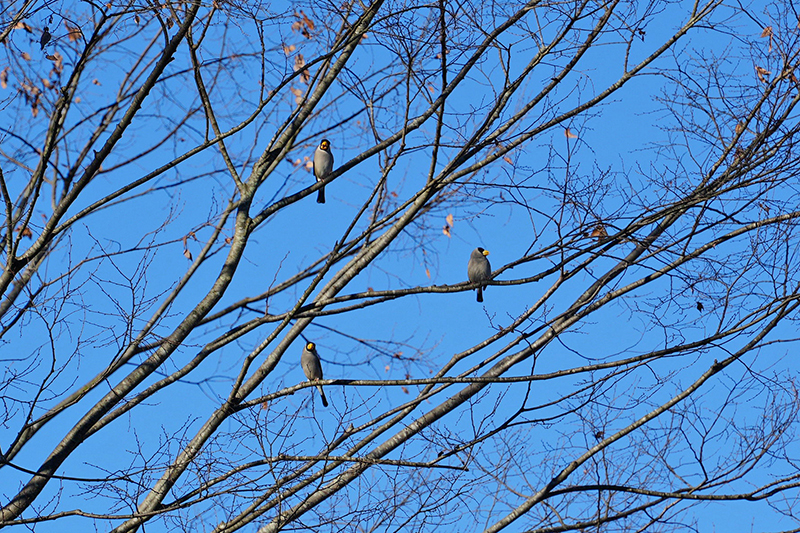
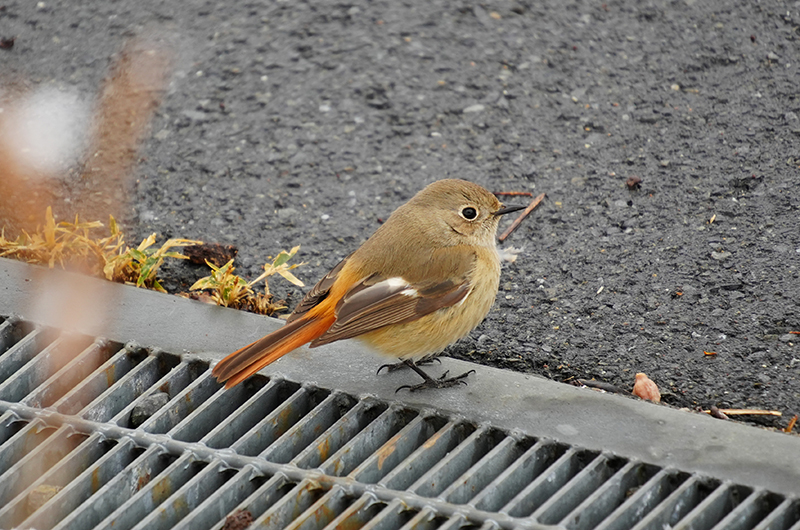
After the observation, we set aside time for reflection and questions. A variety of questions about wild birds were raised, some of which were so insightful that the zoo staff were at a loss for words. Here, we would like to address the questions that we were unable to answer at the time.
Question: "What is the flight range of migratory birds?"
In birds, "migration" refers to the act of regularly moving long distances for the purpose of breeding or securing food. Birds change their habitat with each season, such as spring, summer, and winter. Common examples include birds that breed in the north and migrate to Japan to spend the winter (winter birds: such as geese), and birds that migrate from the south to Japan to breed (summer birds: such as swallows).
The flight distance varies depending on the species and migration route, but here are some representative flight distances for winter and summer migratory birds.
・Winter bird: Snow Goose (Anser caerulescens)
A round trip between Siberia, Russia and Miyagi Prefecture, Japan. Approximately 3,000-4,000 km one way.
• Summer bird: Swallow (Hirundo rustica)
Round trip between Japan and Southeast Asia. Approximately 2,000-5,000 km one way.
So, how long can the bird capable of flying the longest distance in a single flight actually continue flying?
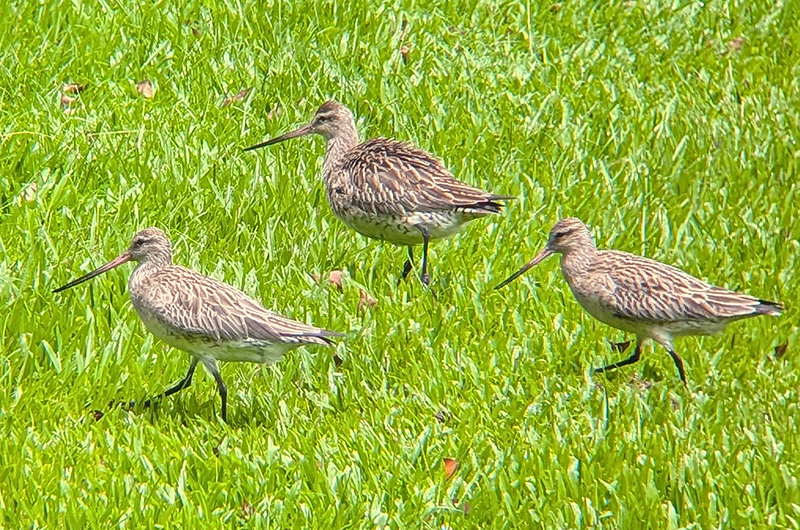
According to a study published in 2020, a record-breaking flight of 12,200 km was recorded by a Bar-tailed Godwit (Limosa lapponica) between Alaska and New Zealand. While most birds stop in Japan for nutrition, the individual that made the record appears to have flown continuously without taking a break.
Migratory birds often use the fat they store up in large quantities before migration to get the energy they need for long-distance flights. However, the Bar-tailed Godwit can also use muscle and organ protein as energy, allowing it to fly longer than if it relied solely on fat.
Naturally, by the time they arrive, their bodies are completely exhausted, but they also have mechanisms to efficiently recover their energy, so they seem to be able to recover thoroughly in a short period of time.
Just looking at the migration patterns of some birds is fascinating and interesting, and the abilities that wild animals have acquired to survive are truly astonishing.
Beyond the amazing and rare birds introduced here, even the common birds you might see around you have many fascinating details if you take a closer look. When you spot a wild bird, stop for a moment and observe it quietly. You'll find it fascinating the more you look at its body color, patterns, beak shape, and how it searches for food. We hope that this event will encourage more people to take an interest in the wild birds and nature around them.
[In charge of the beginner bird watching event Tama Zoo]