

Tips for breeding Scarlet Ibis: Raising chicks in collaboration with caretakers
February 6, 2026
Tama Zoo The "Crested Ibis Breeding House" at Crested Ibis is currently breeding a total of 11 species of birds, including 9 birds from the family.
The Scarlet Ibis introduced here is a bird with distinctive red plumage that inhabits beaches, riverbanks, and wetlands from Venezuela to southern Brazil in South America. The name "Shojo" is said to derive from its vivid red color, like the Japanese color name "Shojo scarlet" (猩猩).
Tama Zoo So far, Scarlet Ibis parent birds have raised chicks by themselves and many chicks have left the nest and have been breeding naturally smoothly. However, since only individuals that are good at raising chicks have left offspring, a bias in the lineage has been observed. In order to maintain a long-term population in a zoo, it is necessary to breed in such a way that there is as little bias in the bloodline as possible.
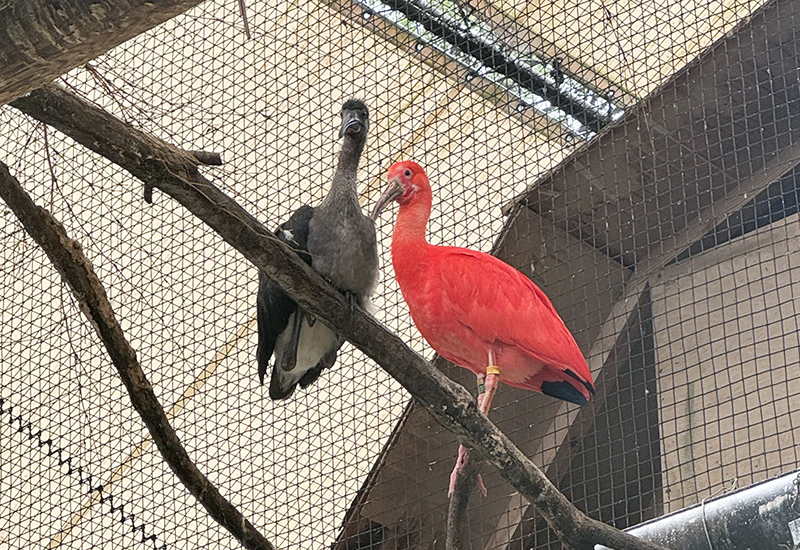
Therefore, we have been working towards breeding with a single male of a different lineage that was newly introduced from another zoo in 2023.
The first challenge for breeding was whether the new individuals would be able to pair up smoothly. Scarlet Ibis live in flocks, with males and females working together to raise their chicks. Our flock is over 20 birds in size, and when a new individual joins the flock, a major concern is whether it will be able to find a breeding partner. However, this individual overcame this challenge with ease, forming a pair, and two chicks were born during its first breeding season in Tama in 2024.
The next issue was whether this individual would be able to raise its young well, but unfortunately, both chicks that year died within a few days of hatching. This was thought to be because the parent male had little breeding experience and was not used to handling chicks, and was therefore unable to keep the chicks warm or feed them properly.
Ideally, we would have liked to have this pair try again and focus on natural chick rearing, but we thought about how to ensure that the chicks survive, and in 2025 we decided to try breeding using "combined chick rearing."
"Dual-rearing" is a method that utilizes both "natural brooding," in which parent birds raise the chicks, and "artificial brooding," in which breeders raise the chicks in place of the parents. The chicks are raised by humans until their physical strength stabilizes, and then they are returned to the parents to be raised.
First, the eggs laid by the parents are collected and replaced with fake eggs, which are then placed in an incubator to hatch.The hatched chicks are then artificially raised for 2-3 days, after which they are replaced with the fake eggs from the parents.
This method not only prevents the chicks from losing their strength before the inexperienced parents have time to get used to handling them, but also allows the chicks to be entrusted to another pair of unrelated parents as foster parents, as long as they are laying eggs at the same time, which helps ensure that the offspring are raised by a specific individual.
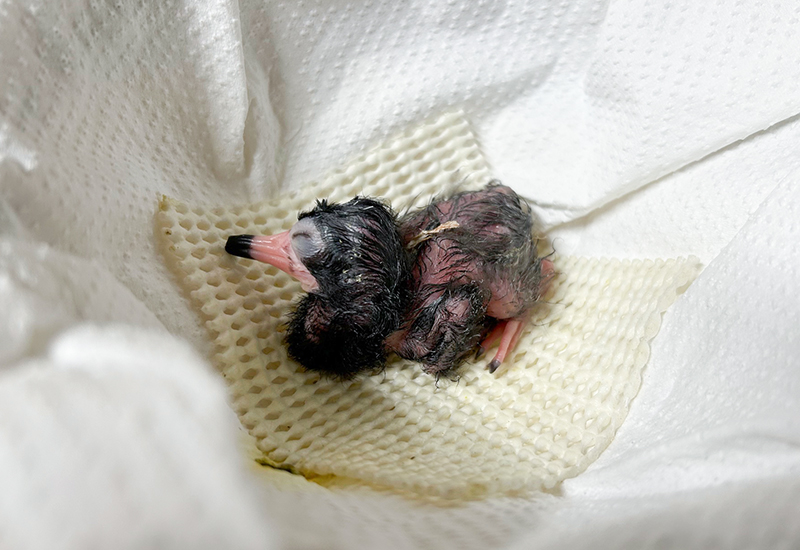
This time, four chicks of the male's lineage were reared together and placed with a total of three pairs of foster parents. Specifically, one chick was placed with each of two other pairs with ample breeding experience, and the remaining two were placed with the original male's pair.
As a result, all four chicks that were artificially reared grew and left the nest in August. I think this was beneficial because the chicks gained strength during two to three days of artificial rearing, allowing them to persistently ask for food from their foster parents and their real parents even after returning to the nest, and allowing the parents to firmly recognize their chicks and continue their rearing behavior.
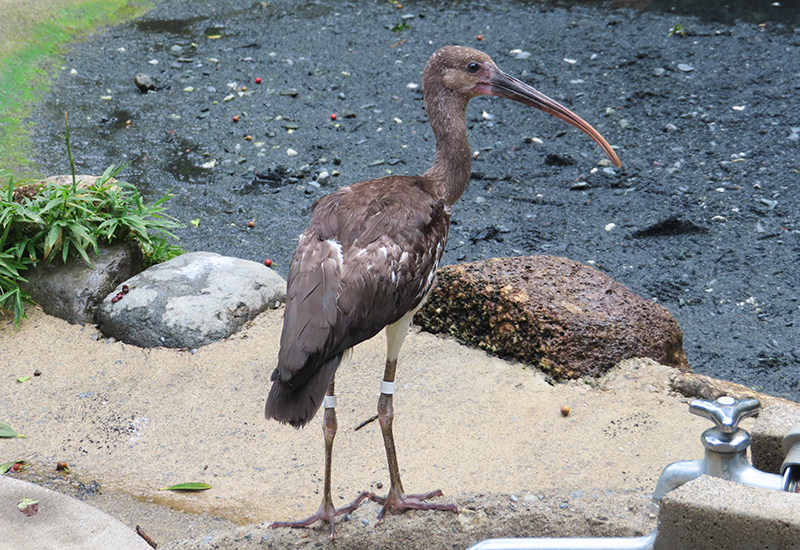
In this way, the new male was able to gain experience raising chicks in 2025, and next year we will work to ensure successful natural breeding without the intervention of breeders.
[Naka, Wildlife Conservatio Center]
Related articles
(February 6, 2026)