

Chimpanzee and Plants: How They Use Plants for More Than Just Eating
December 26, 2025
Chimpanzee, which inhabit the lush forests of Africa, use plants not only as food but also as tools. However, the term "plants" encompasses a wide variety of species, including trees, herbaceous plants, and, looking more closely, leaves, bark, seeds, and fruits.
At Tama Zoo, from the very beginning of their keeping program, animal keeper have been collecting various plants within the park grounds and giving them to the Chimpanzee. Looking around the lush grounds, one can see that numerous plants grow naturally throughout the year in the forms of young leaves, flowers, fruits, seeds, and tubers. By utilizing the plants that change with the seasons in this naturally rich environment, the zookeepers have been able to add variety to Chimpanzee' daily lives, increasing their foraging time and providing them with more stimulation each day.
To further advance this initiative, we decided to increase the variety of plants we provide by researching available plant species, collection locations, and timing.
However, many plants are poisonous. We gathered information from past Chimpanzee handlers and staff members at the zoo who are knowledgeable about plants, and researched plants that can be given to the chimpanzees based on whether they are edible for humans. Thanks to these efforts, we were able to increase the number of plants we can give to the chimpanzees by about 20 this year.
The reactions of individual fish to the food they are given vary greatly. Some eat without hesitation, while others form a circle around those that are already eating, huddling together and watching with interest.
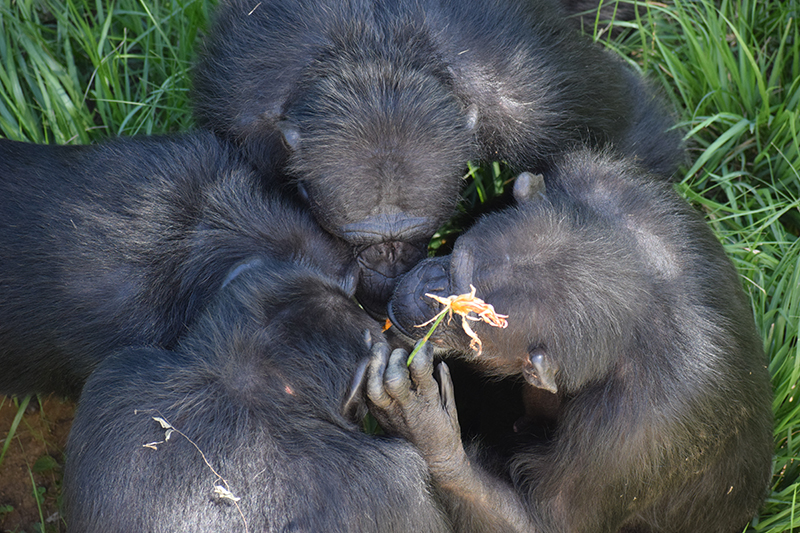
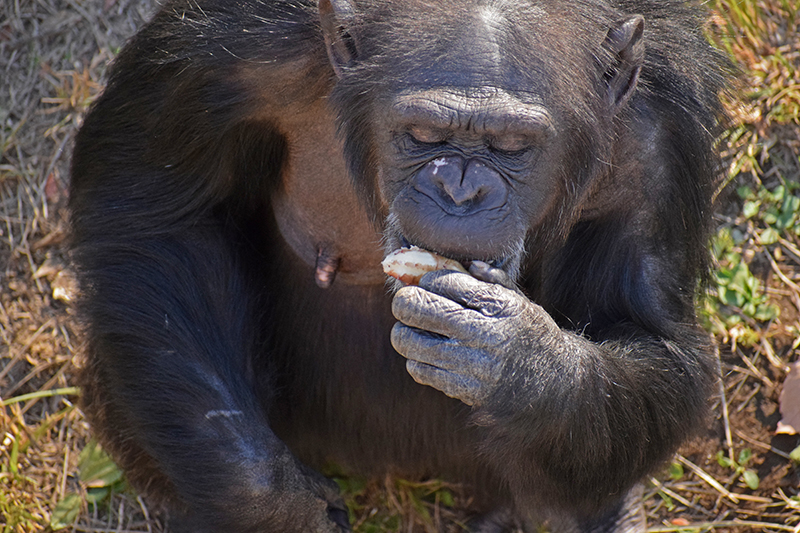
Furthermore, some individuals spend time experimenting to figure out how to extract chestnuts from their burrs, while others use their teeth to carefully peel the skin off Jerusalem artichoke rhizomes before eating them.
Aside from being used as food, the ants have also used branches to create beds by gathering them in a circular shape, as tools for the artificial ant mounds permanently installed in the exhibit area, and have been observed sniffing the flowers when they were offered as food.
Then, in the spring, plants begin to sprout within the exhibition area. After eating the plants that the staff had collected and given to the animals, they were sometimes seen picking plants on their own, perhaps stimulated by the experience.
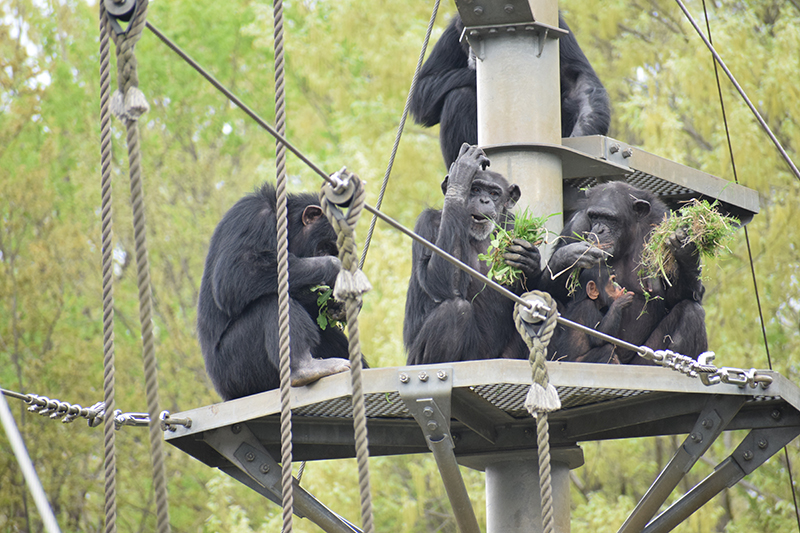
Providing a variety of plants each season provided daily stimulation, encouraging increased and varied behavior. Plant feeding can be evaluated not only as "foraging enrichment" that leads to the enjoyment of eating, but also as fulfilling the five elements of "environmental enrichment" (social, cognitive, physical, sensory, and foraging), such as eliciting social behaviors like interactions between individuals out of curiosity, cognitive behaviors like thinking about foraging methods, and sensory enjoyment through smelling, so it is thought to contribute to improved animal welfare.
We will continue to investigate the plants available in the park and provide them with food to enrich Chimpanzee' daily lives.
[Tama Zoo]