

Zoo Stock Species and the Red List
Zoo Stock Species and the Red List
Zoo Stock

This indicates that the species is included in the Second Zoo Stock Plan, which was formulated by the Tokyo Metropolitan Government in 2018. The plan sets goals for the next 10 years in three areas: "species conservation," "contribution to wildlife conservation," and "environmental education and conservation awareness." 124 animal species are included.
What is the Red List?
Based on scientific research, this is a list of wildlife classified by rank (category) indicating the degree of risk of extinction.
Livng Things Encyclopedia shows the categories (mainland and islands) assessed by the IUCN (International Union for Conservation of Nature) at the global level, the Ministry of the Environment for Japan, and the Tokyo Metropolitan Government for Tokyo.
The higher the category in each table, the higher the risk of extinction, and CR, EN, and VU are the three categories known as "endangered species." In Tokyo, species that are not at the NT (near threatened) level but are relatively rare are considered "species of concern."
|
IUCN categories |
|
|---|---|
|
EX |
extinction |
|
EW |
Extinction in the wild |
|
CR+EN |
— |
|
CR |
Serious crisis |
|
EN |
crisis |
|
VU |
emergency |
|
NT |
Near Threatened |
|
LC・○ |
Low Concern |
|
DD |
Data shortage |
|
LP |
— |
|
Japan (Ministry of the Environment) Category |
|
|---|---|
|
EX |
extinction |
|
EW |
Extinction in the wild |
|
CR+EN |
Endangered species |
|
CR |
Critically Endangered |
|
EN |
Endangered species |
|
VU |
Endangered species |
|
NT |
Near Threatened |
|
LC・○ |
— |
|
DD |
Lack of information |
|
LP |
Endangered |
|
Tokyo Category |
|
|---|---|
|
EX |
extinction |
|
EW |
Extinction in the wild |
|
CR+EN |
Endangered species |
|
CR |
Critically Endangered |
|
EN |
Endangered species |
|
VU |
Endangered species |
|
NT |
Near Threatened |
|
LC・○ |
Unranked |
|
DD |
Lack of information |
|
LP |
Endangered |
Creatures at Tama Zoo
Creatures at Tama Zoo

Great White Pelican
Pelecanus onocrotalus
Great White Pelican
Pelecanus onocrotalus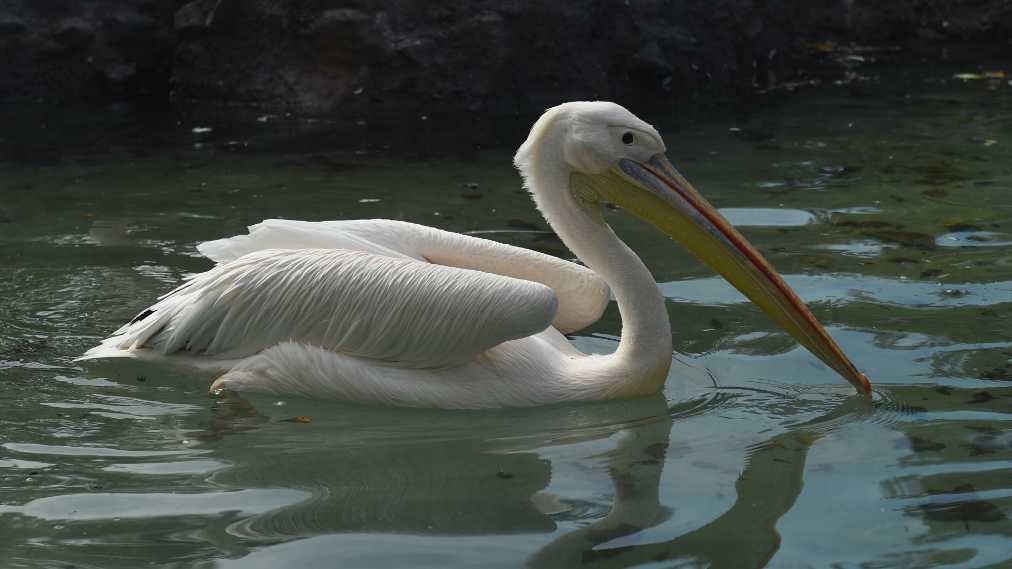
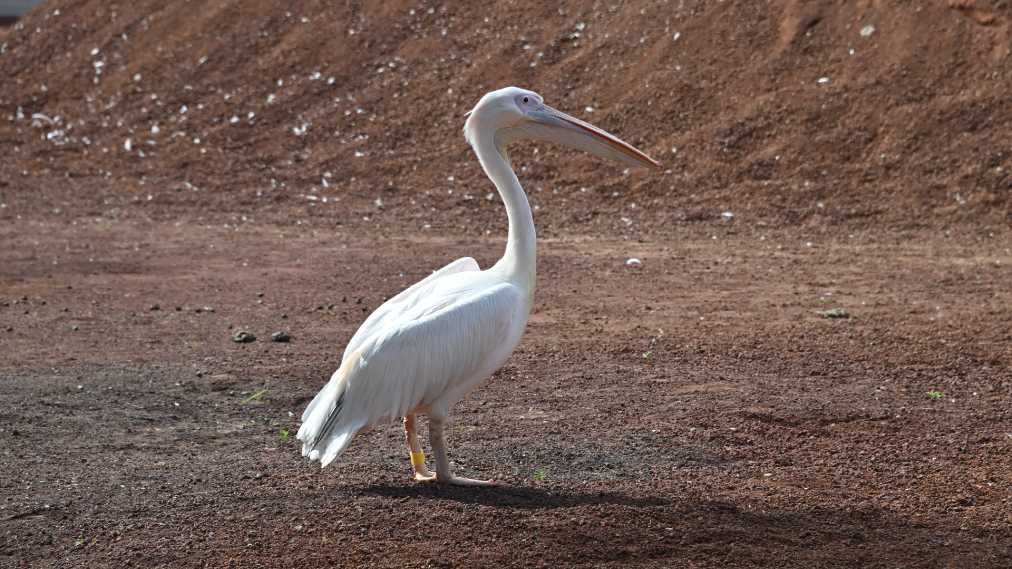
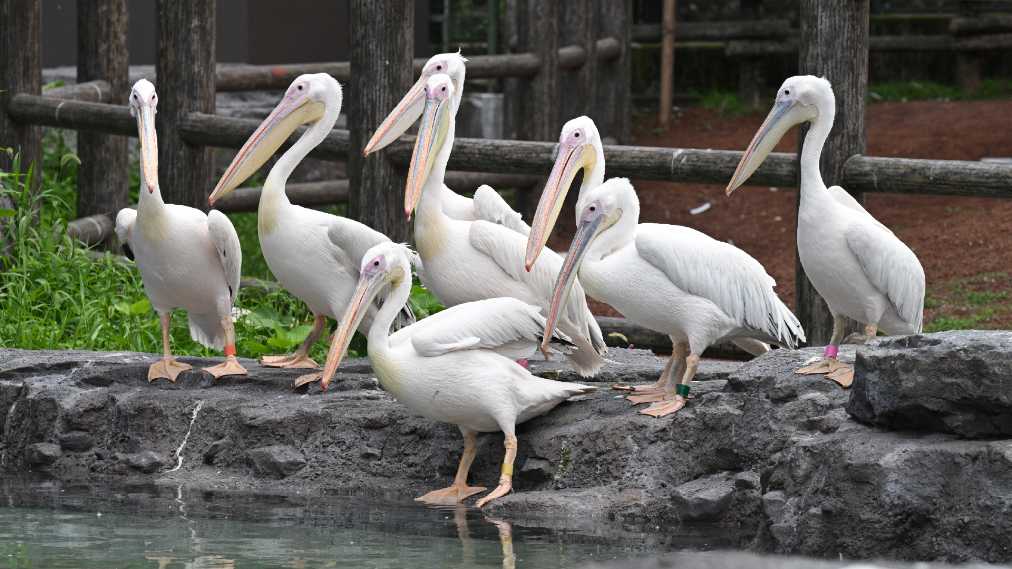
Their entire body is pale pinkish-white, becoming a deeper pink during the breeding season. The color of the skin on their face also changes during the breeding season, with males turning pinkish-yellow and females turning bright orange. When they spread their wings, their black flight feathers are visible. Breeding season is in the spring in temperate regions, but in Africa they breed all year round. They form large colonies and lay 1 to 3 eggs in nests made of reeds or twigs.
| classification | Birds, Pelecaniformes, Pelecanidae |
|---|---|
| English name | Great White Pelican |
| distribution | Breeding location: Central Asia, around the Black Sea Wintering grounds: Africa, northern India *There are also resident birds on the African continent and northwestern India. |
| Residence | Lakes, lagoons, deltas, and wetlands |
| Size |
Total length: Male 175cm, Female 148cm
Wingspan length: 226-360cm Weight: Females 5.4-9 kg, Males 9-15 kg Beak length: 289-400mm |
| food | fish |
| Red List |
IUCN: LC (Least Concern)
|
large beak
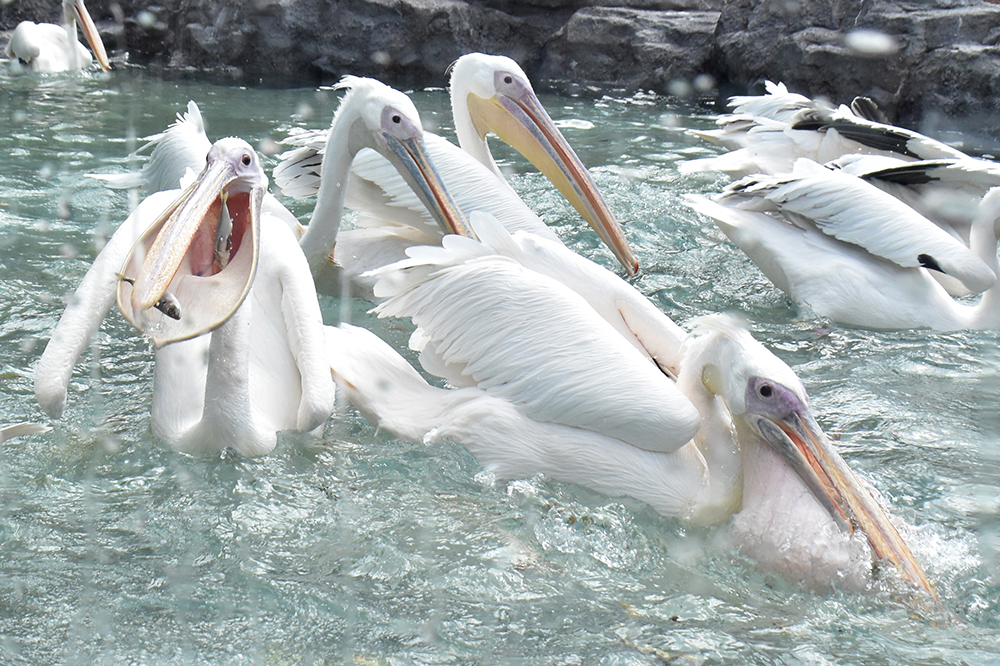
When feeding, they all enter the pond at the same time. They then plunge their heads into the water and open their large beaks to catch fish. When doing so, their lower beaks spread wide to the left and right, allowing them to scoop up large amounts of fish along with the water.
mixed exhibition
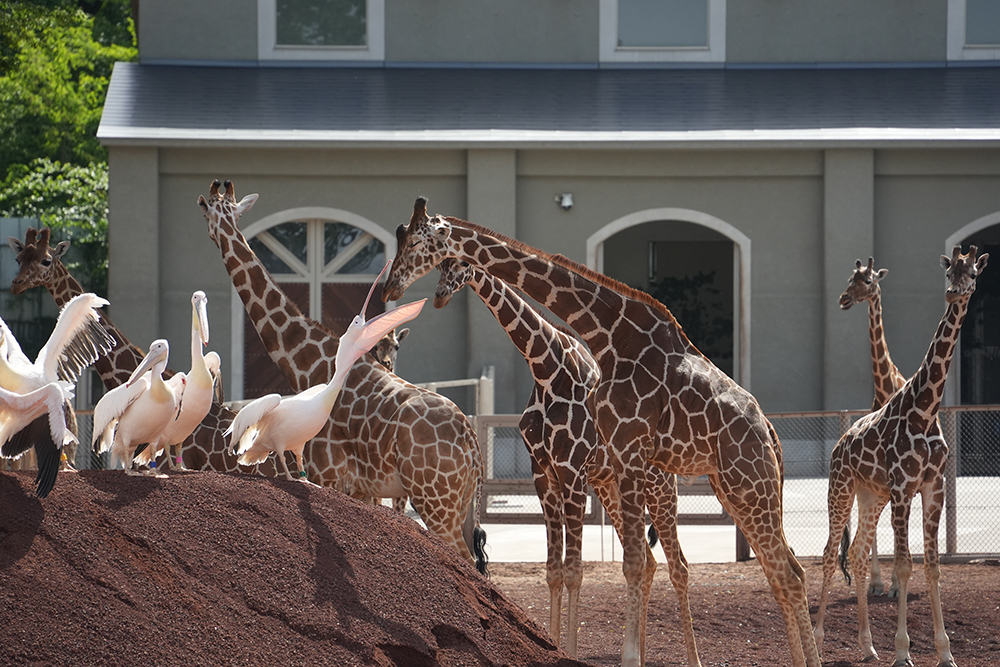
Tama Zoo displays Giraffe, Scimitar-horned Oryx, and Grevy's Zebra, all of which live on the same African continent.