February 27th is
International Polar Bear Bear Day.
Last year, we used
this day to share information about the current state of breeding efforts throughout Japan, as well as our own initiatives at the zoo.
In addition to our previous efforts, this year we conducted artificial insemination of "Ikoro" (male) and "Dea" (female) based on joint research with Hokkaido University on Polar Bear breeding.
Artificial insemination is performed in conjunction with the female's estrus cycle. Based on the behavior of the two males so far, it was inferred that Ikoro correctly detected Dea's estrus and mounted her (the male mounted the female and assumed a mating position). Therefore, the goal was to perform artificial insemination within a few days of confirming that they were mounting.
On January 13, 2024, Ikoru began exhibiting stronger breeding-season behaviors, such as wanting to be near Dea and meticulously sniffing the surroundings while making snorting noises. As a result, the two were placed together, and on January 14, two instances of mounting were observed.
On the following day, the 15th, although there was no mounting, Ikoro's interest in Dea remained high. Based on the changes in the behavior of the two dogs and the hormone levels from the blood test conducted on the 14th, we consulted with Hokkaido University regarding the timing and performed artificial insemination on January 16th.
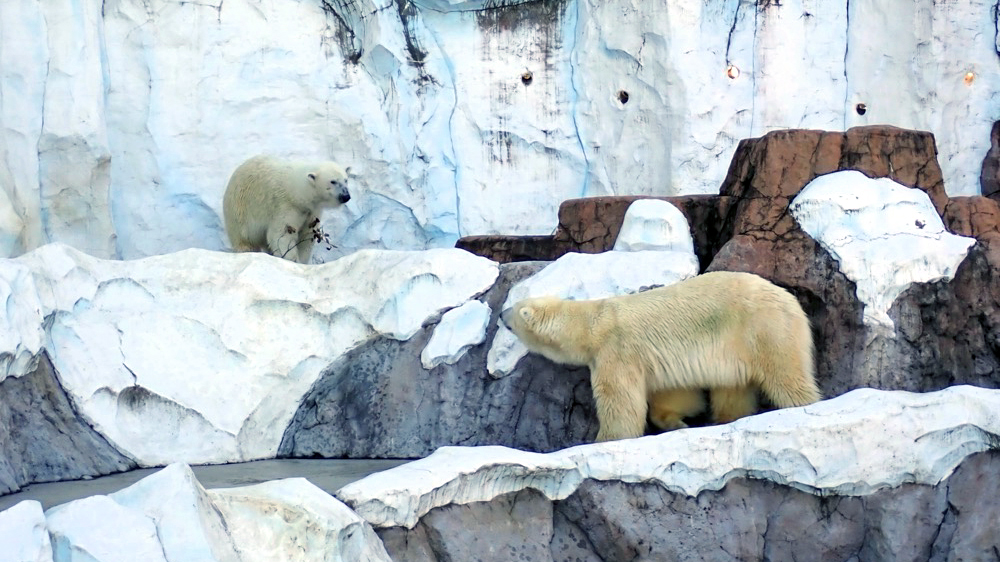
Pairing processOn the day of artificial insemination, Ikoru was first anesthetized and sperm was collected, and then Dea was anesthetized and the sperm was injected. The procedures were completed successfully in about an hour for each, and after they woke up from the anesthesia, they were observed to be moving and eating as usual. After that, both dogs returned to their non-estrus state, so the two dogs were separated again.
The successful completion of artificial insemination does not necessarily mean that pregnancy will occur. We will continue to observe Dea, checking for any changes, and will make every effort to prepare her environment and manage her health in consideration of the possibility of giving birth. In addition, we will review the cohabitation method in case she does not become pregnant, and will continue to consider repeating artificial insemination or exchanging individuals in cooperation with other zoos.
We believe that many people observing Polar Bear at zoos will serve as an opportunity for them to become aware of the changes in the Arctic environment, their natural habitat, and will lead them to take action for conservation, such as actively using environmentally friendly products that produce less carbon dioxide.
Ueno Zoo will continue its breeding efforts to protect wild Polar Bear and will work to increase opportunities for many people to see Polar Bear at zoos throughout Japan.
[Ueno Zoo East Garden Animal Care and Exhibit Section]
◎Related News
・
Ikoru, Polar Bear, is coming to Ueno Zoo. (March 26, 2015)
・
Polar Bear "Dea" and "Ikoro" begin living together for the first time in preparation for breeding. (April 7, 2016)
・
International Polar Bear Day: Breeding Attempts at Ikoru and Dea (1) (February 26, 2023)
(February 27, 2024)