The Bird House Bird House, which had been closed due to measures against the novel coronavirus infection (COVID-19), reopened its first-floor exhibits on Monday, October 5, 2020!
In our two-part series, "From Bird House Bird House The final topic is the Crested Stint (
Click here for the previous installment, "From Bird House (1)").
The Crested Ostrich is neither a "sandpiper" nor an "ostrich." It is a bird belonging to the order Scholupidae, family Scholupidae, and both males and females are brown, with a crest of feathers called a "crown" that stands erect on top of their heads, making them look completely different from sandpipers and ostriches. Males and females are the same color and cannot be distinguished by appearance.
For the past few years, two specific birds have been seen together as a pair in Bird House, but they have not yet bred. This year, they actively engaged in mating behavior and nesting behavior by digging in the ground starting around springtime, but unfortunately, no eggs were laid.
Crested ostriches are polygynous, and it's common for multiple females to lay eggs in a nest built by a single male. So, we decided to place a "dummy egg," made to resemble a real egg, into the nest to see if they would lay any more. A few days later, one ostrich began incubating the dummy egg. Unfortunately, however, she didn't lay any eggs. A few more days passed, and surprisingly, two ostriches began incubating the single dummy egg.
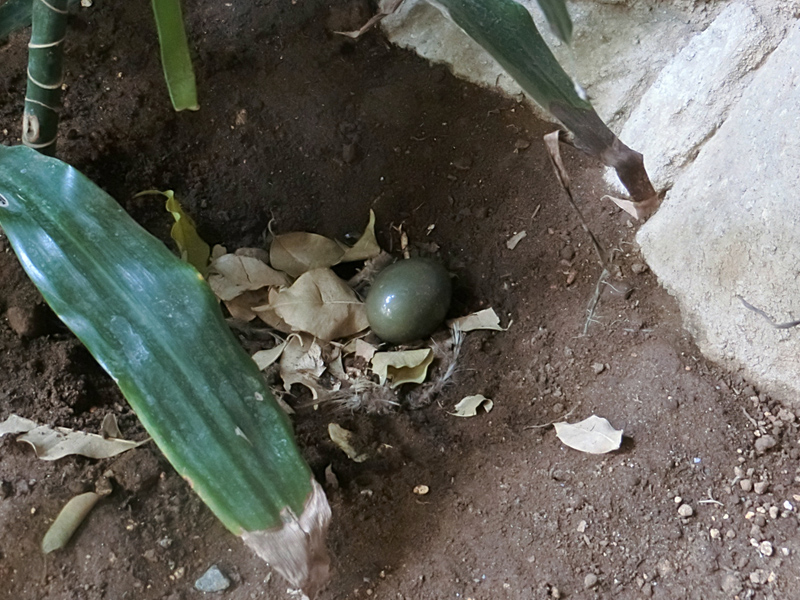 | 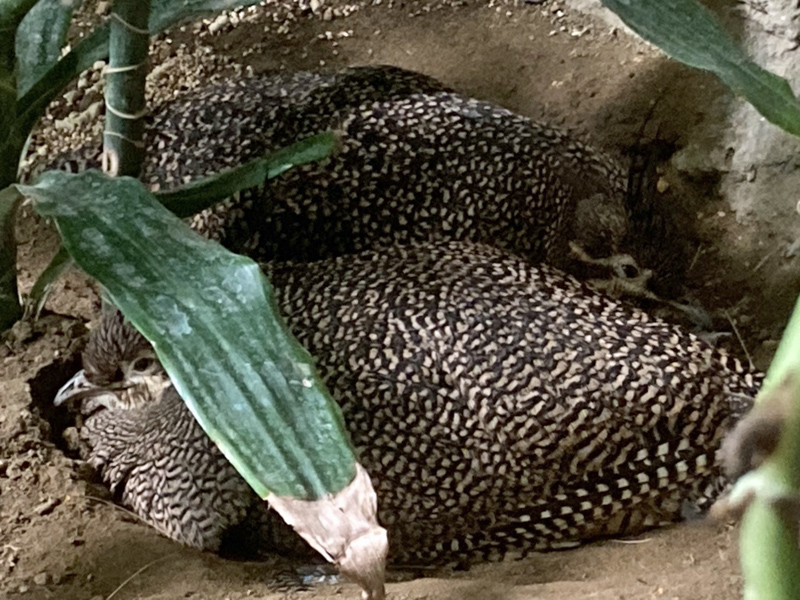 |
| Dummy eggs placed in the nest of a Crested Stint Ostrich | Two birds incubating a dummy egg |
Bird breeding behaviors vary widely, with some species involving both male and female cooperation in nesting, incubation, and raising chicks, others involving only one sex, and still others entrusting these tasks to other species. The Crested Stint is a species where only the male participates in nesting, incubation, and raising chicks; the female does not participate. Therefore, based on the characteristics of the species, this behavior makes it unlikely that the two birds are a male-female pair.
Upon testing the two birds to determine their sex, it was discovered that both were male, which made me realize once again how difficult it is to determine the sex of species that look identical.
In the wild, they often lie flat on the ground and blend their brown feathers into the background to hide when predators approach, making them difficult to observe. Although they look rather plain, they sing with a beautiful, flute-like voice, so please try to observe them and hear their calls.
The Crested Stint is on display on the first floor Bird House.
*At the time of publication, the bird was also on display in the birdcage near the exit of Bird House (second from the left), but the display in the birdcage ended on October 25, 2020.
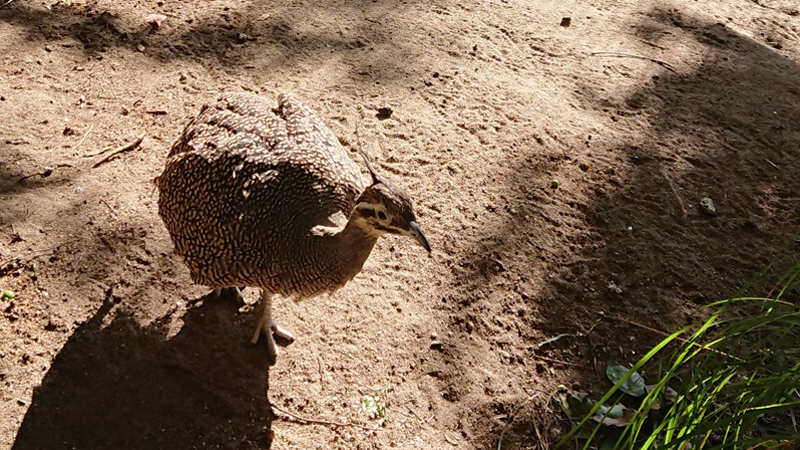
Brown feathers blending into the ground[Yoshimi Ao, Animal Care and Exhibition Staff, Ueno Zoo East Garden]
(October 6, 2020)
(October 26, 2020: Added information regarding the end of the birdcage exhibit)