Since the opening of "Bear Hill" in 2006, Japanese Black Bear Ueno Zoo has been exhibiting Japanese black bears in hibernation with the aim of conveying the animals' natural ecology.
This winter, one 15-year-old female has been hibernating since December 10th.
Last winter, the park was closed to prevent the spread of COVID-19, so this will be the first time in two years that the animals will be exhibited in hibernation.
When we first started the hibernation exhibit, there was still much we didn't understand about hibernation, so every year was a challenge. However, as a result of continuing our research, preparation, and record-keeping to successfully induce hibernation in captivity, we can now reliably conduct the exhibit if we create the right environment, and this year marks our 15th year.
Thorough preparation is necessary to induce hibernation. Since they fast during hibernation, we start building up their bodies to store nutrients from September to help them survive. We mainly feed them plenty of sweet potatoes and walnuts, and this time we increased their weight from 82 kg to 104 kg by the end of November.
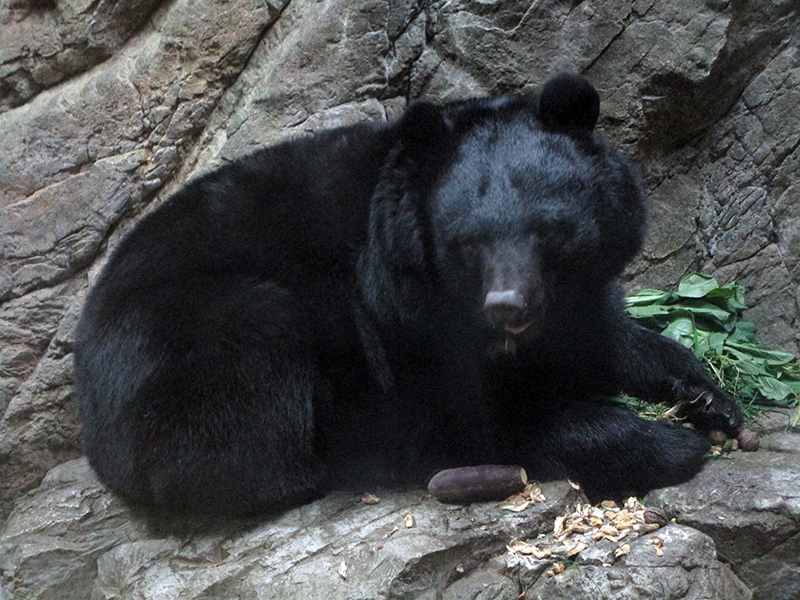
A female Asian Black Bear (15 years old) has gained weight in preparation for hibernation.
(Date of photo: December 6, 2021)Once they gain weight, we stop letting them out into the enclosure and have them spend the entire day in a connected area called the "hibernation facility," which consists of three rooms: the "exhibition room," the "winter mountain room," and the "hibernation booth."
Around this time, their long winter coats grow in thickly, making them look plumper and slower in movement. When they start leaving some of their favorite food uneaten, it's a sign that their bodies are ready. Then, over the next 10 days or so, we gradually reduce their food intake. Once they begin fasting, we close the "exhibition room" and divide them into two rooms, and we stop animal keeper' intervention and switch to monitoring them on screens. After that, it's up to the bears; some will immediately fall into a deep sleep in their hibernation booth, while others will wander around for a long time, but we carefully watch over them until spring.
This time, the hamster entered the hibernation facility on November 30th, and afterwards, it repeatedly carried large amounts of droppings from the hibernation booth into the exhibit room to create a sleeping place there. However, on December 5th, it settled down inside the hibernation booth and went into hibernation on December 10th.
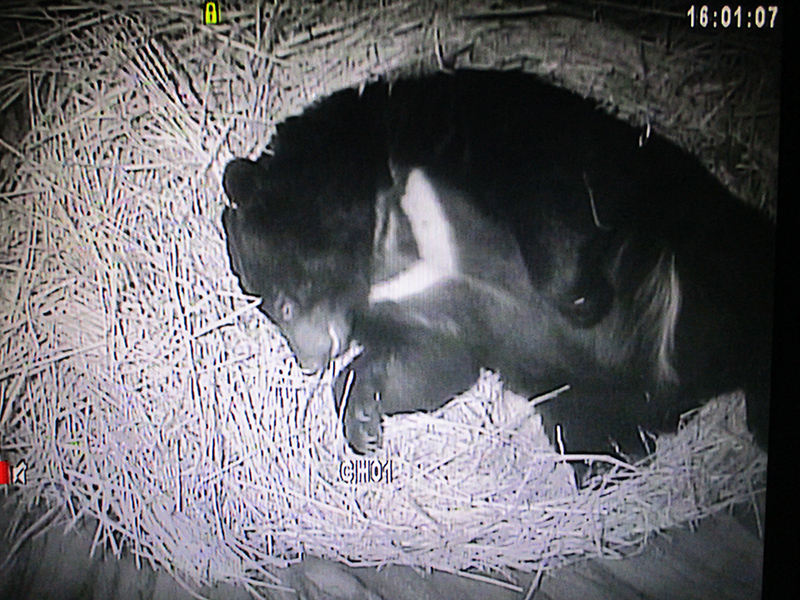
Inside the hibernation booth
(Date of photo: December 6, 2021)During hibernation, they sleep for more than 20 hours a day, but they are surprisingly active, arranging their bedding, yawning, and stretching. You can observe their hibernation process on live video feeds on monitors installed in the viewing area, so it would be interesting to stop by at different times when you visit the zoo.
The timing of when our Asian Black Bear emerge from hibernation varies from early March to May.
This time, the female that is hibernating is the type that sleeps soundly, so it may be sometime after Golden Week before we can observe her in the enclosure.
*Currently, we are suspending live video displays due to monitor malfunction. We will resume them as soon as repairs are complete, so please wait a little longer.*Live video displays using temporary monitors will resume from December 14th (Tuesday).
[Ueno Zoo East Garden Animal Care and Exhibition Staff]
(December 11, 2021)
(December 13, 2021: Added information regarding the resumption of monitor displays)