If you hear the word "shiryōshitsu" at Ueno Zoo, you need to determine from the context whether it refers to the "archive room" containing books and materials, or the "feed room" where animal feed is handled. The "feed room" is essentially the "kitchen of the zoo," where the animals receive, distribute, and prepare their food. It used to be adjacent to East Garden 's administrative office, but when the administrative office was newly built in West Garden in 2014, it moved to the first floor of that building.
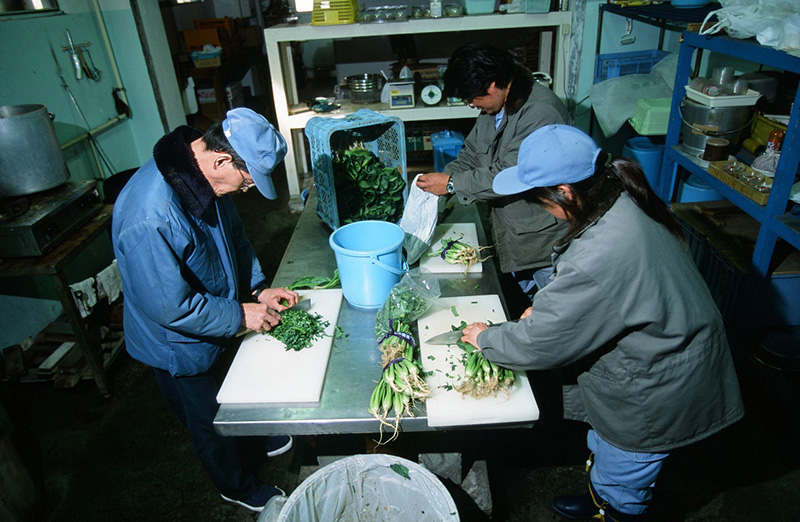
Cooking work in the old feed roomThe old feed room was a two-story building constructed in 1961, with a weighing room, kitchen, and office on the first floor, and a feed warehouse on the second floor. The weighing room was a room lined with cylindrical tanks called silos.
At the time, there were no artificial feeds specifically for each animal, so animal keeper had to weigh out and mix the appropriate amounts of barley, bran, and nutritional additives from each silo according to the animals they were responsible for. However, around 1970, solid feeds (pellets) made specifically for each animal became available, reducing the need for weighing and mixing, so the silo was converted into a regular warehouse.
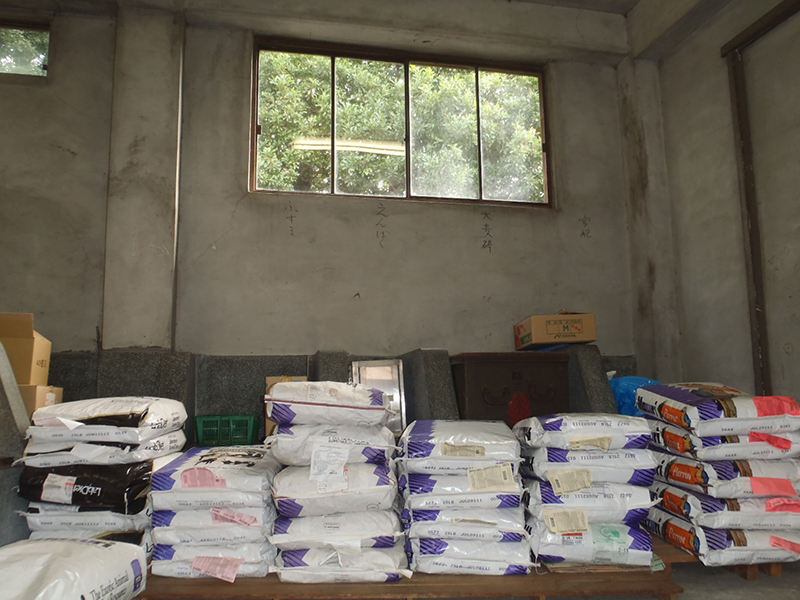
Pellet warehouse in the former feed roomThe kitchen is lined with knives and cutting boards, and the main task is cutting meat and vegetables into bite-sized pieces for each animal. There is very little boiling or grilling, but as an exception, sweet potatoes and carrots are steamed, and hard-boiled eggs are made. These are given to elderly animals or those whose health has deteriorated, as they are more appealing to the animals and easier to digest.
This type of cooking is not done individually by each animal keeper, but rather by staff in the feed room using large cauldrons and pots. Boiled eggs are made in 10kg batches, once or twice a week.
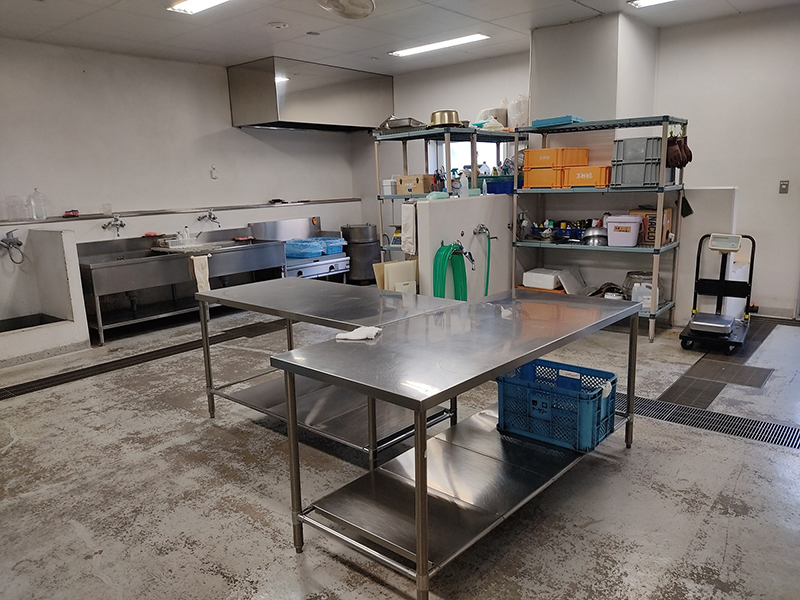
The new feed room, which has been in use since 2014, is a single-floor space housing a kitchen, office, refrigerator, freezer, and pellet storage. While the equipment has been updated, the process of cutting and cooking the food to suit the animals remains the same. However, since the newer animal enclosures have dedicated cooking spaces, many animal keeper now receive meat and vegetables in the feed room and cut them back at their respective enclosures.
New feed roomThe most commonly used feed at our zoo is fresh grass (hay), with approximately 200 kg delivered to each animal enclosure daily. Tree branches and leaves, bamboo (eaten by Giant Panda, etc.), and hay are delivered regularly in batches of several hundred kg to the animal enclosures and hay storage warehouses. All other feed is basically delivered to the feed room. Over 30 different types of vegetables and fruits, totaling approximately 300 kg, and about 40 kg of fresh fish are delivered daily from the wholesale market.
The feed mainly consists of lean horse meat and chicken heads, using about 150 kg per week. Chicken heads are inexpensive because humans don't eat them, and they are also a nutritious feed as they include not only meat but also bones, skin, and fat.
Because such a large quantity is delivered every day, there are always 5 to 6 tons of feed stored in the feed room. There is a concept called rolling stock for food reserves in case of disaster, and at our farm, in addition to keeping some vegetables, fruits, fish, and meat in the refrigerator and freezer at all times, we also keep a surplus of pellets and hay in the warehouse to prepare for disasters such as major earthquakes.
In fact, during the Great Hanshin-Awaji Earthquake and the Great East Japan Earthquake, emergency shipments of animal feed were made from zoos across the country, including our own, to zoos in the affected areas.
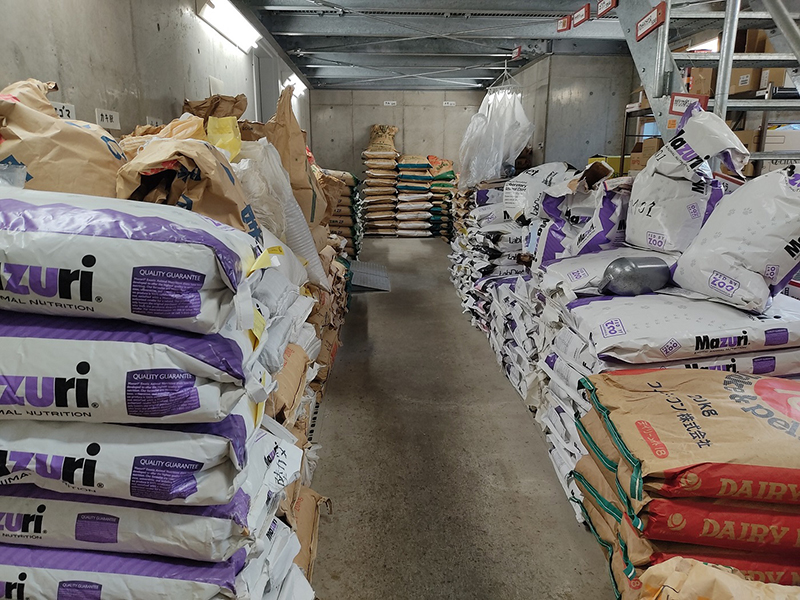
Pellet warehouse in the new feed roomAlthough the building and equipment are new, the work itself in the new feed room hasn't changed much from the old one. The biggest difference is that they now handle many new types of feed to ensure the animals are raised in good health. In 2001, they used 170 types of feed per year, but by 2022, that number had exceeded 250.
As research into the nutrition of wild animals progresses, and various pet foods and human health foods are being developed, we use online shopping to introduce these products and constantly improve the feed to enhance the quality of life (QOL) of our animals.
Furthermore, we have started to implement measures to support the SDGs and environmental conservation, starting with what we can do. When animal keeper transport feed to the animal enclosures, we reuse over 200 plastic bags each month that previously contained vegetables, drying them out to reduce the amount of plastic waste. In addition, the rice flour used in our panda dumplings is "Stork-Friendly Rice," produced by JA Tajima in Hyogo Prefecture, in order to protect the environment that is suitable for storks.
Finally, I'd like to introduce the large cauldron used to steam about 20 kg of sweet potatoes and carrots every day. It has been in use since the old feed room, and it seems to have been there since the time when retired animal keeper came to Ueno Zoo as new recruits, so it has probably been in active service for several decades.
The latest kitchen equipment used in restaurants can cook a variety of dishes with the push of a button, but it's far too complex and expensive, making it overkill for a zoo's feed room. This type of large cauldron is no longer manufactured, so what to do when this one, which is starting to deteriorate, becomes unusable is one of the biggest concerns for the feed room.
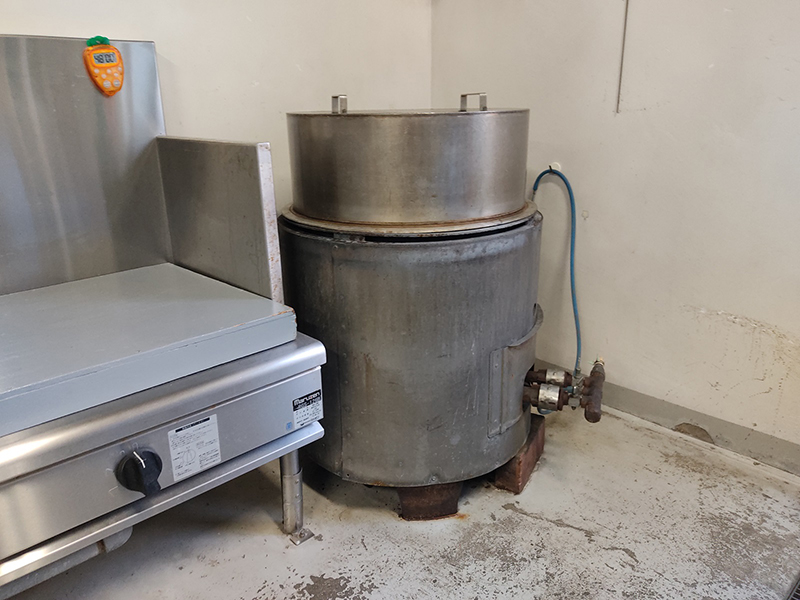
Large cauldron[Takeshi Inouchi, Coordinator, Ueno Ueno Zoo]
◎140th Anniversary Project: ZooNet Series "Ueno Zoo: The Last 10 Years"
・
Conservation of rare wild animals native to Japan・
Taking a new step: "Children's Zoo STEP"・
Changes in Educational Outreach Programs・
Rebuilding of an animal hospital・
The entrance gate undergoes a transformation.・
Various initiatives based on the Tokyo Metropolitan Zoo Master Plan・
Measures against COVID-19・
Environmental initiatives at gift shops and food shops・
Ten Years of Animals in East Garden・
Special exhibit at Vivarium
(December 28, 2022)