The Business Division Manager is responsible for managing and operating the gift and food shops, running the ticket gates and information desks at the entrance, and maintaining the park's facilities, including cleaning. From my perspective, I'd like to share an anecdote about the newly constructed facility, "Saruyama Kitchen," as part of what has happened in the last 10 years.
In March 2016, the free rest area in East Garden and the adjoining food and beverage shop (hereinafter referred to as "East Garden Cafeteria") were closed due to seismic reinforcement plans. Although East Garden Cafeteria underwent renovations along the way, it was built in 1958 (Showa 33) and had been a beloved landmark for over half a century. I was deeply moved when visitors took memorable photos on the final day of business.
As the building was demolished in earnest, we simultaneously began preparations for opening the new facility.
Closed East Garden Restaurant
Concept of the new facility
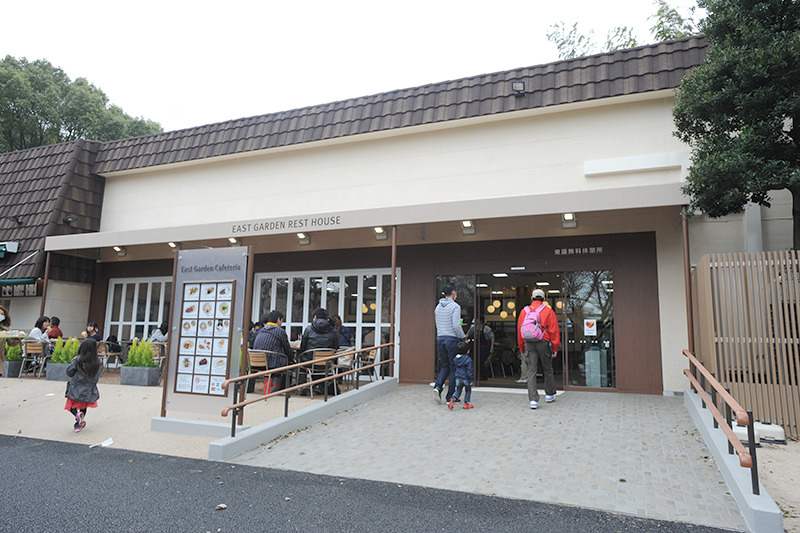
East Garden Cafeteria was located on a site adjacent to Ueno Toshogu Shrine, but it was decided that the new facility would be built on the site of the former Llama and tapir enclosure, which was also demolished around the same time. This location, like the old facility, is on the main route between East Garden and West Garden, and was therefore expected to be the most convenient for visitors.
Furthermore, since the Tokyo Olympic and Paralympic Games were just four years away at the time, the number of visitors from overseas had increased significantly. Therefore, we decided to operate the facility with a focus on Japanese hospitality, primarily offering Japanese-style menus.
New facility equipment
East Garden Cafeteria had a building area of approximately 319 square meters, with about 120 seats in the hall and terrace seating around the building. The new facility has a building area of approximately 718 square meters in total across the first and second floors, allowing for an increase in seating capacity to 180 seats in total (60 on the first floor and 120 on the second floor) (currently, the number of seats has been reduced as a measure to prevent infection).
On the first floor, we've placed box-shaped seating that's convenient for families and groups. Additionally, to help people avoid dining out during the pandemic, we've added counter seating by the windows on the second floor. Furthermore, to evoke a sense of Japan, the backs of the chairs are designed with Japanese Macaque Japanese animals and plants found in the zoo, such as Japanese macaques and cherry Japanese Squirrel, Japanese squirrels and ginkgo trees, and Ezo Sika Deer and maple leaves, as well as silhouettes of Giant Panda and bamboo, which are representative exhibits of Ueno Zoo.
In addition, we have installed nursing rooms and barrier-free toilets on both the first and second floors, and increased the number of individual stalls by using sliding doors for the toilets. We have also installed an elevator. Furthermore, we have introduced digital signage in the hall and on the menu boards, and have created a space in the second-floor hall for a large LCD display and printed materials so that users can learn about the facility while they eat.
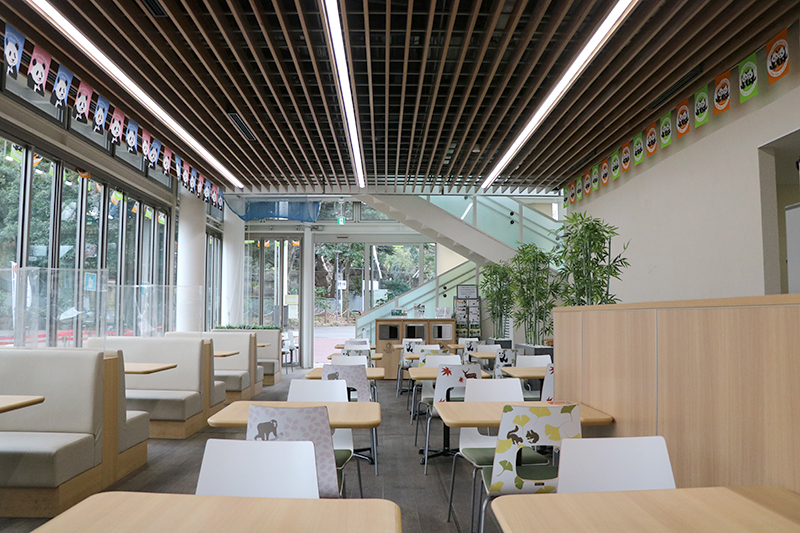 | 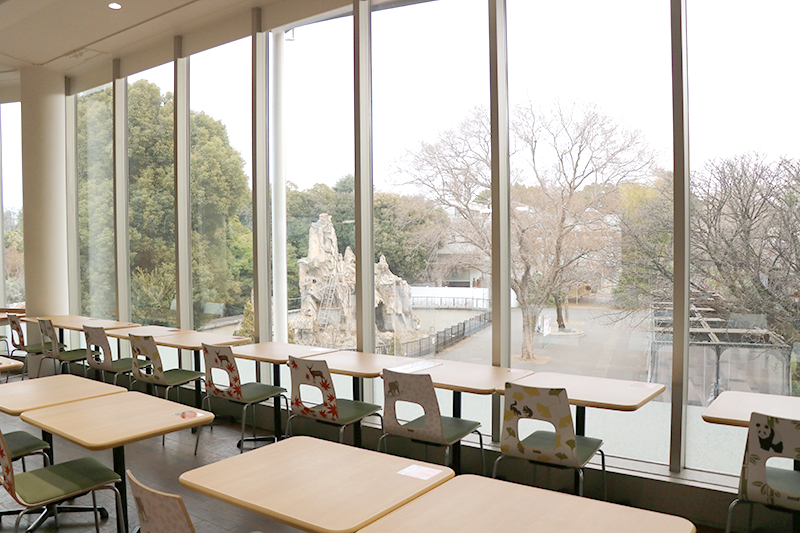 |
| Interior view of Saruyama Kitchen (1st floor) | Interior view of Saruyama Kitchen (2nd floor counter seating) |
New facility name: Saruyama Kitchen
In January 2019, we solicited suggestions from within our association to decide on a name for the new facility. We established a naming committee comprised of staff from each department within the facility, and after selecting five candidates from the many submissions from staff members, we ultimately decided on "Saruyama Kitchen."
The staff member who submitted the name explained, "It clearly indicates its location near the monkey mountain, a landmark of East Garden. It has a soft and friendly sound, and it embodies our desire for it to be a 'kitchen' where people can gather and create enjoyable times through 'food'." The deciding factors for choosing this name were: "It's easy for people of all ages to read, understand, and remember. Just by telling people the name, they can immediately imagine the location, making it easy to guide them. The hiragana spelling and sound of 'saruyama' (monkey mountain) are cute. The monkey mountain is an important facility in the park, including its historical significance. The monkey mountain is a symbolic presence in the area and stands out to all visitors."
Once the name of the new facility was decided, we commissioned the park's designer to create a logo that matched the name. The following are the words of the designer who created this logo.
"We aimed for a design that reflects the changing seasons of the park's exterior and a modern Japanese interior, creating a soft and calming atmosphere that harmonizes with them, while also conveying the charming sound of 'Saruyama Kitchen' and fostering a sense of affection. The colors of the circular frame represent the four seasons, and a monkey (Japanese Macaque) is placed inside the circle, creating a design reminiscent of a family crest. Because it is composed of simple lines, we believe it is a design that will not be intrusive no matter where it is placed."
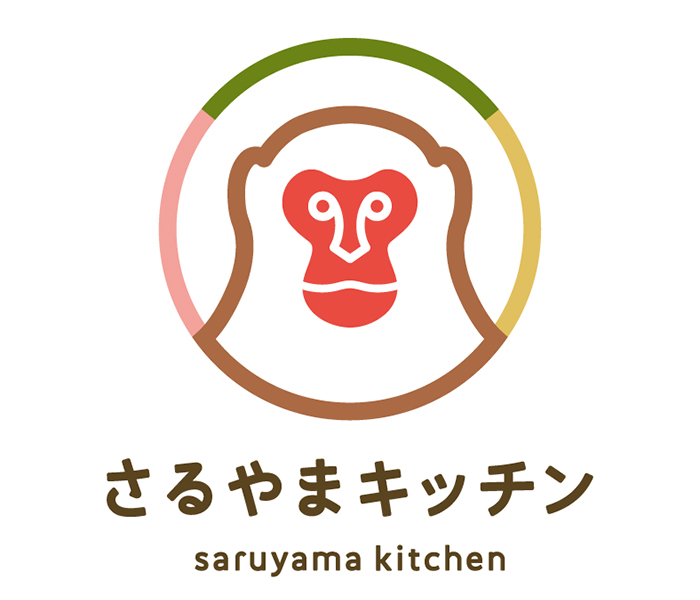
Saruyama Kitchen logo
Saruyama Kitchen Menu
When the restaurant first opened, in order to promote local Tokyo ingredients, they sold braised pork rice bowls using processed pork products from a brand of pork called "Tokyo X," which was developed at the Tokyo Metropolitan Livestock Experiment Station (this product is no longer available).
In addition, to accommodate visitors from overseas who require halal menus or those who are vegan, we have added a "Sweet and Spicy Soy Sauce Ground Soybean Rice Bowl" to our menu, which uses no animal-derived ingredients (mayonnaise and miso soup are also replaced with plant-based alternatives). For Japanese sweets, we sell "Saruman," which is a large pancake-like pastry stamped with the "Saruyama Kitchen" logo.
At Saruyama Kitchen, we will continue to innovate and strive to create menus that everyone can enjoy.
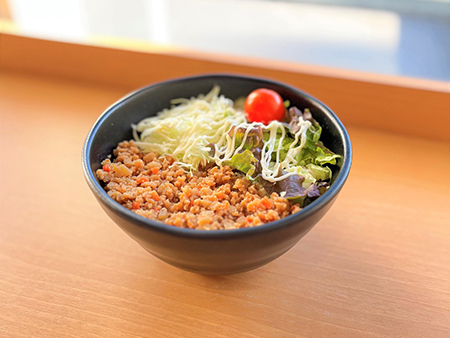 | 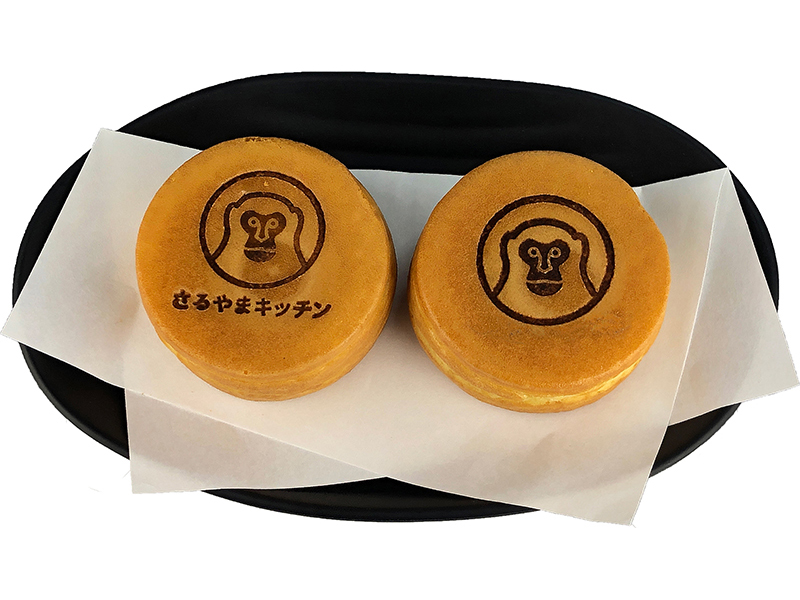 |
| Sweet and savory soy meat minced rice bowl | "Saruman" when it first opened |
Saruyama Kitchen Opening
"Saruyama Kitchen," which incorporated many innovative ideas, successfully opened for business on February 26, 2020. Unfortunately, however, due to the spread of the coronavirus, Ueno Zoo was forced to temporarily close just three days later, on February 29.
As the park closure period dragged on, ingredients for the park's food shops, including Saruyama Kitchen, began to reach their expiration dates. Therefore, we took steps to reduce food waste, such as selling the ingredients closest to their expiration dates to the staff.
Eventually, on June 23 of the same year, it was decided to reopen the zoo with entry restrictions using a numbered ticket system. As a measure to prevent the spread of COVID-19, mats to maintain social distancing, disinfectants, splash-proof films and partitions were installed, and visitors were finally able to be welcomed back while wearing masks. After that, the zoo closed and reopened several times, but has been operating continuously since reopening on March 23, 2022, without any further closures. Now, Ueno Zoo has regained the vibrancy it had before the pandemic.
We are pleased to announce that "East Garden Kitchen" has successfully reopened, and we hope that it will continue to be a beloved establishment for many years to come, just like its former location, "Higashizono Shokudo," and that it will live up to the name "Saruyama Kitchen."
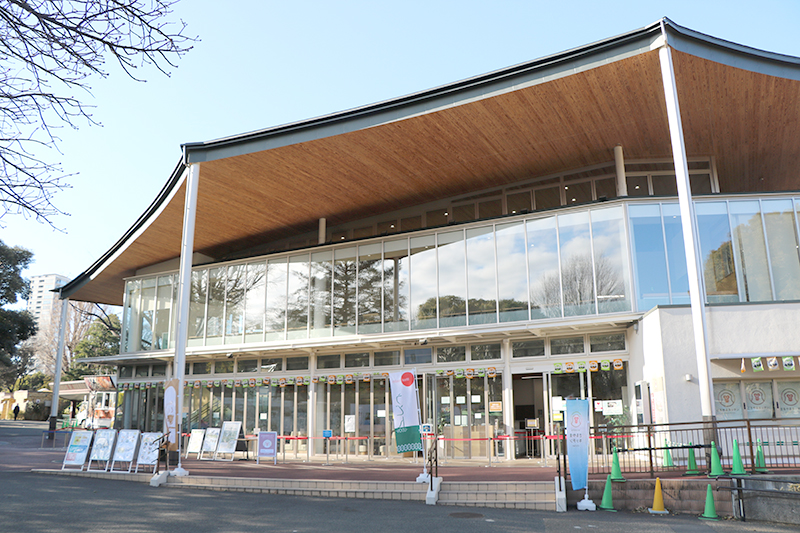
Exterior view of Saruyama Kitchen[Ichiro Hattori, Head of Business Operations Ueno Zoo]
◎140th Anniversary Project: ZooNet Series "Ueno Zoo: The Last 10 Years"
・
Conservation of rare wild animals native to Japan・
Taking a new step: "Children's Zoo STEP"・
Changes in Educational Outreach Programs・
Rebuilding of an animal hospital・
The entrance gate undergoes a transformation.・
Various initiatives based on the Tokyo Metropolitan Zoo Master Plan・
Measures against COVID-19・
Environmental initiatives at gift shops and food shops・
Ten Years of Animals in East Garden・
Special exhibit at Vivarium・
Relocation of the feed room
(January 15, 2023)