The work of animal keeper is varied, including feeding, cleaning, observing their assigned animals, and planning breeding programs. What do you think they're doing here?
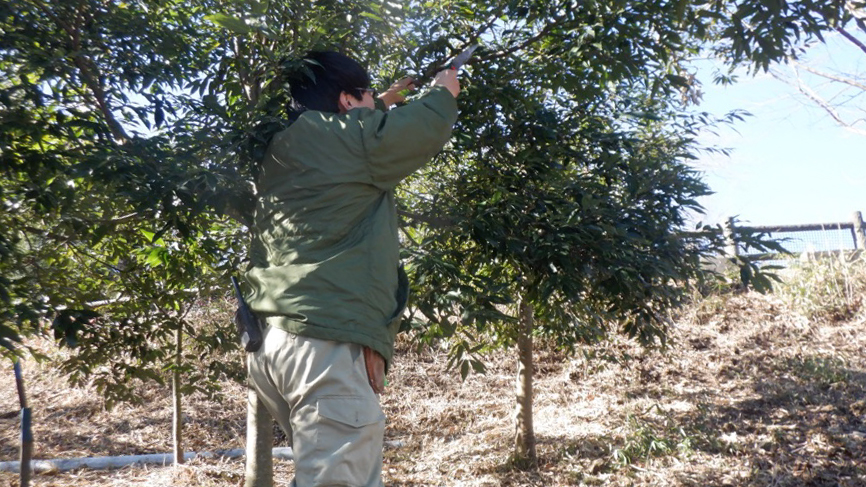
Scenes of animal keeper workThe correct answer is...
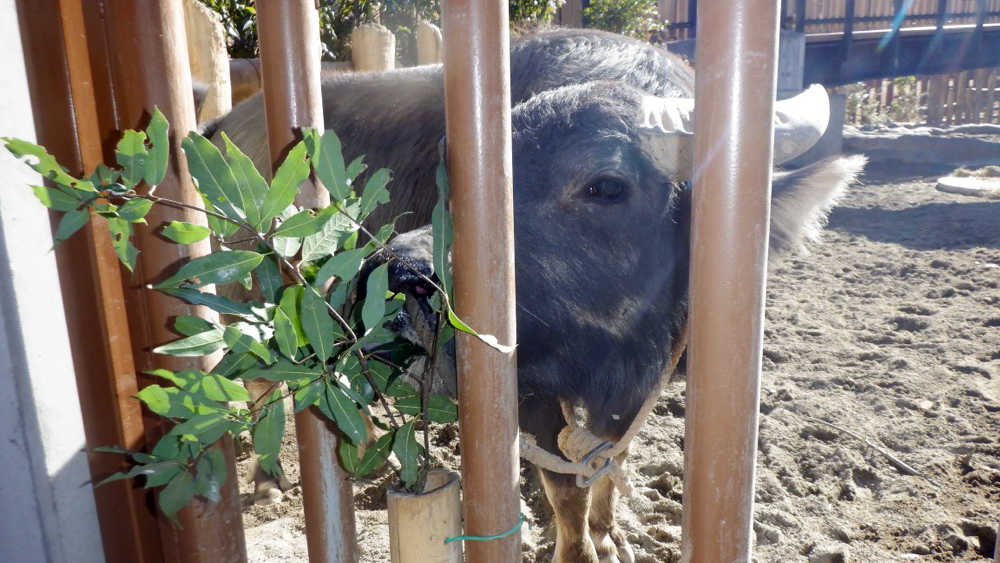
Water Buffalo (Kokichi) eating a Japanese evergreen oak.
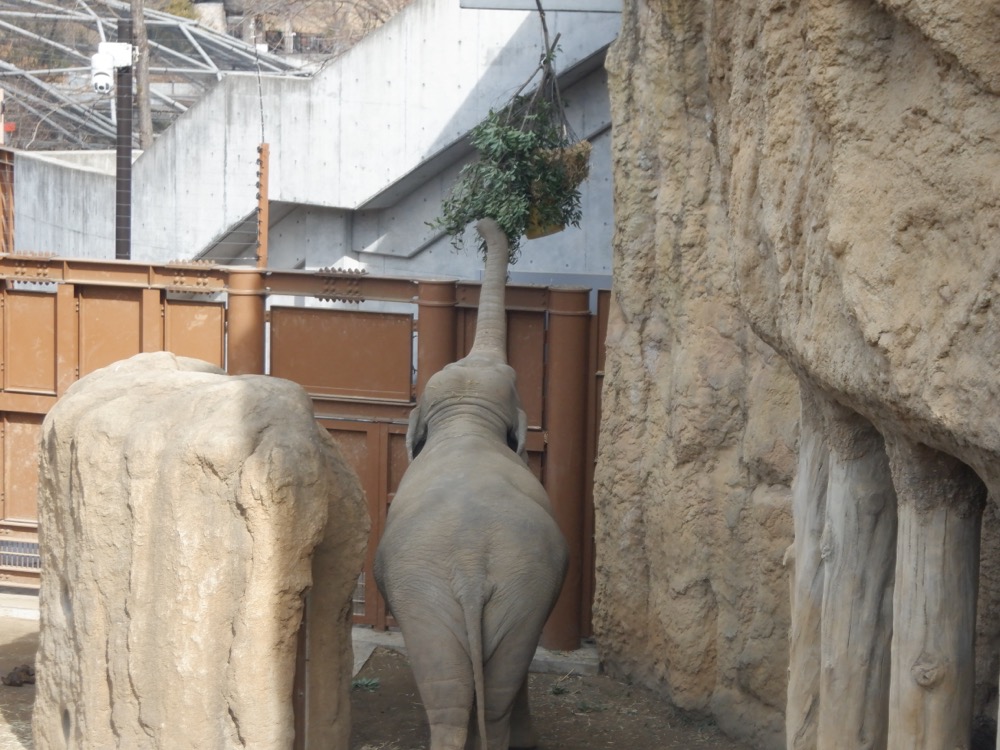
Asian Elephant (Amara) eating Japanese evergreen oak.The animals were gathering branches (with leaves) to eat!
This is a Japanese evergreen oak (Quercus myrsinaefolia), a tree belonging to the beech family. It is evergreen and grows relatively large, and its branches and leaves can be harvested throughout the year, providing a large supply. For this reason, it is used as food for herbivores in many zoos.
These branches and leaves are rich in fiber, which helps regulate digestion. Also, unlike pre-cut food, they take longer to eat. For example, Asian Elephant spend most of their day eating in the wild, so providing them with branches and leaves to extend their foraging time is one way to mimic their natural behavior.
While Japanese evergreen oak branches and leaves are usually purchased from suppliers, Tama Zoo utilizes its large open spaces to cultivate Japanese evergreen oak trees. animal keeper manage the trees themselves, selecting branches that are suitable for the animals they are responsible for. Asian Elephant, in particular, eat enormous amounts, so the amount purchased from suppliers is insufficient, and the Japanese evergreen oak trees grown at the park play a vital role.
In 2015, Tama Zoo began a plan to cultivate oak branches within the park grounds. As they are trees, it takes 4 to 5 years from planting until they can be used as food. The management is also very labor-intensive, involving mowing grass, thinning branches, and removing weeds and vines. However, by cultivating them themselves, they can save on feed costs and provide the animals with the desired amount of fresh food. Furthermore, even if supply chains are disrupted by disasters such as earthquakes or extreme weather, having feed grown within the park, combined with other food sources, can help them survive for a while.
As you can see, cultivating Japanese evergreen oaks (Quercus myrsinaefolia) within the park offers many advantages.
Actually, the oak grove I mentioned is visible from the park's walking paths. There are oak groves in various locations throughout the park, so try to find them when you visit!
[Tama Zoo]
(March 1, 2024)