Last June (2015), Masami, Red Kangaroo, was found covered in wounds and exhausted, apparently having fallen and thrashed around somewhere. We immediately took her to the hospital for treatment, but sadly, she died a few days later. At that time, there was a female baby in Masami's pouch whose fur hadn't fully grown in yet. That was Chao.
At this stage, babies spend a lot of time in their mother's pouch, but the day before Masami died, Chao stood still beside the listless Masami, with her head buried in the pouch for a long time. It seemed that no milk was coming out of the mother's breast inside the pouch. We decided to feed Chao milk by hand.
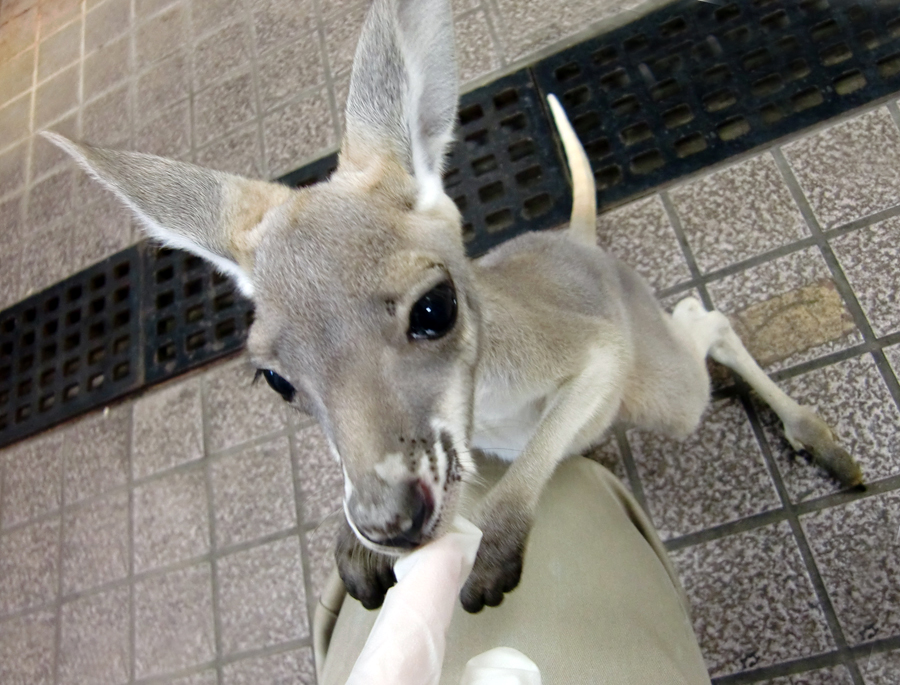 | | 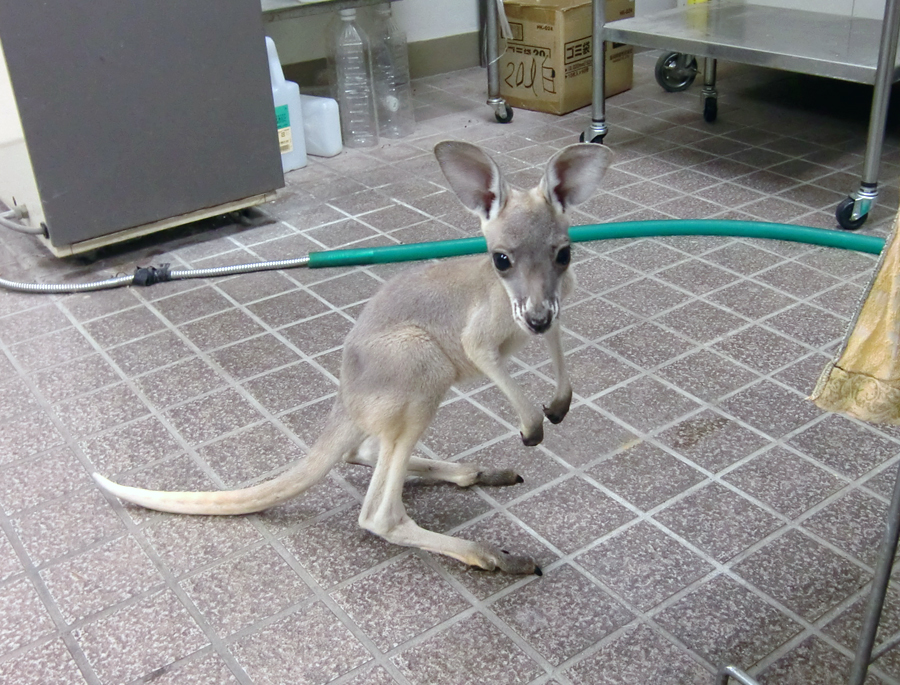 |
| Chao is getting used to drinking milk. | Exercising inside the hospital |
Chao wasn't used to humans, so even though he must have been hungry, getting him to drink milk was a real struggle. When we held his head down and forced the artificial nipple into his mouth, he would tremble in protest, but after about a week he got used to it and started drinking milk on his own. For the next few months, the staff took turns caring for him, and Chao grew up healthy and strong. He started eating solid food well, his fur grew in completely, and he was able to move into the kangaroo enclosure.
Shortly after moving in, the first challenge awaited me. I was using a cloth bag that I hung on the wall as a bed, but I tripped over the hook holding the bag and burned a hole in the sole of my foot. Regular injections and bandage changes began.
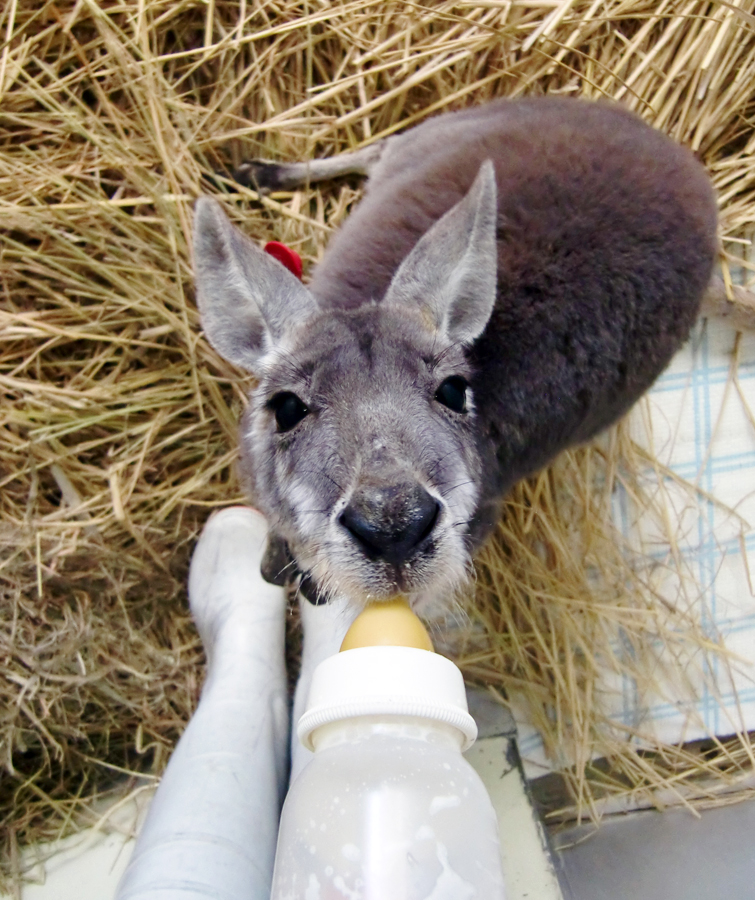 | | 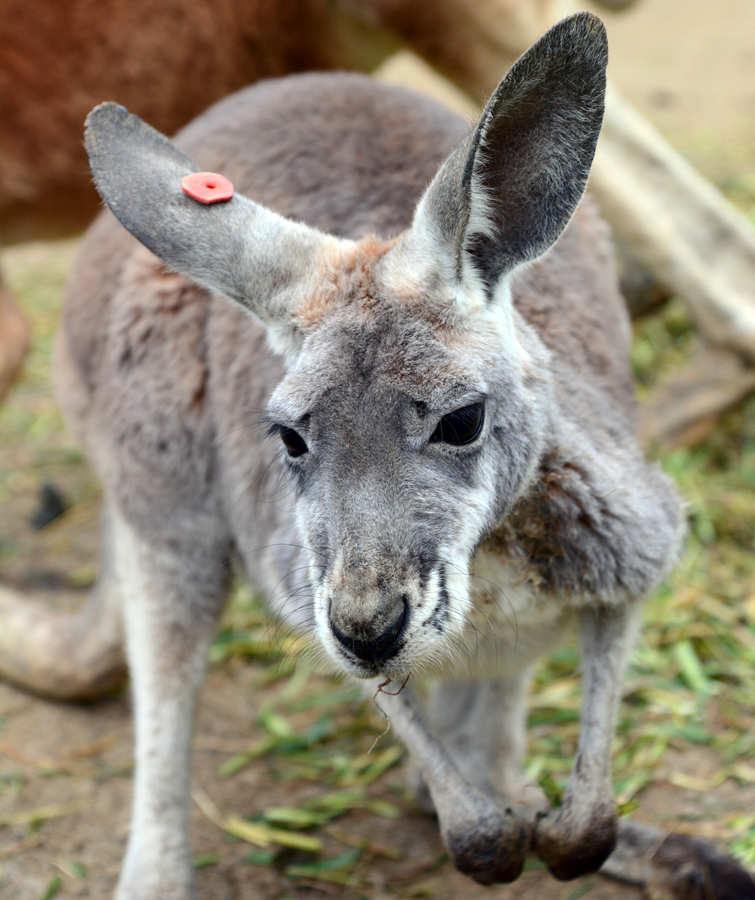 |
| Currently hospitalized with gingivitis | A recent photo of Chao. Look for the red tag on her right ear. |
Its leg healed completely, but now it was having trouble eating. It turned out it had gingivitis. Some kangaroos die if gingivitis doesn't heal. We immediately hospitalized it and started disinfecting its mouth and giving it injections. It gradually got better and was able to eat normally again, so it was discharged.
Peaceful days continued for a while, but one afternoon I received a call saying that a fingernail had come off in her room and her fingertip was bleeding profusely, so I rushed over. She didn't seem to mind at all and, despite the blood gushing out, was nonchalantly asking for milk. I quickly stopped the bleeding while she drank milk. The days of applying bandages and giving her antibiotic injections began again, but so far there have been no new injuries since that healed.
What we were grateful for was that when we showed Chao the bottle, he would run over to us on his own. We didn't have to go through the trouble of hunting him in the large kangaroo enclosure, and as long as he was drinking his favorite milk, he didn't seem to feel any stress from the potentially painful disinfection or injections. Chao is gradually growing up and has become quite "indifferent" to humans. It's a little sad, but we're happy that he's walking the right path as a kangaroo.
Many baby kangaroos have just started going in and out of their mothers' pouches in the kangaroo enclosure. They make unpredictable movements, suddenly running at top speed or abruptly changing direction. It's a cute sight, but it sends chills down our spines. We sincerely hope that they don't suffer the same fate as Chao and grow up safely. During the day, the kangaroos may seem to be lounging around with their bellies exposed, but each one has its own history, and animal keeper and veterinarians are working hard to protect their health. Please come and see and experience this Llama for yourself.
[Madoka Yoshizawa, former staff member at Tama Zoo Animal Hospital / currently staff member at Tokyo Sea Life Park Animal Care and Exhibition]
(April 22, 2016)