This year (2016), two Inca Tern were raised in Crested Ibis enclosure at Tama Zoo. Inca Tern, with their distinctive beaks that look like they've applied bright lipstick and their unique ornamental feathers that resemble well-groomed beards, are a species of gull found along the Pacific coast from Peru to Chile. They typically live in large flocks of several thousand individuals, building their nests in rock crevices and holes (occasionally using burrows previously occupied by shearwaters or Humboldt Penguin).
The 12 Inca Tern at Tama Zoo arrived from Ueno Zoo two years ago. They are popular for their adorable appearance and unique hunting behavior. When animal keeper appears with a bucket of food, Inca Tern hover above their heads and skillfully catch the fish thrown vertically into the air with their beaks. Visitors watching often erupt in applause.
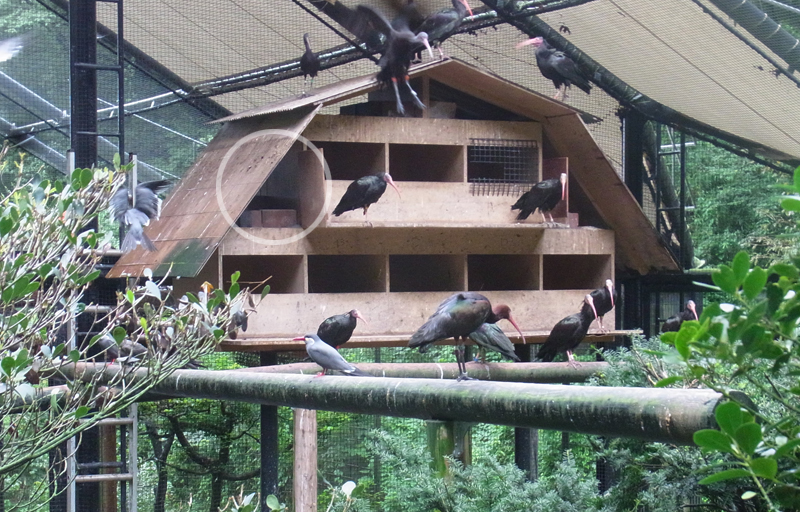 | |  |
The gaps in the nest box of Northern Bald Ibis
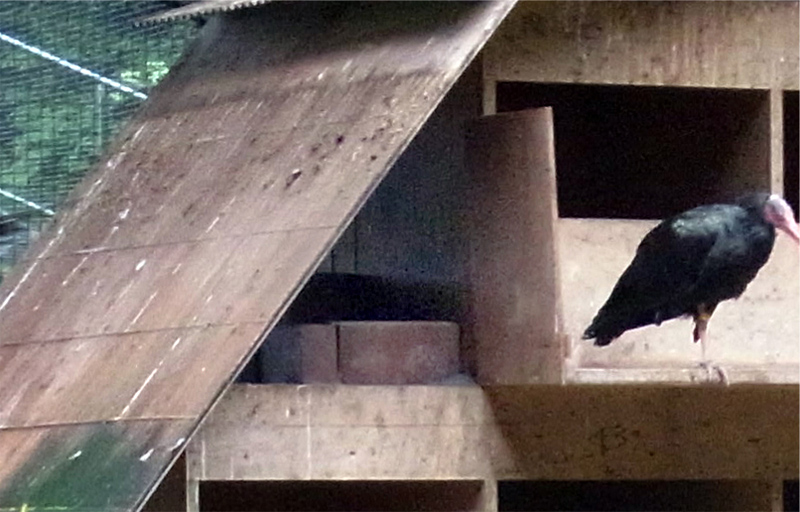
Room for Inca Tern (within the white circle) | Room for Inca Tern (enlarged) |
Now in their second year at the zoo, the Inca Terns have finally adapted to their environment, and we've witnessed their first breeding at Tama Zoo. This year, we created a brick frame in the gaps of the nest box used by Northern Bald Ibis, and filled it with a shallow layer of sand to create a room for Inca Tern. Since the Red-cheeked Northern Bald Ibis, which share the enclosure, are highly carnivorous, we installed a board to prevent them from entering and eating the eggs and chicks.
On June 4th, we finally spotted our first chick. It had been over 15 days since hatching, and although it had fallen from the nest platform to the ground twice, the chick was fortunately unharmed, and its parents were taking good care of it on the ground, so we decided to let it continue to grow there.
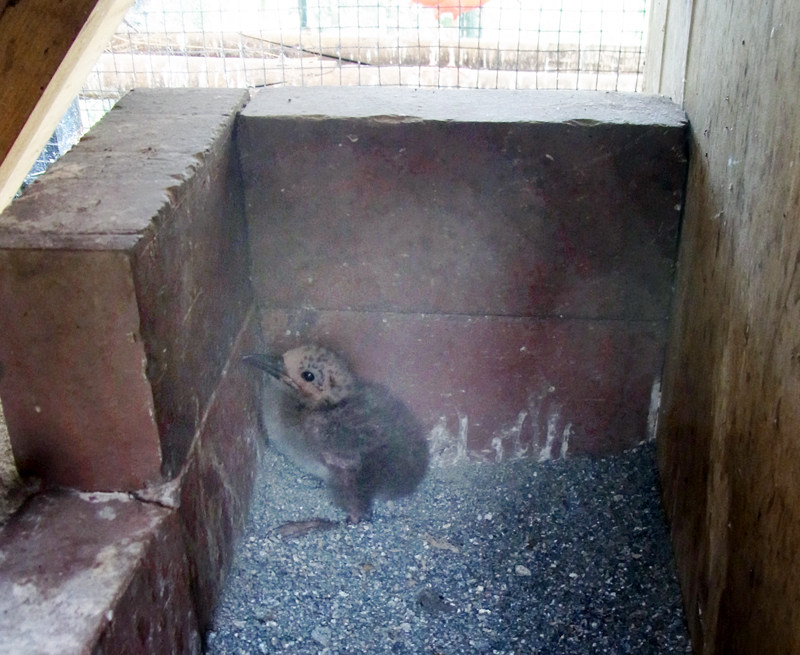 | | 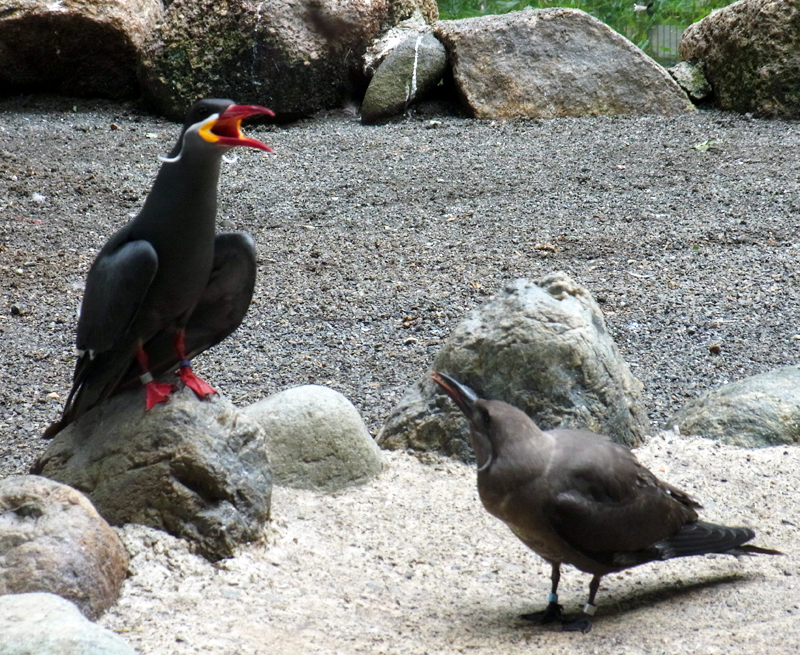 | |  |
| Inside the nest box | A chick begging for food | Even the chicks have magnificent ornamental feathers. |
The chicks fledge about a month after hatching, but the chicks raised on the ground were observed flying on the 52nd day, which was considered fledging. Even after fledging and becoming able to forage for food on their own, they would still beg for food when their parents approached (of course, after 81 days from hatching, the parents stopped feeding the chicks even when they begged).
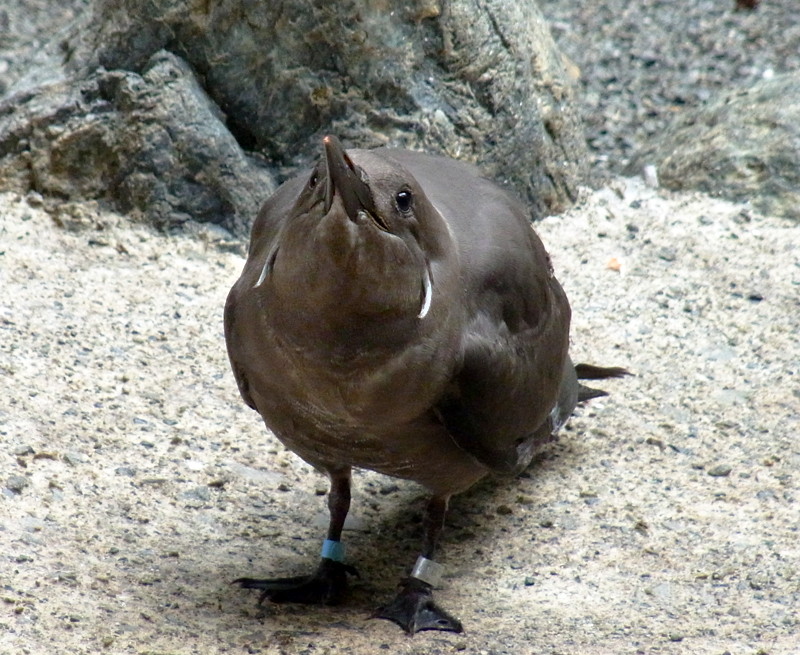
The chicks that hatched in a different nesting platform also fledged on September 5th. The chicks have black beaks and are covered in gray juvenile feathers, but they have grown impressive ornamental feathers that resemble whiskers.
Please come and see the adorable sight of the two birds—and the parent-child relationship where the chicks are easily refused when they beg for food—at Tama Zoo.
[Masataka Kawanabe, Wildlife Conservatio Center Tama Zoo]
(September 9, 2016)