On June 11, 2024, a black-faced Black-faced Spoonbill (sex unknown, estimated birth year 2023) arrived at Tama Zoo. This Black-faced Spoonbill was rescued in Fukuoka Prefecture in February of this year, but because its leg fracture did not heal and part of one leg had to be amputated and a prosthetic leg fitted, it could not be released into the wild and was brought to Tama Zoo. This report details the circumstances leading up to this individual's arrival at the park.
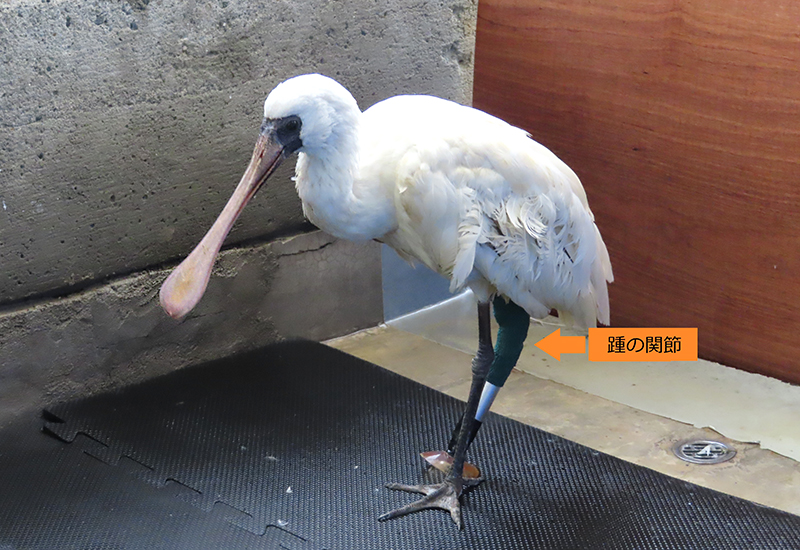
Protected individual wearing a prosthetic legBlack-faced Spoonbill is one of the endangered species, with approximately 6,000 individuals mainly inhabiting East Asia, including Japan, South Korea, China, Taiwan, Hong Kong, Vietnam, Thailand, and the Philippines. Some of them are known to migrate to western Japan, such as Kyushu and Okinawa, to spend the winter, and the species is designated as a nationally rare wild animal and plant species under the Act on Conservation of Endangered Species of Wild Fauna and Flora (commonly known as the "Species Conservation Act").
They hunt and eat small fish, crustaceans, and aquatic insects in shallow waters near the sea and river mouths, but their foraging method is unique. They put their beaks into the shallow water and shake their heads in a semicircle, seemingly using sensors at the tip of their beaks rather than their eyesight to locate food. As a result, they can encounter unexpected accidents, such as getting trash or fishing lines tangled in their beaks or legs, which can lead to weakness and death.
Unfortunately, the fracture in the bird that arrived at the zoo did not heal, so we had no choice but to amputate its leg below the heel joint (the part of the bird's leg that appears to bend in the opposite direction to a human knee) and fit it with a prosthetic leg specifically made for it.
However, since prosthetic limbs require regular maintenance, it is safer for them to be kept in captivity. Therefore, with the cooperation of the Ministry of the Environment, we have decided to accept them into our zoo, which has a large number of Black-faced Spoonbill Spoonbills.
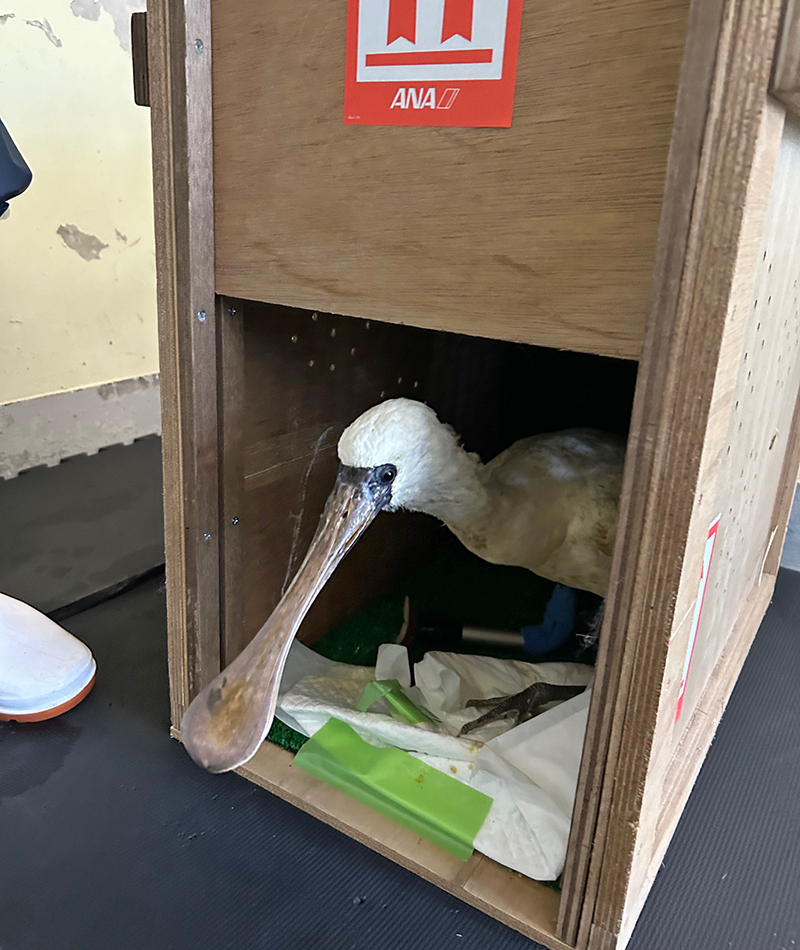
Arriving at Tama Zoo and being taken out of the transport crate.After arriving at Tama Zoo, and allowing the bird to acclimate to its environment in the animal hospital, it was finally time for it to meet other birds. There was a black-faced Black-faced Spoonbill chick being artificially incubated in the brooding house, and the rescued bird was kept in a cage next to it so that it could see the chick. At first, it was startled and kept its distance, but now it is gradually showing interest and seems to be approaching through the net to observe.
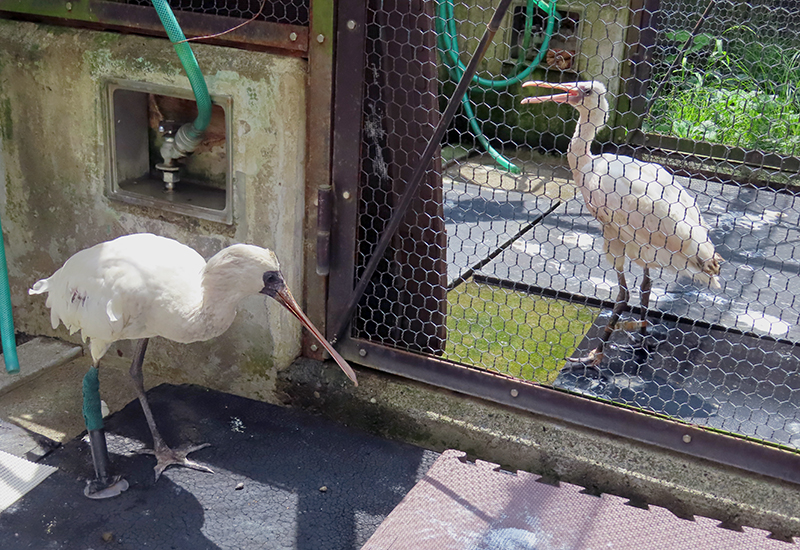
Protected individual (foreground) and artificially reared individual (background)We are considering raising them in groups in the future. They will spend the rest of their second life with their companions at Tama Zoo, and we will also consider breeding them with individuals in captivity.
In recent years, the number of Black-faced Spoonbill migrating to Japan has been increasing, and we've heard that accidents involving them in the wild are on the rise. We will continue to share various information about Black-faced Spoonbill from the zoo.
[Wildlife Conservatio Center Conservation Section, Ishii]
◎Related articles
・
New initiatives to promote wildlife conservation (May 19, 2023)
(September 11, 2024)