In September 2024, Tama Zoo and
Okinawa Children's Land exchanged one black-faced Black-faced Spoonbill each.
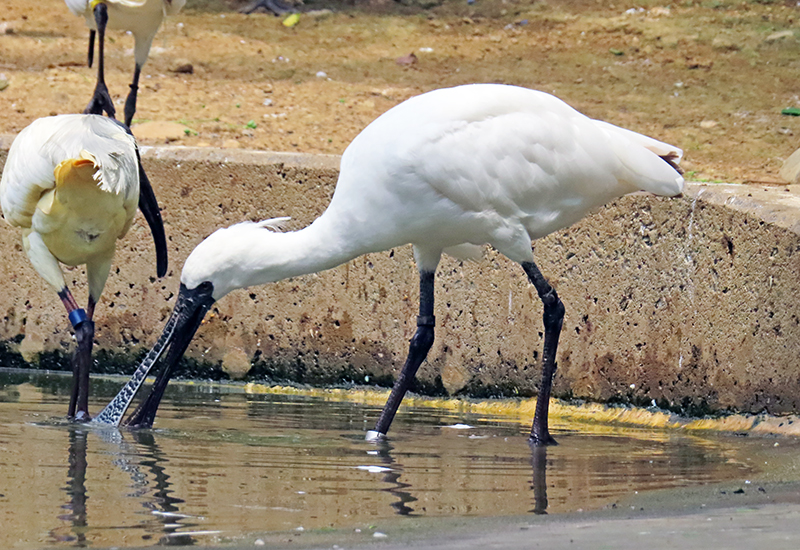
Individuals that have been moved to Okinawa Children's LandTama Zoo began keeping Black-faced Spoonbill in 1989, and in 1996, it became the first zoo in the world to successfully breed them. Since then, it has continued to breed them and currently houses 69 birds. The park has been working with facilities both domestically and internationally to carry out ex-situ conservation, such as moving the grown individuals to other facilities. However, because individuals of a limited bloodline are breeding in the captive space, concerns have arisen about inbreeding.
The individual that arrived at the zoo this time (sex unknown) was rescued in the wild, then
kept at a sanctuary, and finally at Okinawa Children's Land. Because it was born and raised in the wild, it is thought to be unrelated to any individuals previously kept in captivity. With the aim of breeding it with individuals kept at Tama Zoo and creating a new bloodline, it was brought to the zoo with the cooperation of Okinawa Children's Land. One male born at Tama Zoo has also been moved to Okinawa Children's Land.
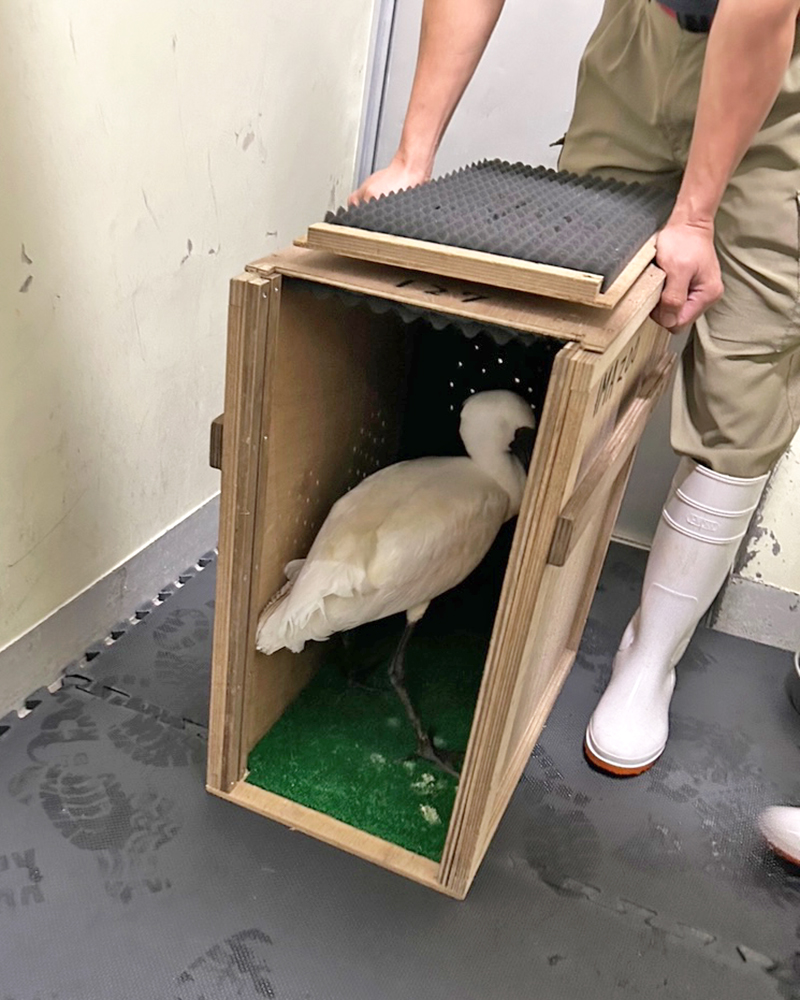
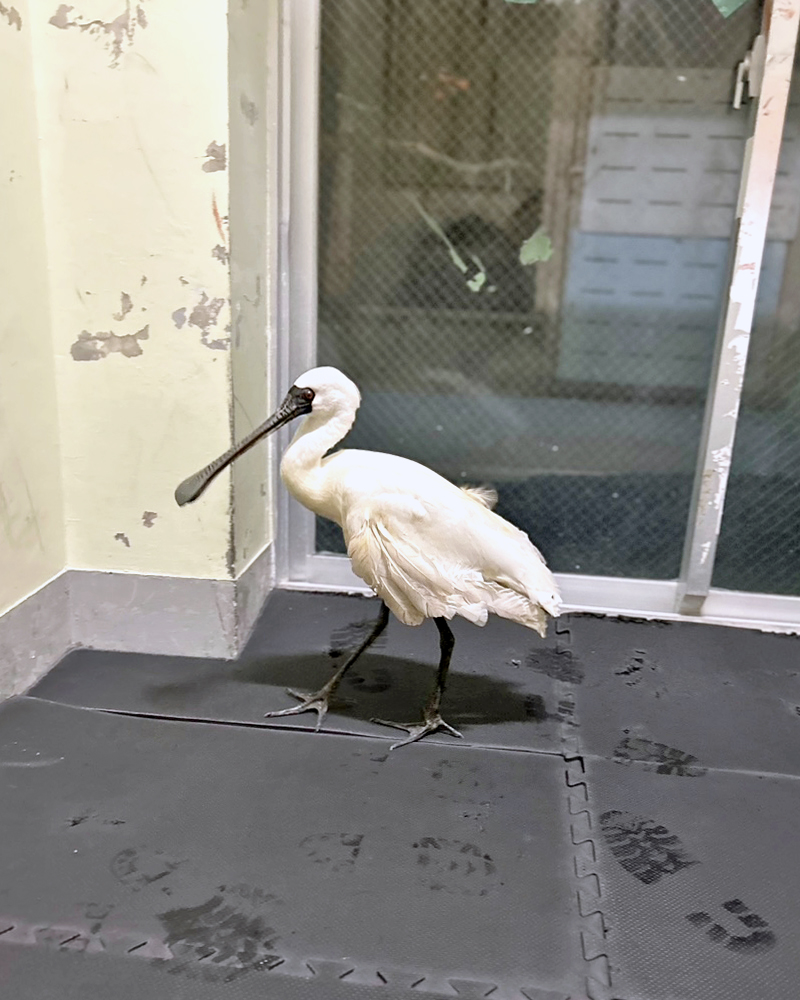
A Black-faced Black-faced Spoonbill shortly after arriving from OkinawaTama Zoo also took in Black-faced Spoonbill that was rescued from the wild in June 2024, and in addition to the individual that arrived this time, they are currently raising two other rescued individuals.
Sending Black-faced Spoonbill to Taipei: The Arrival and Breeding of the "Taipei" Zoo,
Black-faced Spoonbill rescued from the wild has arrived at the park. These individuals will form pairs in the breeding facility within the park after they have become accustomed to their environment, with the aim of breeding.
The number of Black-faced Spoonbill migrating to Japan is on the rise, and they are increasingly appearing in places where they have never been seen before, or unfortunately, being injured and rescued. These incidents are attracting more attention in the news. In the future, we will not only continue our efforts to breed and raise them in the park, but we will also continue to share information about Black-faced Spoonbill 's ecology and the latest habitat status.
[Wildlife Conservatio Center Conservation Section, Ishii]
◎Related articles
・
New initiatives to promote wildlife conservation (May 19, 2023)
(October 25, 2024)