The large greenhouse at Tama Zoo 's insectarium is a paradise where flowers bloom and butterflies flutter about all year round. Here, we ask that you refrain from touching the insects and instead observe them gently. The butterflies are not very afraid of people, so you can observe them up close. Observing them is fun in itself, but if you take pictures, you can enjoy even more details that are difficult to see with the naked eye. So, let us introduce some subjects that are unique to Insectarium.
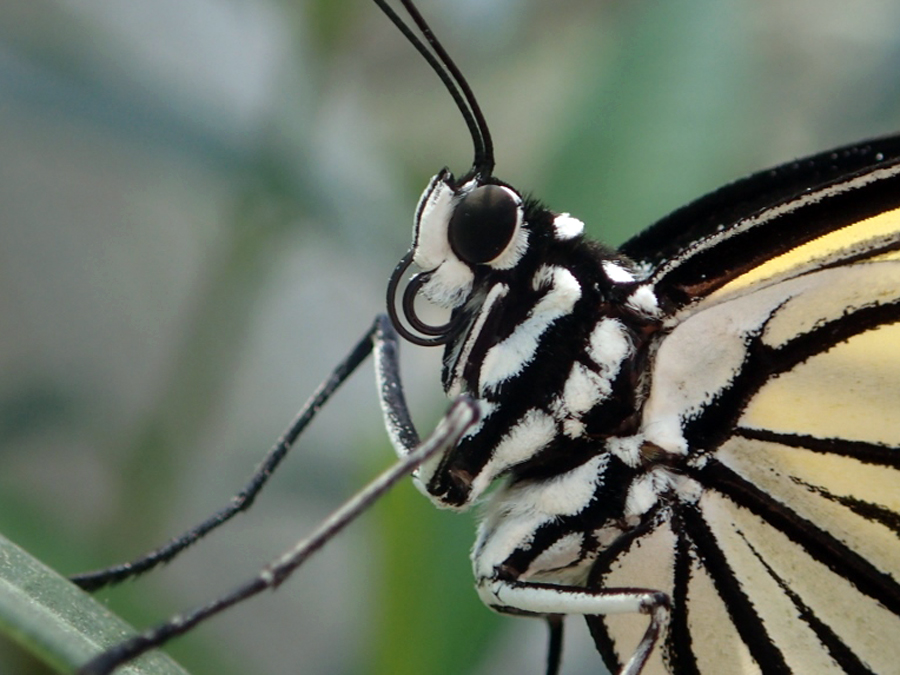 | | 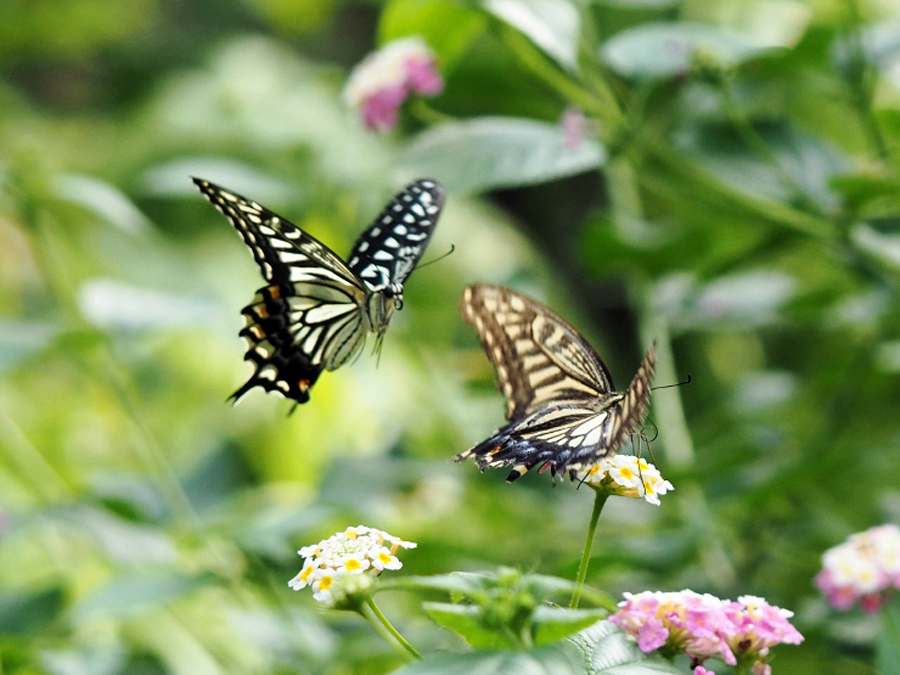 |
| Photo 1: Tree Nymph. Its forelegs are folded. | Photo 2: A swallowtail butterfly's proposal.
A courting male and an unresponsive female |
◎ Butterfly proboscisA nectar dish, which serves as food for butterflies, is placed near the pathway. The butterflies that gather here are particularly unafraid, making it an easy spot to observe them. Try photographing them as they extend and curl their straw-like proboscis to sip nectar. You can see the many hairs on their heads and the folded forelegs of the Great Tree Nymph (Photo 1).
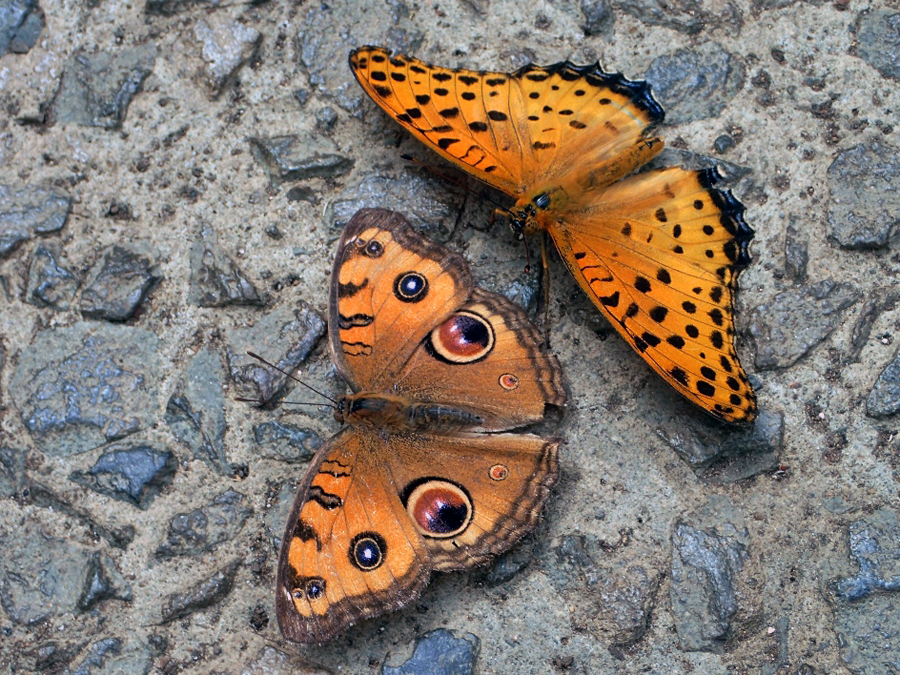 | | 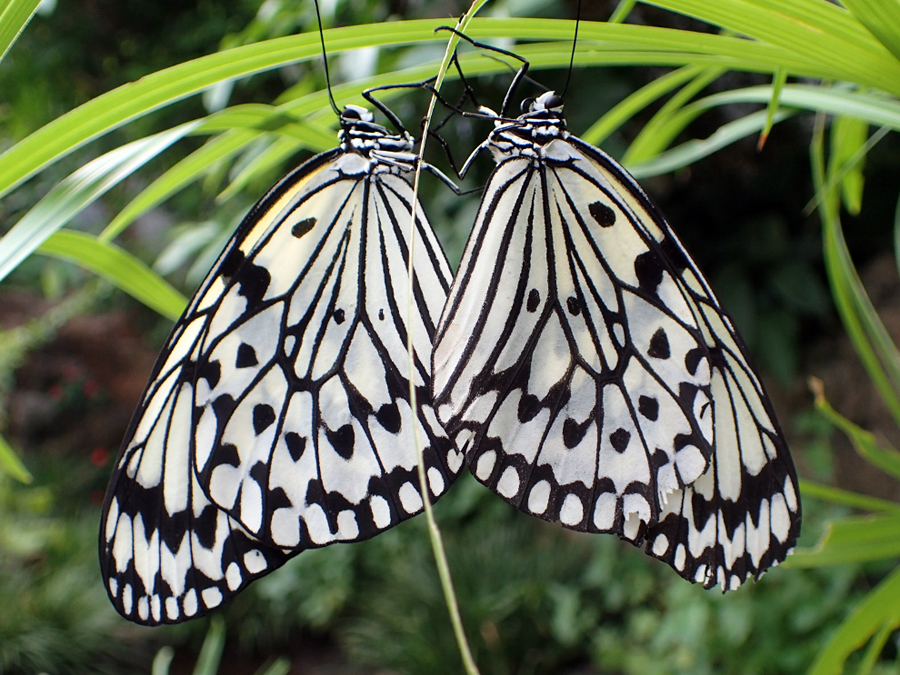 |
Photo 3: Interspecies courtship.
On the left is a false pygmy butterfly, and on the right is a black-tipped fritillary butterfly. | Photo 4: Mating Great Tree Nymph |
◎Butterfly breeding behaviorIn the large greenhouse, many male and female butterflies are released almost every day, so you can observe their breeding behavior. You can photograph a variety of breeding behaviors, such as a poor male trying to attract a female who is diligently sipping nectar from a flower but is completely ignored (Photo 2), a clumsy male proposing to a different species of butterfly (Photo 3), and two Great Tree Nymph happily forming a couple in the shade of the grass, assuming a mating position that resembles an upside-down heart (Photo 4).
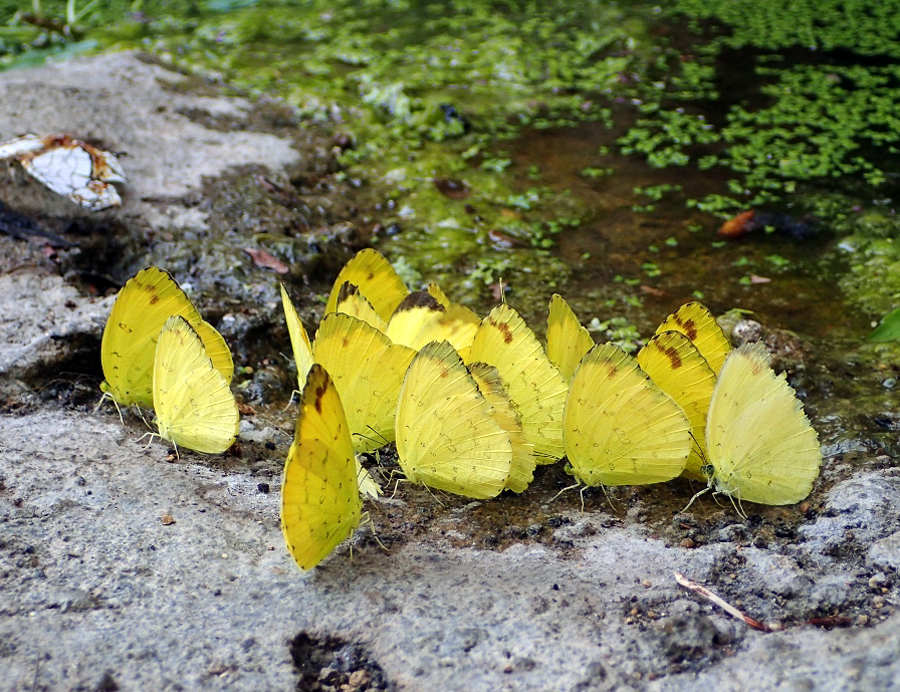 | | 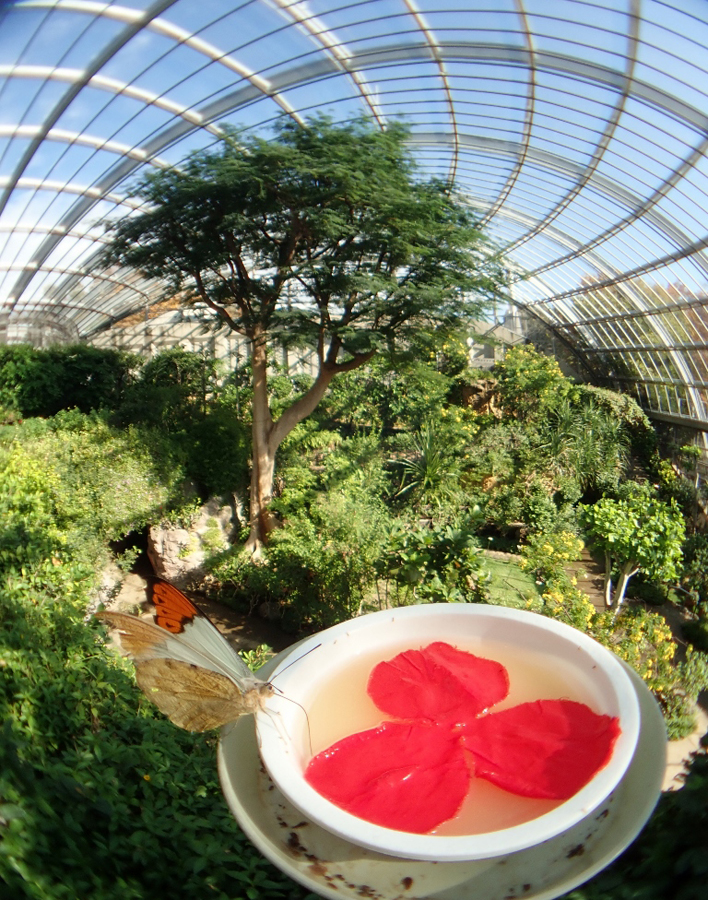 |
| Photo 5: Group watering of Taiwanese Yellow butterflies | Photo 6: The surrounding scenery is captured using a special lens. In the foreground is a Red-tipped Butterfly, and in the background are Royal Poinciana trees. |
◎ Group water supplyI once saw a photograph of a group of foreign butterflies drinking water and longed to see it with my own eyes someday. Now, in a large greenhouse, you can even photograph them drinking water in groups. Especially in winter, many Taiwanese yellow butterflies emerge and drink water in groups by the water's edge (Photo 5). When there are a large number of individuals, the sense of accomplishment when you photograph them is all the greater.
◎Include the surrounding sceneryAttaching a high-performance peephole to the front of a digital camera to capture the surrounding scenery is one technique for photographing insects. This is because it can convey the environment in which the insect was found. On a sunny day, I tried photographing a Red-tipped Butterfly visiting a nectar dish in the large greenhouse (Photo 6). In the background is the greenhouse's symbolic tree, the Royal Poinciana.
Unlike animals that require telephoto lenses for photography, butterflies can be photographed with a regular digital camera, making them ideal for beginners in wildlife photography. Utilizing macro mode will further enhance your experience. Spend a day in the greenhouse in search of that perfect moment. Remember to stay hydrated during the hot season. Also, please be considerate of the narrow pathways and avoid blocking them.
[Nami Katada, Insect Salt Rearing and Exhibition Staff, Tama Zoo]
(March 23, 2018)