Are you familiar with Red-headed Wood Pigeon? It may look plain at first glance, but it is a rare pigeon that inhabits only the Ogasawara Islands. It is currently endangered, and at one point its numbers had dwindled to about 40-100 individuals.
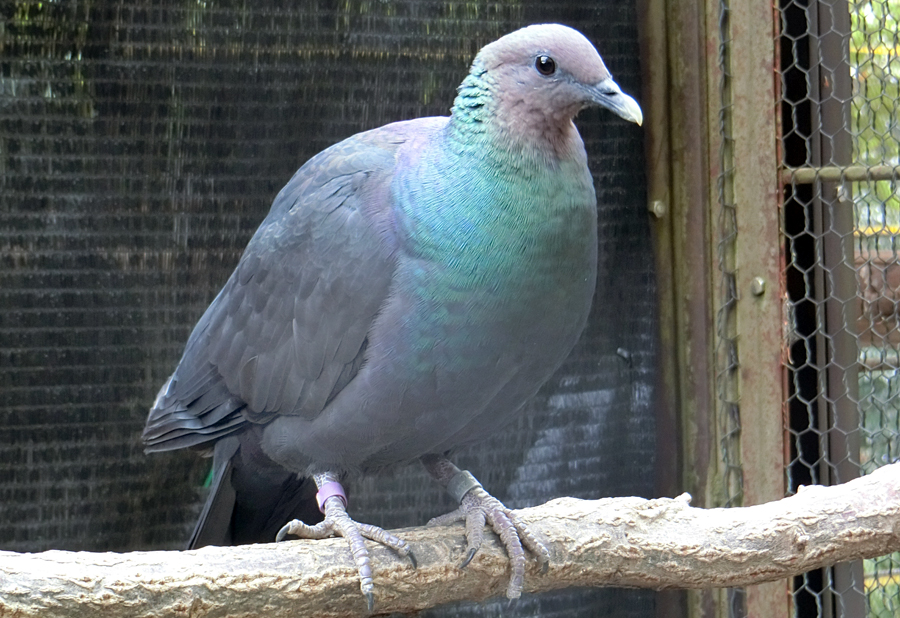
Red-headed Wood Pigeon PigeonTo protect Red-headed Wood Pigeon, Ueno Zoo captured two adult birds (male and female) and one chick (male) on Chichijima Island in the Ogasawara Islands in March 2001 and began raising them, successfully breeding them. Subsequently, Tama Zoo also began raising them in 2007.
Recently, a female Japanese wood pigeon arrived at Tama Zoo from Chichijima Island in the Ogasawara Islands. She was rescued after fracturing her right leg. Although she is of breeding age, she has not shown any breeding behavior even after her injury healed. We have tried pairing her with other Red-headed Wood Pigeon in cages where they can hear each other's calls, and also tried keeping multiple males and females together in one cage to help them form pairs, but perhaps due to her timid nature, she has had difficulty adjusting to her new environment and other birds, and has not been successful.
So, I tried a method that this individual had never experienced before. It was a female-prioritizing method that took the female's personality into consideration. I placed the female in a calm environment where she could not see or hear any other individuals, and then introduced one male at a time in rotation, letting the female choose.
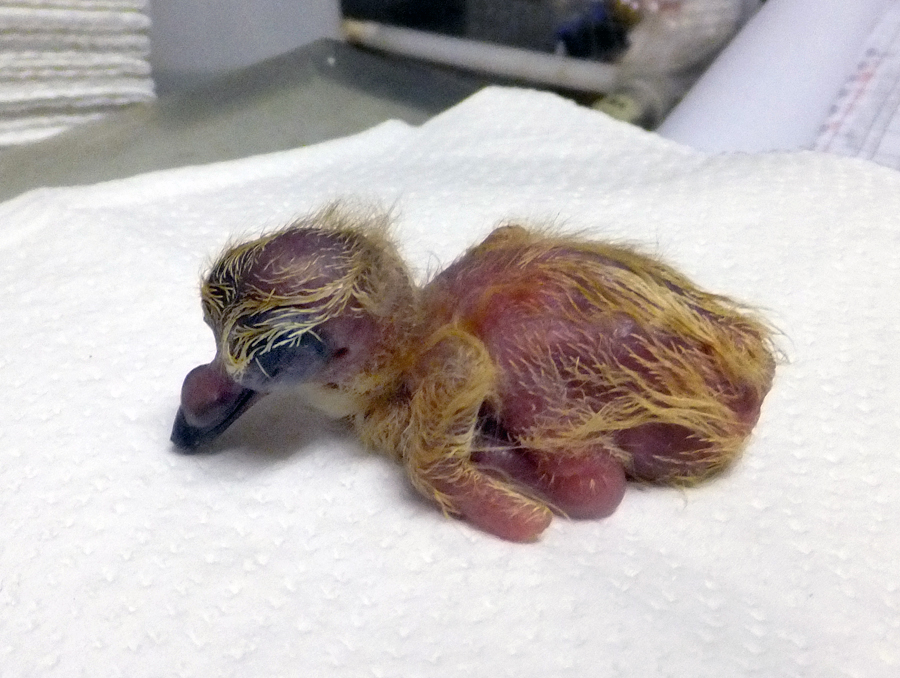 | | 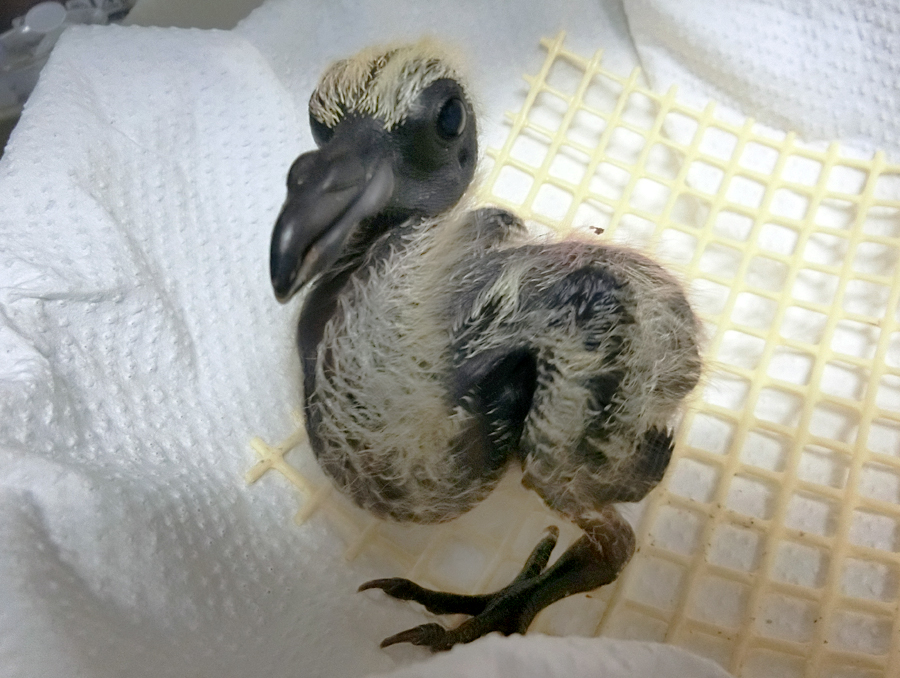 |
| Newly hatched chicks | 12-day-old chick |
I started breeding them in May of last year (2017), and with the third male, I was finally able to obtain a fertilized egg. After that, I confirmed that the female was incubating the egg, but unfortunately, the chick did not survive. After that, I couldn't get any more fertilized eggs for a while, but after six months, with the fifth male, she finally laid a second fertilized egg. However, the parents stopped incubating it midway, so I hatched it in an incubator, and it is currently being artificially raised.
The participation of rescued individuals in breeding is of great significance to both wild individuals and zoos. This is because, when the initial number of individuals in captivity is small, continued breeding results in limited genetic diversity and raises concerns about the effects of inbreeding. To improve this situation, it is necessary to introduce new bloodlines. In this regard, rescued individuals, who are difficult to return to the wild, play a crucial role. Furthermore, individuals that would have difficulty surviving in the wild can survive in captivity and have opportunities to breed.
Our next goal is to have this female raise her own chicks. We will continue working towards this goal so that we can share more good news with you in the future.
Related articles
"
Red-headed Wood Pigeon chicks have hatched. (Ueno Zoo, November 29, 2002)
"
Red-headed Wood Pigeon fledging (Ueno Zoo, January 10, 2003)
"
Red-headed Wood Pigeon is finally revealed. (Ueno Zoo, October 14, 2005)
"
I'm sharing Red-headed Wood Pigeon! (Tama Zoo, December 10, 2009)
"
New Red-headed Wood Pigeon arrives at the zoo. (Tama Zoo, April 12, 2013)
"
Artificial rearing of Red-headed Wood Pigeon chicks (Ueno Zoo, July 31, 2015)
"
Natural rearing of Red-headed Wood Pigeon (Tama Zoo, April 8, 2016)
[Yoshimi Ao, Wildlife Conservatio Center Tama Zoo]
(April 20, 2018)