On the morning of April 23rd, when I went to African Bush Elephant enclosure, I found traces of Tom sleeping on the sand dune in the outdoor enclosure. Tom is free to go in and out between his sleeping area and the small enclosure at night, but when he sleeps lying down, his body marks are clearly left on the sand dune.
During the cold winter months, Tomu would lie down on a sand dune indoors for 4-5 hours every night. The fact that he's now sleeping outside suggests that Tomu has sensed the arrival of warm spring weather.
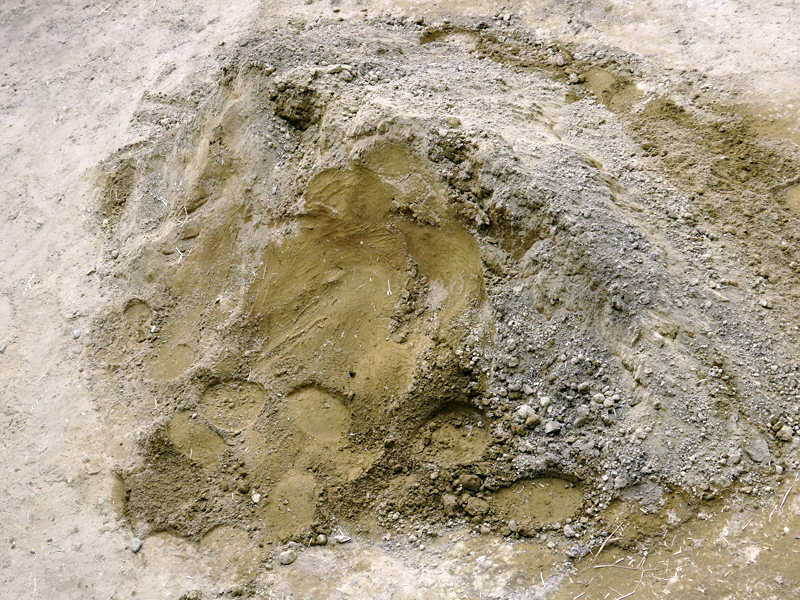 | | 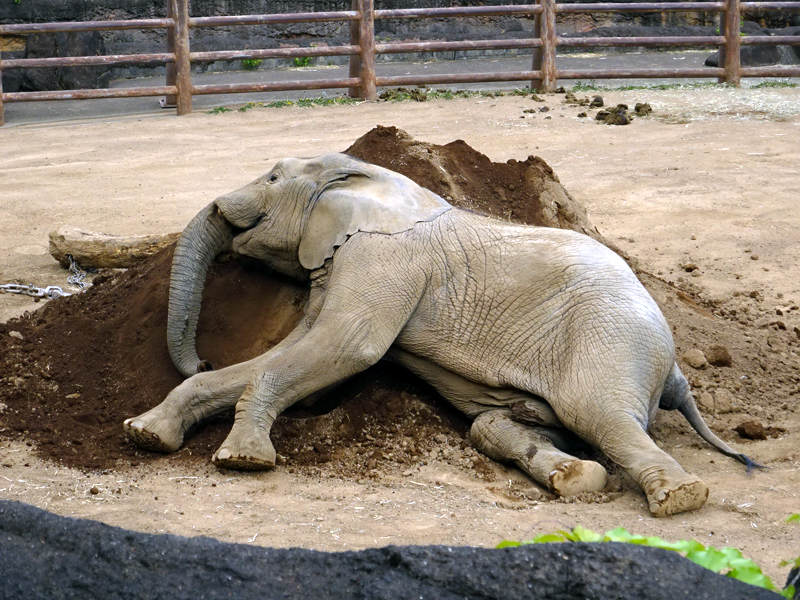 | | 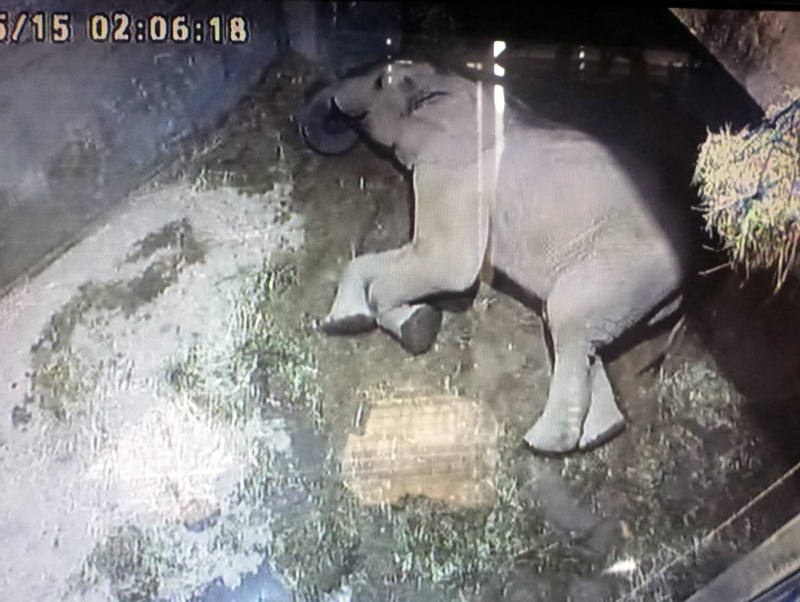 |
| Traces of someone sleeping in an outdoor sand dune | Tomu playing while lying down in the enclosure | Tomu sleeping on a sand dune in the bedroom |
Many people imagine elephants as animals that sleep standing up, right? Actually, elephants sometimes sleep standing up, with their trunks on the ground or leaning against a wall. We call this behavior "dozing." Imagine someone dozing off while standing on a train, and you'll get a sense of that.
Elephants can be seen sleeping in two ways: lying down and sleeping deeply, or lightly dozing. Tama Zoo keeps three African Bush Elephant, but only 10-year-old Tomu sleeps lying down; 43-year-old Chiki and 54-year-old Ako only doze off.
Why don't adult elephants lie down to sleep? Imagine their habitat. Animals living in the wild are constantly surrounded by danger. This is true even for large animals like African Bush Elephant, where deep sleep can be a matter of life and death. Adult elephants only doze off when they sleep so that they can react quickly to danger and protect the herd and their offspring. Thanks to this, baby elephants can lie down safely. It is said that they don't even lie down when they are feeling unwell. Understanding the difference in sleep between children and adults reveals insights into the relationships within African Bush Elephant herd.
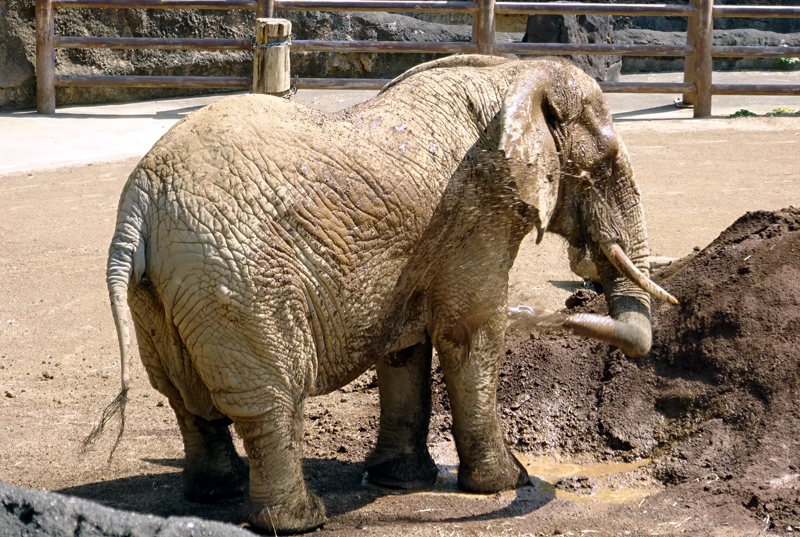
Chiki playing in the mudYou can observe them dozing off while basking in the sun not only at night but also during sunny days. Furthermore, as the seasons have changed and temperatures have risen, you can now see them bathing in water and mud, behaviors that weren't possible during the cold winter months. These actions are thought to cool their bodies and protect their skin from insects and the sun. Their powerful and impressive bathing in water and mud truly showcases the majesty of African Bush Elephant. Please take the time to observe them closely when you visit Tama Zoo. Incidentally, the sand used in the sand dunes at African Bush Elephant enclosure was purchased with funds donated by our zoo supporters. Thank you for your support.
[Yuta Yamamoto Tama Zoo, Tama Zoological Park]
(May 24, 2019)