According to Hiroki Izawa's book "Studies on Wild Japanese Macaque" (Dobutsu-sha), the social structure of wild Japanese Macaque is matriarchal, with females generally spending their entire lives in the group they were born into, while males invariably leave their natal group. Therefore, we will consider the male social structure of Japanese Macaque by comparing it with the case of zoo monkeys, which live in social structures different from their natural wild state.
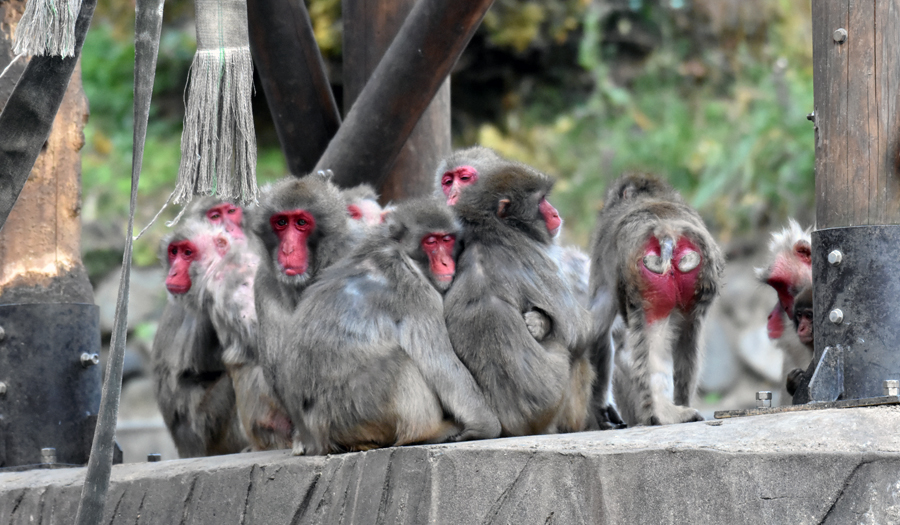
In November 2018, a group formed around a male "Seta Shijimi" butterfly, along with unrelated females."Seta Shijimi," a male monkey that died on June 13, 2019, had been the dominant male in the monkey enclosure at Tama Zoo for seven years since the death of the previous dominant male in 2012. During the mating season in 2018 (September to December), as many as 10 females could be seen following him around. Observations suggested that the 11-year-old male, excited by the mating season, approached the females in heat to try and attract their attention, sometimes biting them severely, and that the females relied on Seta Shijimi to escape these attacks.
In January 2019, Tama Zoo Wildlife Conservatio Center conducted DNA analysis (DNA microsatellite analysis) using blood to determine the paternity of Japanese Macaque. The results showed that of the eight offspring born to mothers in the monkey enclosure at Tama Zoo in 2018, none were determined to be fathered by the Seta Shijimi. Therefore, it was concluded that the relationship between the Seta Shijimi and the unrelated females surrounding him was not sexual, intended for mating or reproduction.
According to Mr. Izawa's book mentioned above, field research on Kinkasan Island in Miyagi Prefecture has revealed that male Japanese Macaque spend their first two years with their mothers and other females, then around the age of three they establish close relationships with other males of similar age within the group. Around the age of four or five, they begin to distance themselves from the group as part of a young male group, and then either become "hanareos" (a term coined by Mr. Izawa, referring to males who live alone away from the group), or belong to a male group that maintains a balance between being close to and distant from the group. Some individuals eventually rejoin the group. Only a small number of individuals are able to join a group other than the one they were born in, but "the average age for this is probably between 10 and 12 or 13 years old on Kinkasan Island." The 11-year-old male mentioned above falls precisely into this age range.
However, the book states that "we still only know fragments of what kind of Llama unfolds in the isolated environment of Kinkasan Island when male butterflies are in their prime, full of physical and mental strength and rich in experience, between the ages of 15 and 20." The example of the Seta Blue butterfly, which was 17 years old in 2018, can be considered a valuable example for shedding light on the lives of male butterflies in their prime after their reproductive role is complete.
References: Izawa, Hiroki (2009) *Studies on Wild Japanese Macaque *, Dobutsu-sha, pp. 273-275.
[Tama Zoo Care and Exhibition Department, South Garden, Tama Zoological Park]
(October 6, 2019)