Are you familiar with the phrase "Eating is living"? While this phrase can be interpreted in various ways, I believe its underlying meaning is that obtaining necessary nutrients through "food" is an essential activity for living beings.
Preparing food and observing feeding habits are just some of the important tasks of animal keeper when it comes to managing food and nutrition. This time, we'll introduce the nutritional management that animal keeper at Tama Zoo are working on together with Chimpanzee.
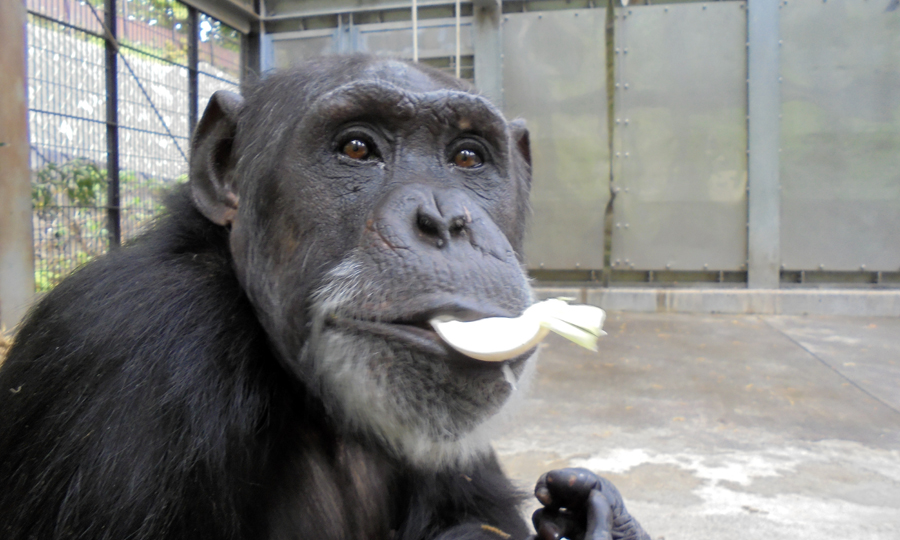
Kei is eating a turnip. Even vegetables he doesn't like will sometimes be eaten if you hand them to him.When considering nutritional management, the first thing you need to know is their diet, that is, their habits in terms of the types of food they eat and how they eat it. So, what is the natural diet of Chimpanzee? Chimpanzee are omnivores that eat a wide variety of foods. Wild Chimpanzee mainly eat fruits, young leaves, and young shoots, but they also eat insects, small animals, and eggs.
It would be great if zoos could replicate the animals' natural diets, but this is impossible. This is because, even though they are all fruits, wild fruits and cultivated fruits grown in fields and distributed for human consumption have vastly different nutritional components.
In the past, it was considered important to replicate the diet of chimpanzees in the wild in zoos, and the prevailing management method was to feed Chimpanzee that eat fruit fruit with fruit. However, nowadays, it is considered more important to create zoo diets that closely resemble the nutritional content of wild chimpanzees, rather than focusing on the content of the food itself. Many zoos overseas are adopting the practice of selecting vegetables, which have nutritional components closer to wild fruits than fruits, as Chimpanzee food, and Tama Zoo is also implementing this approach.
Reducing the feeding of fruit and mainly giving vegetables can have many benefits. For example, they may spend more time foraging, making their lifestyle closer to that of the wild, their physique may become stronger, and their immunity may improve. There have also been reports of behavioral changes, such as Chimpanzee becoming more active.
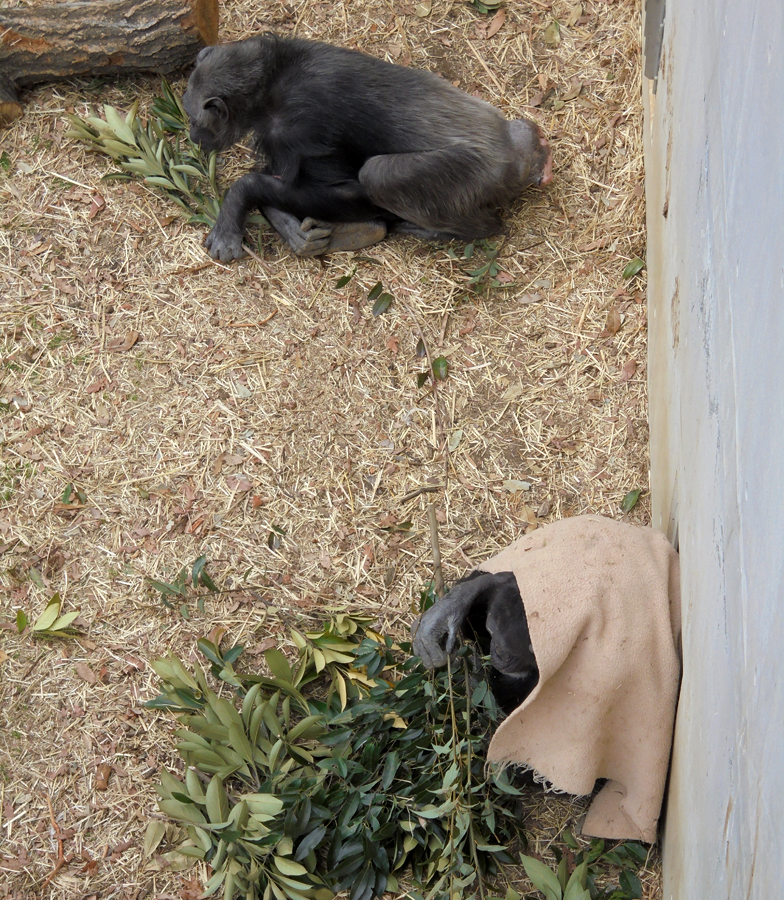 | | 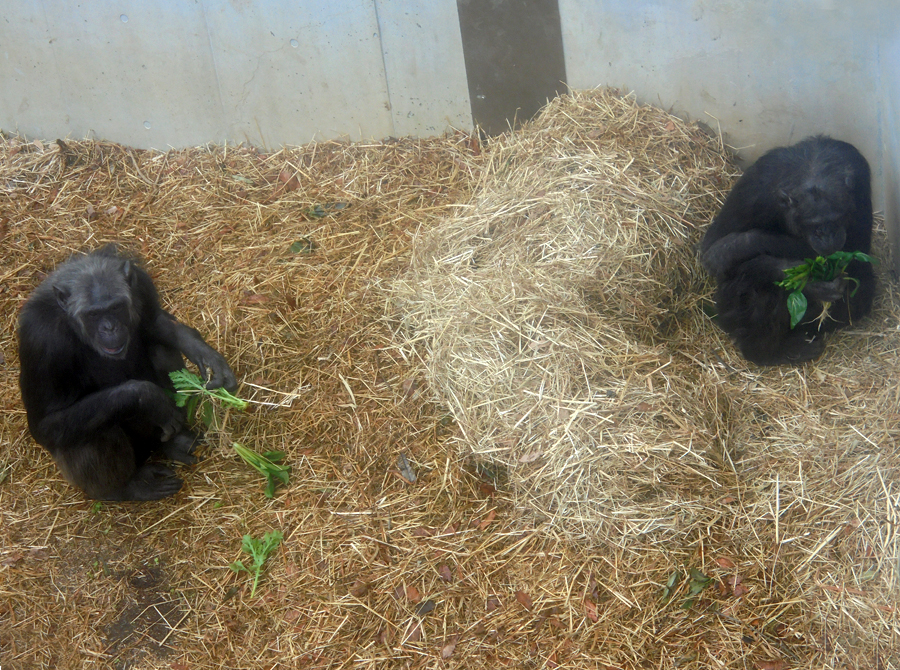 |
| In addition to substituting fruits with vegetables, I try to give them as many different kinds of branches and leaves as possible. | Do vegetables taste better when eaten outdoors? Leafy greens that aren't very popular when given indoors are often eaten well when given outside. |
While there are many benefits to nutritional management, it's pointless to prepare a diet that closely resembles the nutritional content of wild Chimpanzee if they don't eat it properly. We rack our brains every day, coming up with ways to ensure that Chimpanzee eat all of their food without leaving any behind.
[Kaori Ito, Animal Care and Exhibition Staff, North Tama Zoo]
(February 7, 2020)