Here's a question for you. Look at the picture. There are animal "traces" in the sand. What kind of animal is it?
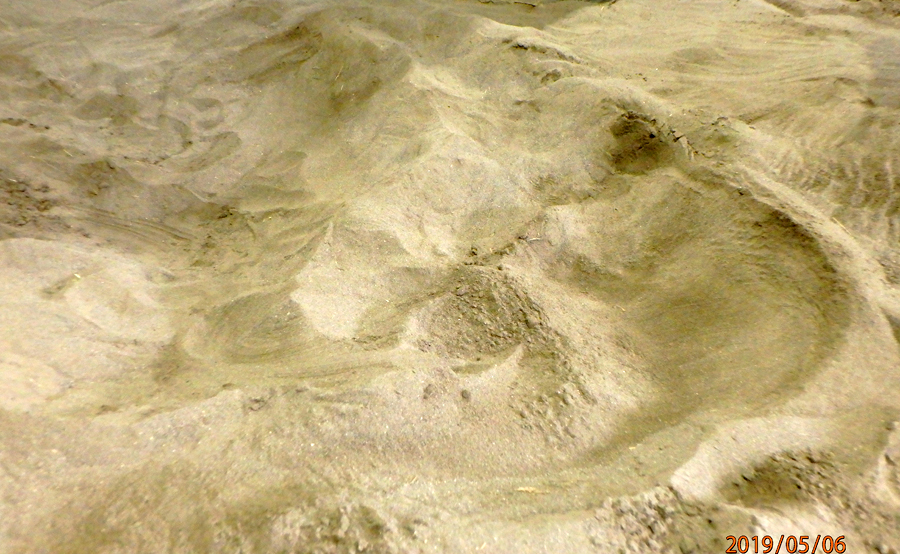
There are indented marks on the sandy ground.Here's a hint for those who are unsure: I've traced the outline of the trace with a red line.
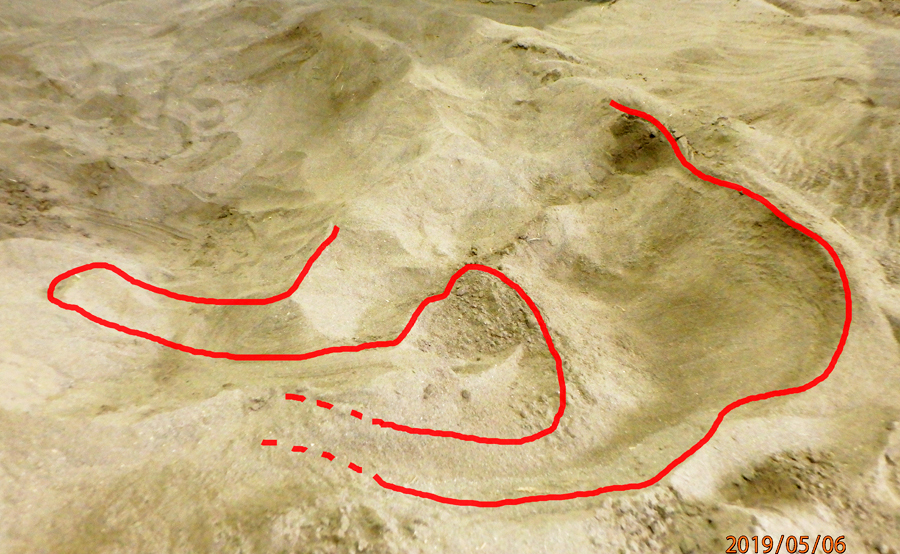
Hint: Follow the traces...What do you think? The correct answer is Asian Elephant.
Tama Zoo is home to three Asian Elephant. One of them, Anura (male, estimated 67 years old), the oldest in Japan, has already moved into the new Asian Elephant enclosure, which is currently under construction, and is spending time in a large indoor enclosure covered with sand (see article "
Anura's current situation in the new Asian Elephant enclosure").
The photo above shows the traces left by Anura sleeping on her left side at night in the new Asian Elephant enclosure. The red lines indicate Anura's head, trunk, and forelimbs.
Wild adult elephants rest for 4-5 hours a day, but they don't lie down to sleep. They only doze off while standing, leaning against trees or other objects. Captive elephants, on the other hand, sleep lying down at night, even as adults. Once they lie down and fall asleep, they stay in that position for several tens of minutes to 2 hours before waking up.
When it wakes up and gets up, it eats or dozes while standing. After a while, it lies down and sleeps again. When it lies down again after waking up, it alternates between lying on its right and left sides to avoid uneven pressure on its organs due to its weight. When it dozes while standing, it rests with its long nose hanging down on the ground or resting it on the fence.
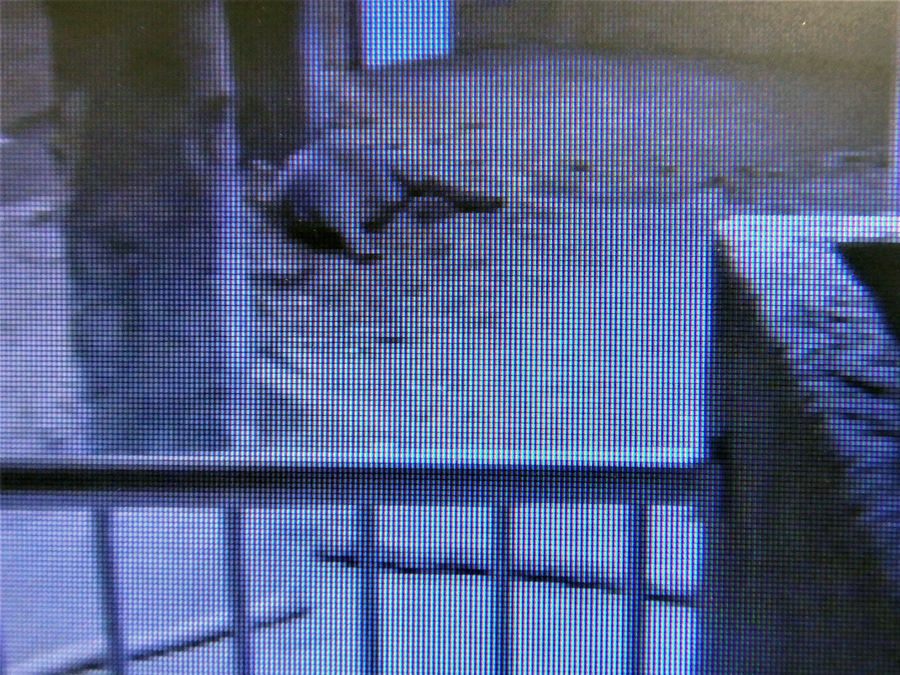
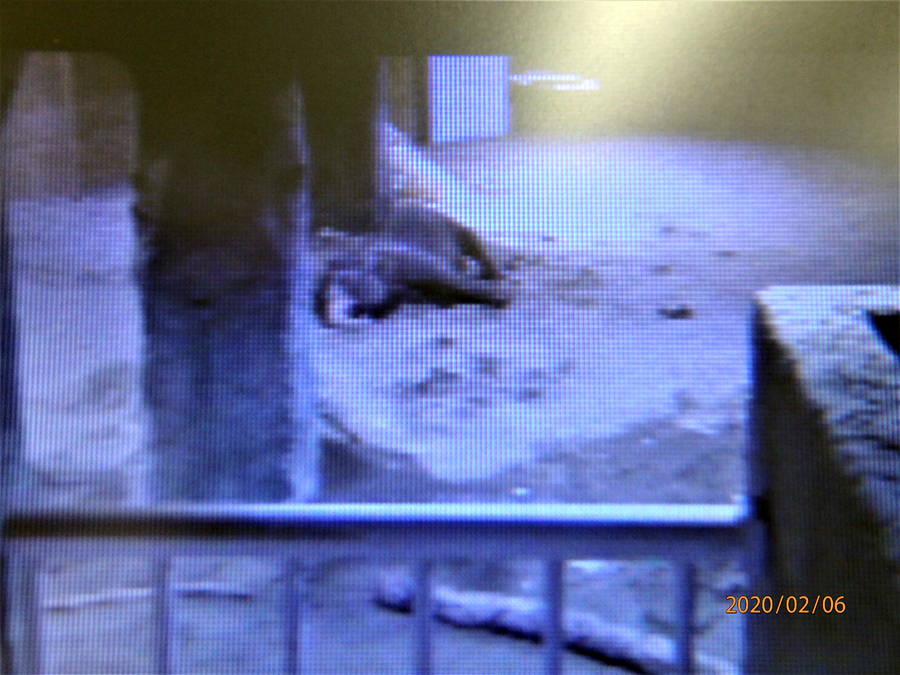
Anura sleeping on her side at night. Left: With her left side down. Right: With her right side down.The nighttime habits of elephants kept in zoos vary, of course, depending on the individual and their environment. In Anura's case, it took about two weeks after moving to the new Asian Elephant enclosure in 2017 before she started lying down to sleep at night. Initially, she would only lie down for a few minutes. Since then, the amount of time she spends lying down has gradually increased, and now she sleeps for a total of 2 to 5 hours a day, balancing her sleeping position on both sides.
Since Anura is elderly, it is important to carefully observe her digestion, water intake, and daily behavior, but we keep a close eye on animal keeper sleep patterns at night.
We will continue to provide updates on Anura's condition while carefully observing her daily and providing thorough care during training.
◎Related articles
·[movie]
Anura moves into new home early・
Anura's current status at the new Asian Elephant enclosure・
Asian Elephant elephant's appetite in autumn
[Tama Zoo Tama Zoological Park]
(February 28, 2020)