Tokyo Metropolitan Zoos (Tama Zoo, Ueno Zoo, and Inokashira Park Zoo) are working on a conservation and breeding program for Red-headed Wood Pigeon an endangered species (subspecies) endemic to the Ogasawara Islands. At Tama Zoo, they successfully achieved natural breeding of 3 birds from 2 pairs between summer and autumn of last year (2019), and 8 birds from 2 more pairs from autumn onwards, bringing the total number of birds in captivity to 30. This time, we will talk about the two pairs that bred in the autumn.
・
Click here for news about natural breeding from last year (2019) (October 11, 2019)
Room 5-6 pair
The pair is being kept in "Room 5-6," which consists of two connected rooms. The male was rescued in 2019, and the female in 2014. The female has already successfully bred naturally with another male and has ample experience raising offspring. They were placed together in July of last year (2019), but the male had a fracture when he was rescued and was unable to fly, so he was walking on the ground. Therefore, the nest box was placed directly on the ground, and a ramp was added to allow him to enter and exit.
The male seemed interested in the female, and gradually he was able to climb the trees to the perch where she was, and eventually they mated. Room 6, where the nest box is located, is screened off so that it cannot be seen from the work area at the back, but if you peek through even a small gap, they immediately notice and become wary. I felt that both birds were very wary, probably because they are wild-caught individuals that have been rescued.
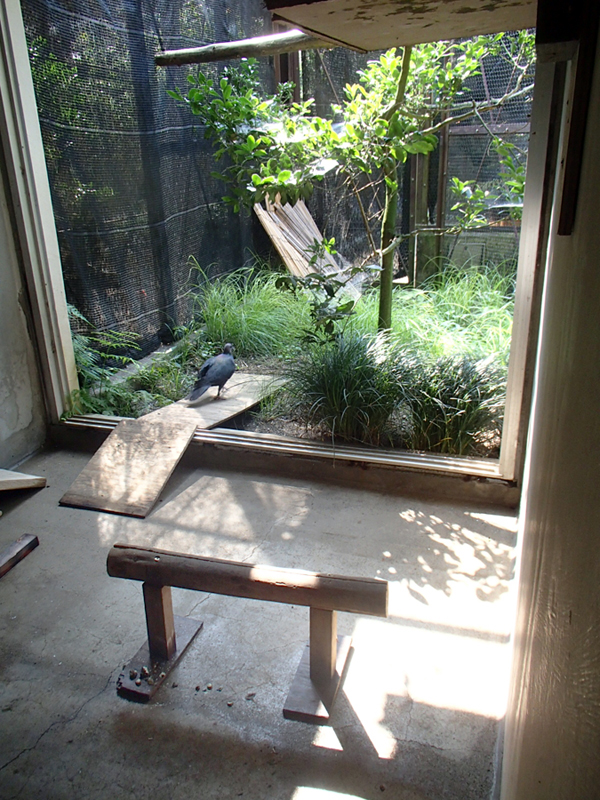 | | 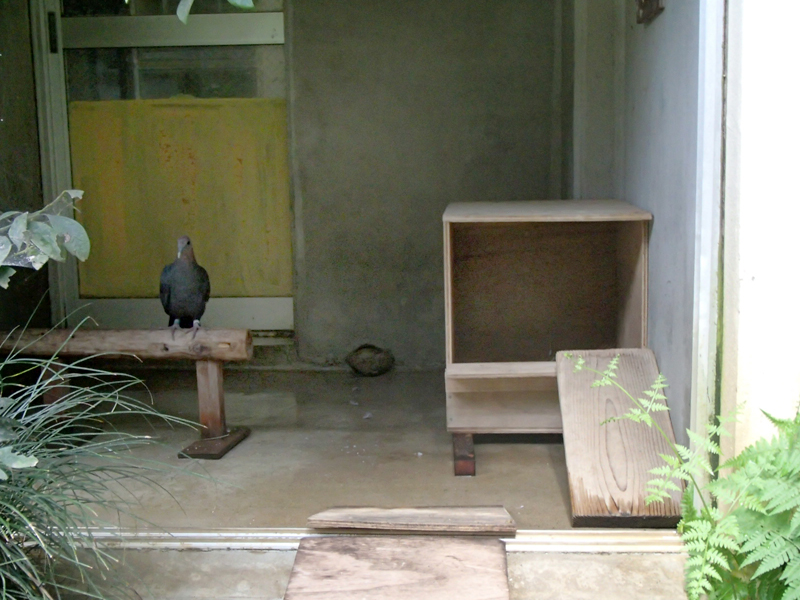 | | 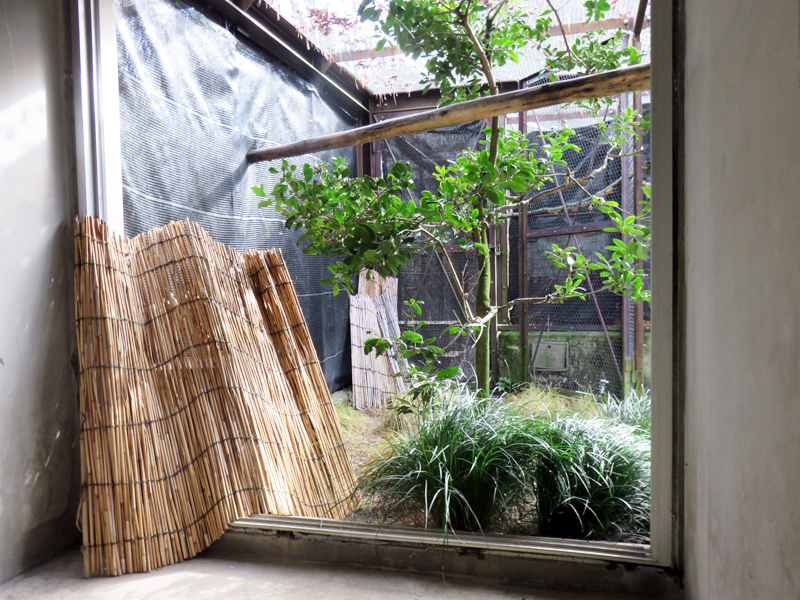 |
| Rooms 5-6 | Location of the first nest box | The nest box was surrounded by reed screens. |
On October 18th, they initially laid their eggs not in a nest box, but on the ground surrounded by grass. The male and female took turns incubating the eggs, and the chicks hatched on November 7th. They grew well and fledged on December 7th, at 30 days old. However, the nest in the grass was a concern during heavy rain. So, we surrounded the nest box with reed screens, and the chicks brought in nesting material and successfully began breeding. As a result, five chicks were born. Now the male can even fly directly from the ground and reach perches.
Pair in Room B
In Room B, a male bird raised by animal keeper was placed among a group of females. He paired with a female who had grown up without human intervention and had experience raising her own young. Although a nest box was provided, the male laid his eggs in a simple nest enclosed with reed screens.
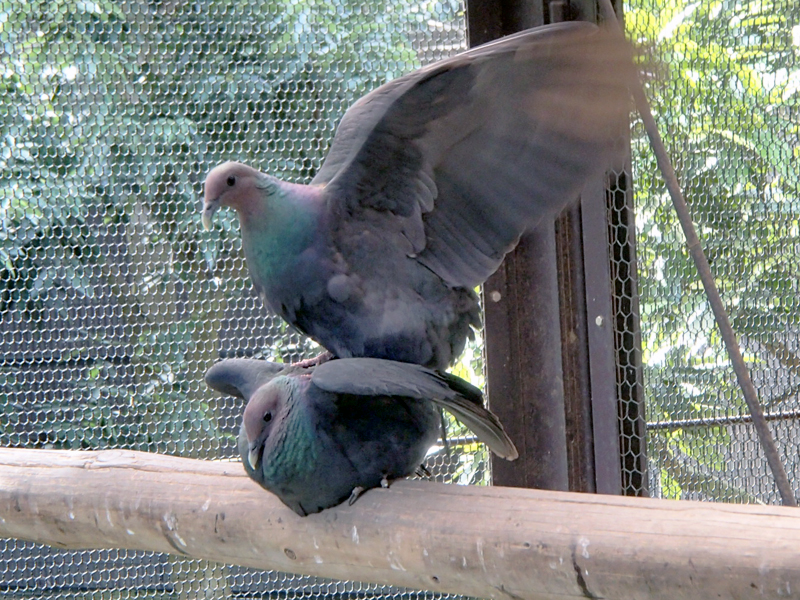 | | 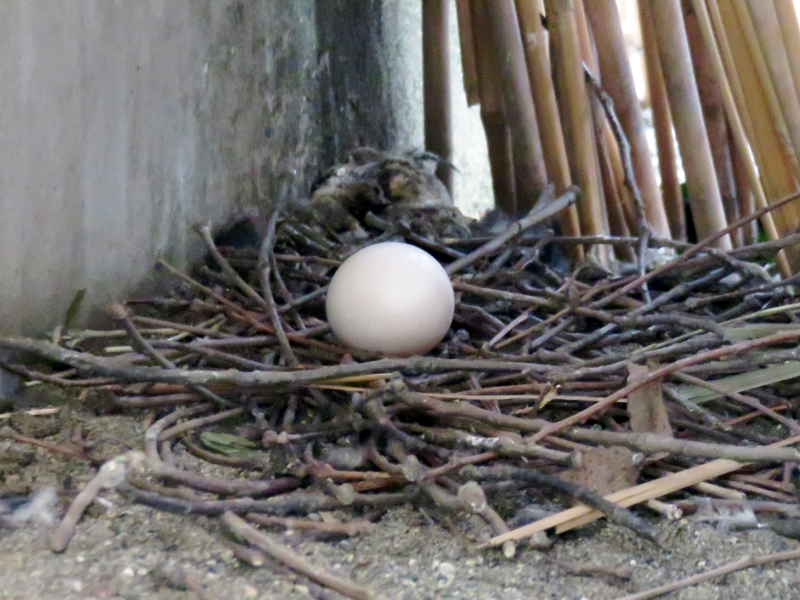 | | 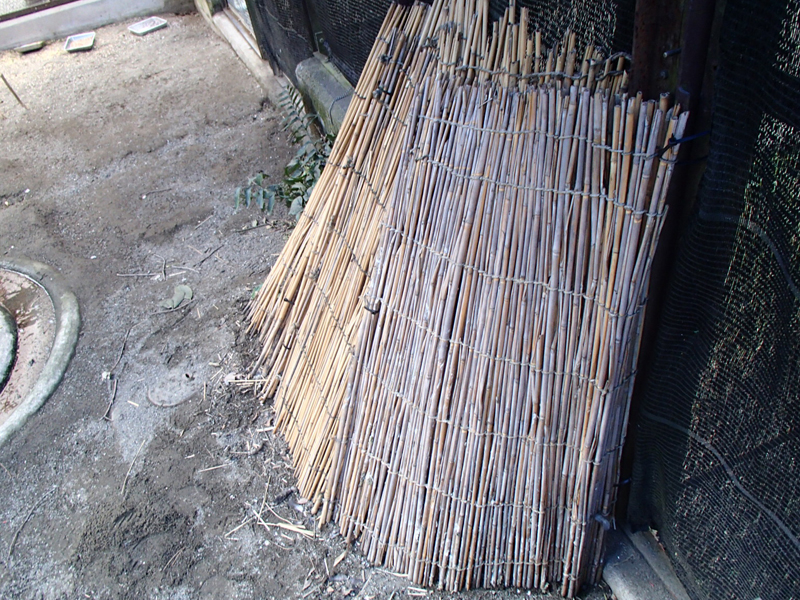 |
| Mating in Room B | Spawning | The nest was surrounded by reed screens. |
The first two times, the nest was abandoned due to typhoons and rain, and things didn't go well after that. However, the chicks that hatched on January 8th this year grew well, and they finally succeeded in breeding on their fifth egg-laying attempt. Perhaps because the nest is on the ground and easy to get out of, the chicks started to wander out of the nest occasionally when they were 22 days old, and were seen begging the male outside for food. After receiving food, they would also peck at the food in the tray before quickly returning to the nest. The chicks fledged on February 6th, at 29 days old. Two more chicks have since successfully bred naturally in Room B.
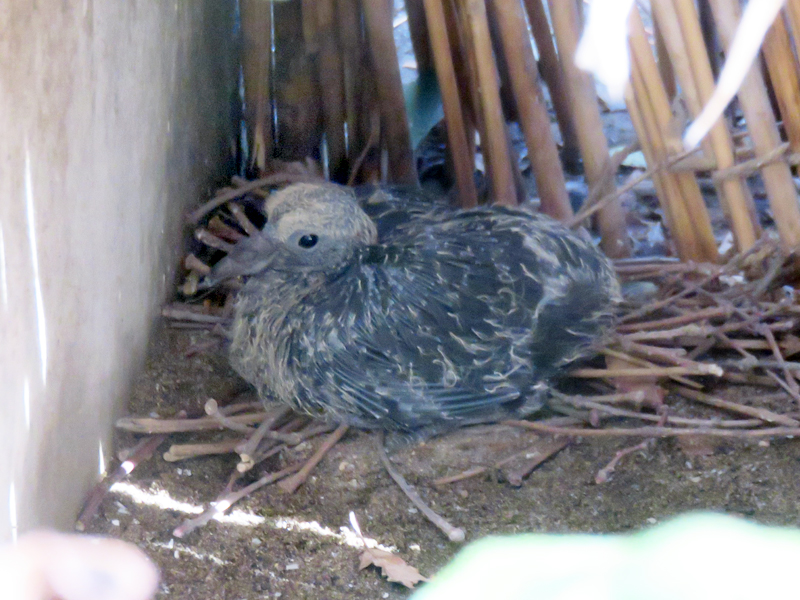 | | 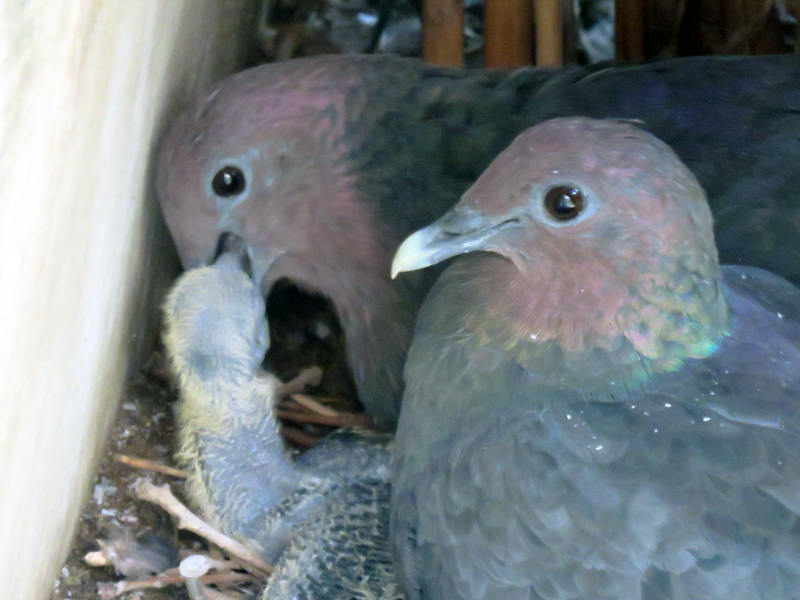 | | 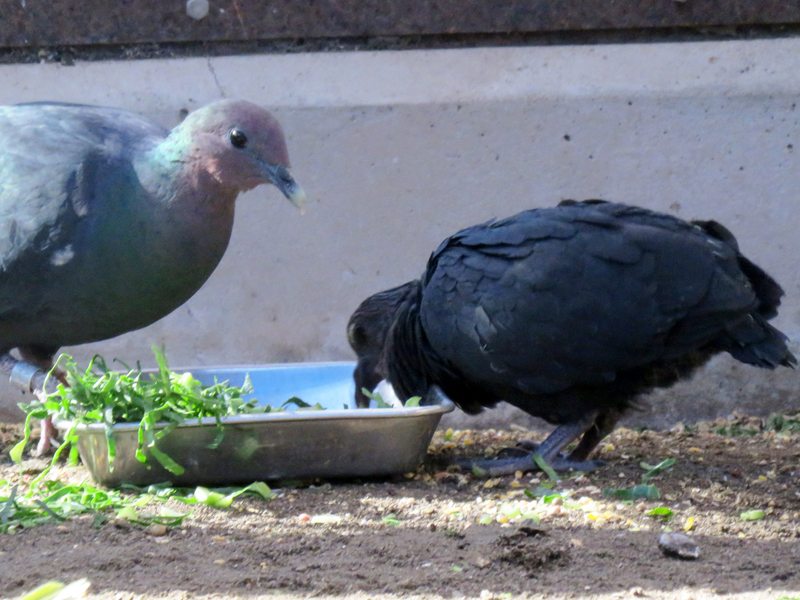 |
| Chicks hatched in Room B | The male parent is feeding the chicks. | A chick eating food outdoors |
Through this past year of breeding, we have learned that breeding is possible even in simple nests enclosed with reed screens, that breeding can occur even with multiple individuals in addition to the pair, that breeding is continuous, that preparations for the next breeding season begin before the chicks fledge, and that the male is primarily responsible for feeding the chicks during this period.
Unfortunately, in July and September, the females in the pairs in Room C and Rooms 5-6 died in quick succession. Therefore, we are currently working on new pairings, adding two birds rescued last year and this year, with the goal of increasing the genetic diversity of the captive population.
[Yoshinori Kojima Wildlife Conservatio Center Tama Tama Zoo]
(October 2, 2020)