In my previous article (published January 8, 2021), I shared the charm of silkworms. Since some of you might be interested in raising them yourselves, this time I'll introduce you to silkworm rearing and breeding.
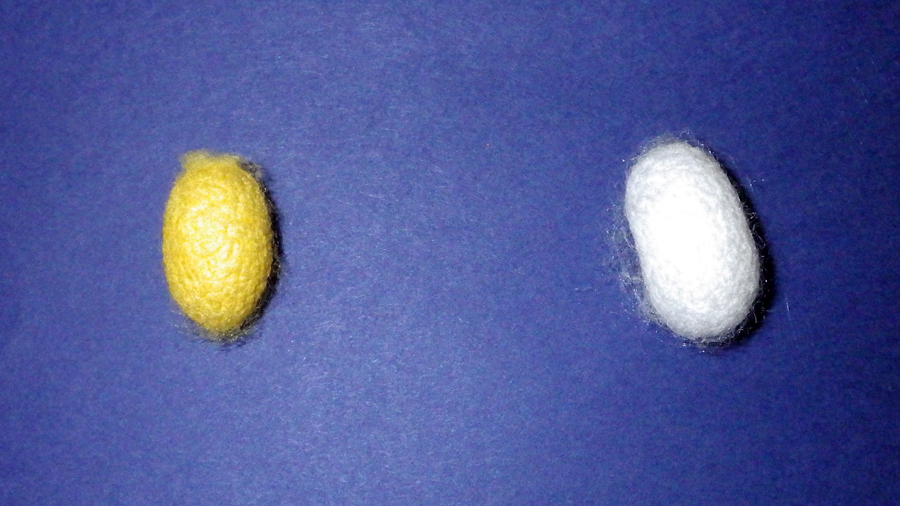
Silkworm cocoons are not only white.
While silkworms are often associated with white cocoons, there are actually many varieties, including yellow and orange ones. The larvae also come in a variety of patterns, from white to striped. These varieties are maintained at Kyushu University and other institutions as part of a national project to preserve genetic resources, and are available to users for a fee (Reference: National BioResource Project [NBRP] Silkworm Database). There are also websites that sell breeding kits containing larvae, feed, and cases. Try to find one that suits your preferences.
Silkworms should be raised in a room with a temperature of around 25°C. A plastic or cardboard box can be used as a rearing container, but make sure to adjust the humidity to around 70%, perhaps by placing newspaper under the lid. Be careful to avoid excessive humidity or dryness. Feed them mulberry leaves or artificial feed. From May to October, mulberry leaves grow outdoors and can be used, but be sure to check that they are free of pesticides and obtain permission from the mulberry tree owner before collecting the leaves.
Newly hatched silkworms are very small and easily crushed, so transfer them to food using a small brush or similar tool. Their appetite increases as they grow, so be sure to keep them well-fed. After they molt four times and become fifth-instar larvae, they will begin spinning their cocoons within a week. When you see them lifting their heads, shaking their heads from side to side, wandering around, or trying to climb upwards, it's time to let them spin their cocoons. Silkworms don't usually move around much, but during this period they may try to escape in search of a place to make their cocoons, so be careful. If you put in toilet paper rolls or similar items, they will spin their cocoons in the gaps.
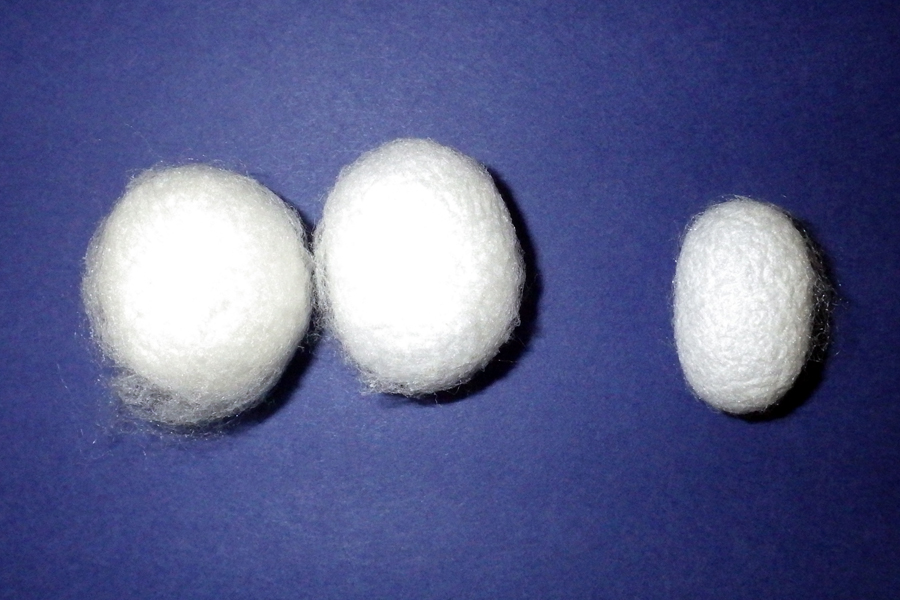
Normally, each silkworm spins one cocoon, but occasionally multiple individuals can enter the same cocoon, resulting in an extra-large cocoon. This is called a "double cocoon" and is used not for silk production, but for making raw silk.
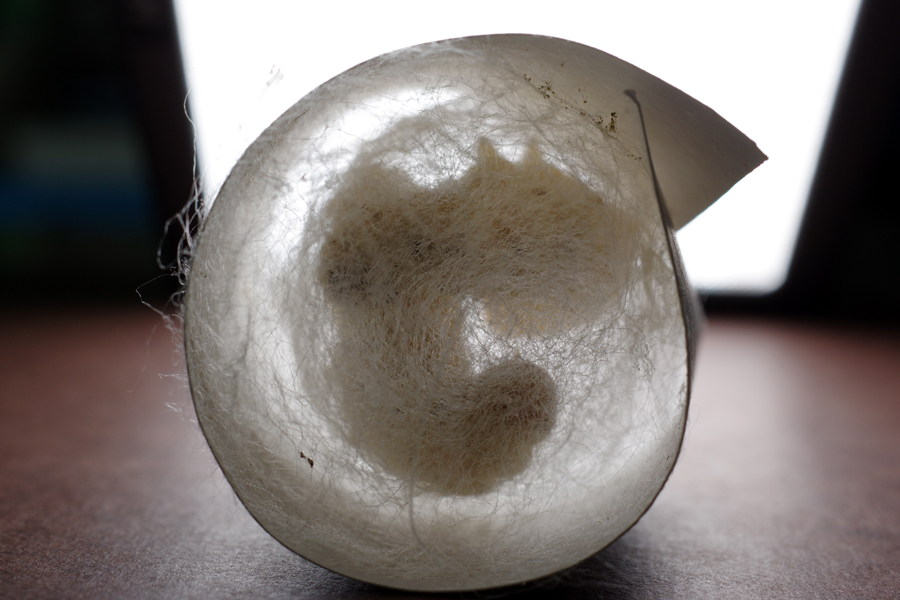
A silkworm cocoon seen held up to the light
Double cocoon and regular cocoon (right)
If you want to extract silk from a cocoon, you must freeze or dry the cocoon to kill the pupa inside. Otherwise, the silkworm that hatches inside will break through the cocoon.
If you want to breed them, let them hatch. They will mate immediately after hatching, and once they start mating, they may continue for more than half a day without stopping. In that case, a person will gently twist the bodies of the male and female to separate them. This is called "separation," and it is said that the expression "to resolutely omit something that is a shame to lose" originated from this.
[Video] "Abstention" - ending mating at the right moment. It can be removed by pulling it straight. Since it's difficult to separate, twist the male's body (the one on the right) slightly to release it.
Adults have vestigial mouthparts and only live for about a week. Females lay hundreds of eggs, and those that develop color 2-3 days after being laid hatch after surviving the winter. Eggs that develop color about a week later hatch after about 10 days.
There's still more I'd like to tell you about silkworms, but due to space limitations, I'll have to omit it for now. I hope this has sparked your interest in silkworms.