The "Valley of Asian Elephant," one of the largest areas in Tama Zoo, also boasts a vast management area that is not usually visible to visitors. This time, we'll introduce you to the "behind-the-scenes world" that only animal keeper can see.
hay warehouse
First, let me introduce the "hay warehouse." The hay warehouse mainly stores three types of grass hay: timothy, sudan grass, and rice straw.
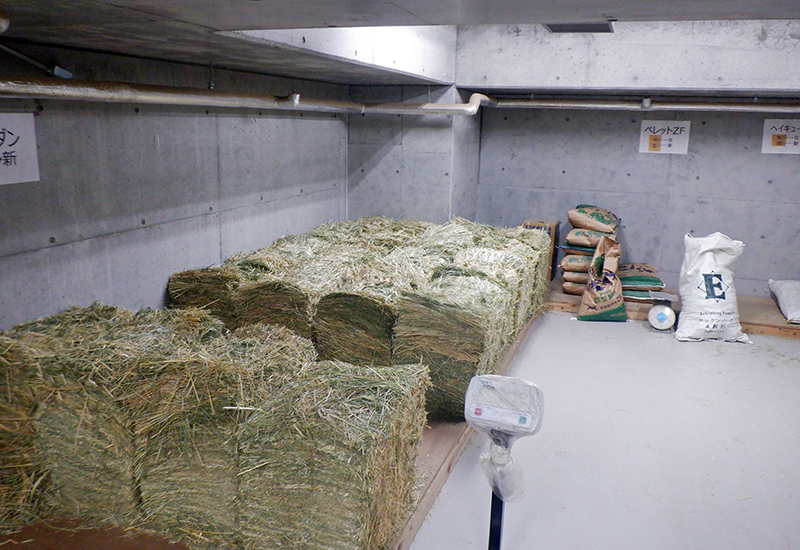
Sudan grass in a hay warehouseAsian Elephant are herbivores, and in the wild they eat grass, fruits, tree branches, leaves, and bark. Because it is difficult to completely replicate this diet in captivity, most zoos feed them mainly hay. Hay is rich in fiber and is important for maintaining the health of herbivores.
At Tama Zoo, the two elephants, Amara (female, 20 years old) and Vidura (male, 17 years old), are fed a combined total of approximately 160 kg of food per day, about half of which is hay. Because hay is such an important food source for our Asian Elephant, we keep a two-week supply of extra hay in stock in case deliveries are not made due to bad weather, natural disasters, or other unforeseen circumstances.
Just looking at the place where this food is stored gives you a sense of the sheer scale of the "Valley where Asian Elephant Elephants Live."
Hydraulic door
Next up are the "hydraulic doors." Many of the doors in the elephant passageways in the "Valley of Asian Elephant" are opened and closed using hydraulic power. animal keeper operate the doors from a distance using a control panel. It may look like they are simply opening and closing a single door, but it is a very important task.
When moving large, heavy doors in areas where elephants are present, extreme caution is necessary because there is a risk of the elephants getting injured if their trunks or tails get caught in the doors. Therefore, doors are only opened and closed after animal keeper have guided the elephants to a safe distance away from the doors and ensured their safety.
If you see a large door moving in the "Valley of Asian Elephant," it might be interesting to look around carefully to see where the elephants are and where the door is being moved from.
How the hydraulic door operates.
Guardhouse
The last place I'd like to introduce is the "office." This is where the staff in charge of Asian Elephant who are on duty that day gather every morning to confirm the day's work schedule and hold meetings.
The monitor at the top of the photo displays real-time footage of the outdoor and indoor enclosures, allowing visitors to constantly observe the elephants. This footage lets you quickly see where the elephants are and what they're doing.
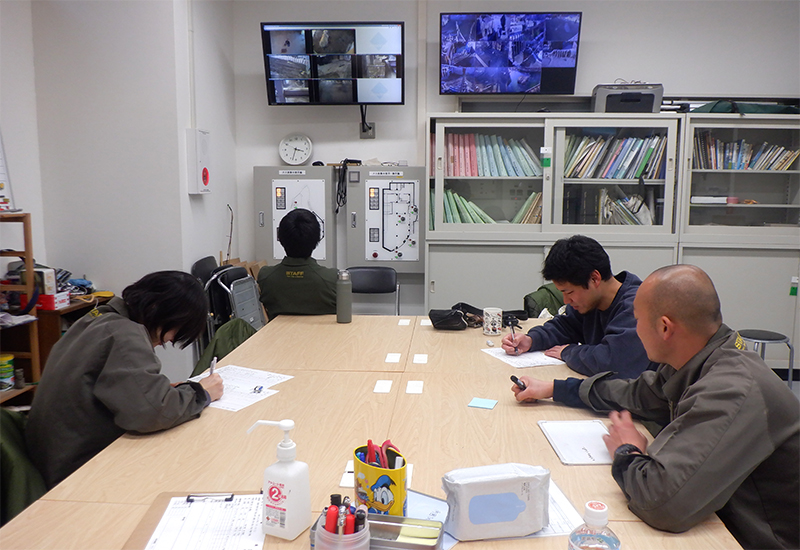
GuardhouseThe elephants' behavior is also recorded on video, allowing us to review it the following day after animal keeper have left for the night. Checking for any abnormalities during the night is also part of our daily work.
As you can see, there are many hidden things in the behind-the-scenes world that visitors don't usually see. When you visit Tama Zoo please enjoy your visit while imagining these hidden places.
[Tama Zoo]
◎Related articles
・
Vehicles working in the "Valley where Asian Elephant Live" (November 10, 2023)
(February 21, 2025)