As of the end of April 2021, Tama Zoo is raising 13 Przewalski's Horse 's horses. There are many things to be careful about when raising and managing animals, but one of the most important things when it comes to Domestic Horse is hoof care. If hooves grow too long, it can cause abnormal gait, lead to hoof diseases, or in the worst case, make it impossible for the horse to walk.
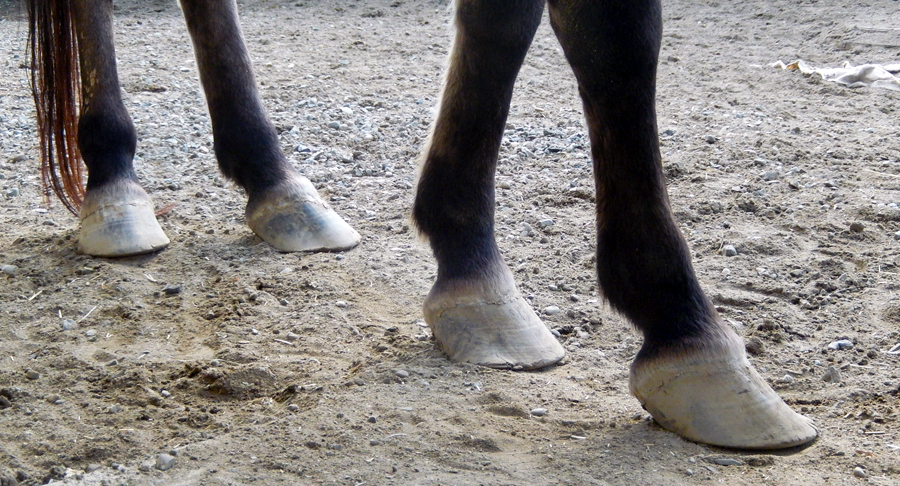
Overgrown hoovesIn zoos, horses don't roam as widely as they do in the wild, so their hooves don't wear down properly and can grow longer than usual. Also, because wild horses like Przewalski's Horse horses cannot be groomed in the same way as domesticated horses, it's difficult to keep their hooves clean.
Furthermore, the hooves of Przewalski's Horse 's horses, which roam the wilderness, are very hard and not easily worn down, so they grow back quickly in a zoo environment. On one occasion, a male horse's hooves grew excessively long, and we had to have them trimmed by a farrier (a specialist in Domestic Horse hoof care) under anesthesia. However, because the blood vessels inside the hooves had grown so much, we were told, "This is as far as we can cut without causing bleeding," and the hooves were not shortened as much as we had hoped.
Przewalski's Horse 's horses are wild horses, highly wary, and difficult to tame, making training impossible like that of domesticated horses. Therefore, even Przewalski's Horse like hoof trimming require anesthesia, making it a very stressful and dangerous job for both the caretakers and the horses themselves. We tried various methods to allow for natural wear, such as paving part of the exercise area with concrete and experimenting with different soil materials. While concrete did wear down the hooves, it wasn't as effective as we had hoped.
The next thing we thought of was crushed stone. Tama Zoo also keeps two Hokkaido native horses. The exercise area in their barn had poor drainage, so we laid crushed stone down. Not only did the drainage improve, but as a secondary effect, the condition of the Hokkaido native horses' hooves also improved considerably. The farrier always compliments us, saying, "Hokkaido native horses have hard hooves, so crushed stone is perfect for them! Their hooves are kept in such good condition."
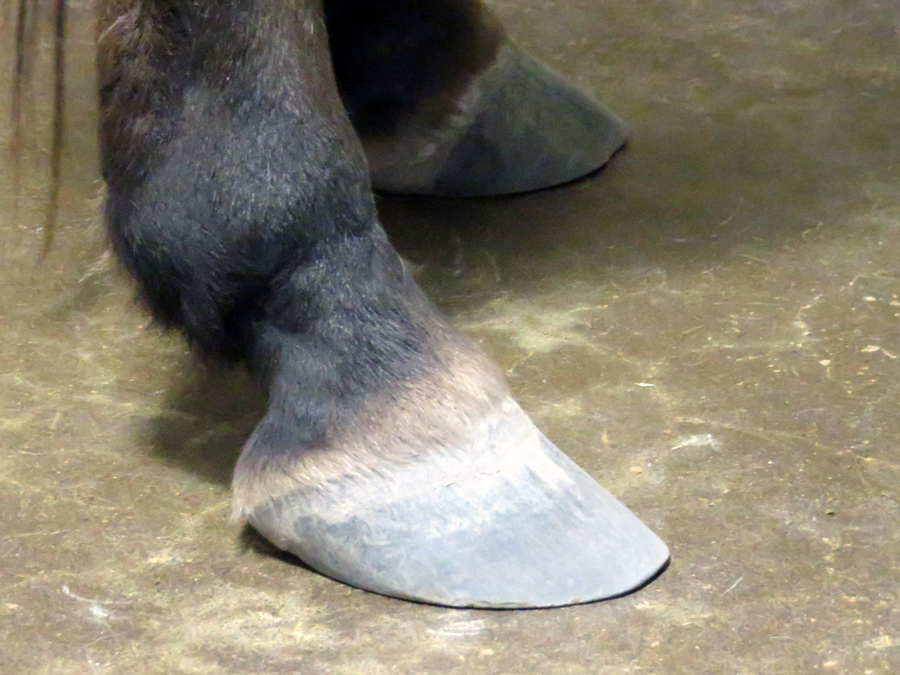 | | 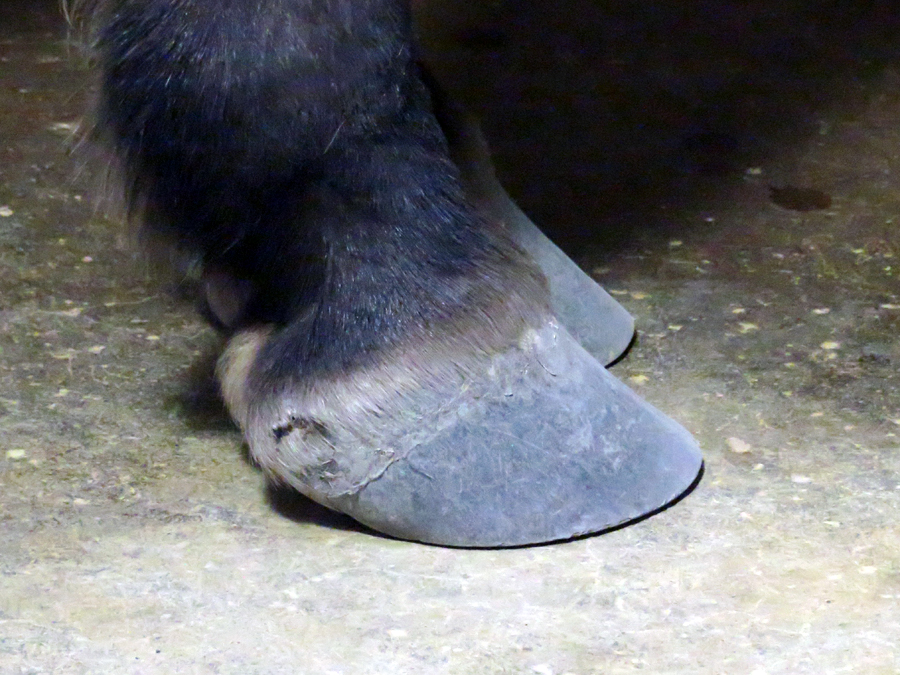 |
| Hind legs after crushed stone is brought in | Forelimb after crushed stone has been brought in |
Therefore, we decided to try laying crushed stone on the hooves Przewalski's Horse, which have even harder hooves than the Hokkaido native horses. As a result, the overgrown hooves of a male horse, which we were told could not be trimmed any further, became very short in six months. I believe that the fact that they were worn down little by little every day was the reason they were able to shorten without bleeding. This eliminated the need for hoof trimming under anesthesia, and we no longer had to worry about various leg diseases and injuries caused by overgrown hooves. In addition, not only male horses, but also older horses whose hooves had started to curl due to reduced activity levels became shorter and looked much neater.
This experience has reinforced my understanding of how crucial creativity and ingenuity are in raising and managing animals in a healthy manner. I will continue to strive to ensure that Domestic Horse can live happy and healthy lives every day.
[Tama Zoo Tama Zoological Park]
(May 21, 2021)