Since 2016, Tama Zoo has been working on artificial insemination of Chimpanzee by forming a team comprised of members from Chimpanzee team, Wildlife Conservatio Center, and the animal hospital staff.
"Decky" (male) is of wild origin, and we wanted to preserve his valuable bloodline. In 2016, we artificially inseminated "Sazae" (female) under anesthesia using Decky's sperm, and she became pregnant. Sadly, both mother and offspring died about a month before birth.
It took five years before artificial insemination was successful again. We continued "sperm collection and testing" so that we could attempt artificial insemination at any time. Sperm collection was done by having animal keeper receive the ejaculate that Decky produced himself.
The females selected are based on a numerical value indicating the degree of kinship in the domestic pedigree registration certificate (see Japanese Association of Zoos and Aquariums website, "
Pedigree Registration and Breeding Plan").
In 2019 and 2020, we selected "Marina" as our target female. We trained Marina by animal keeper insert Domestic Pig artificial insemination catheter into her vagina and inject semen. At first, Marina was sometimes angry, but over the course of about three years she gradually came to trust us, and eventually all four members of Chimpanzee team were able to inseminate her at any time. As a result, in 2020 we were able to perform 75 artificial inseminations without anesthesia. We also performed three artificial inseminations under anesthesia, but she did not become pregnant for two years.
Therefore, this year we changed the target female to "Mikan" and conducted repeated experiments with the goal of injecting as many actively motile sperm as possible.
Between August and October 2021, Mikan underwent three artificial inseminations under anesthesia, and pregnancy was confirmed in November. For the successful injection, two days' worth of semen, which had been stored in a preservation solution and refrigerated, was mixed with two doses of semen collected on the same day and injected into the uterus. The female's ovulation date was determined comprehensively based on changes in her genitals and the results of human ovulation test strips. The first two artificial inseminations did not result in pregnancy because the timing was too early, so for the third artificial insemination, the timing was delayed by one day, which led to pregnancy.
This pregnancy is the result of trial and error and cooperation among a team of about 15 people. Mikan's due date is around late May to mid-June 2022. Mikan is now in her second trimester, eating and sleeping well, and is active and energetic. As this is her first pregnancy, we animal keeper are constantly worried, but we want to create an environment where Mikan can give birth with peace of mind and provide full support so that she can have a safe delivery and raise her pups.
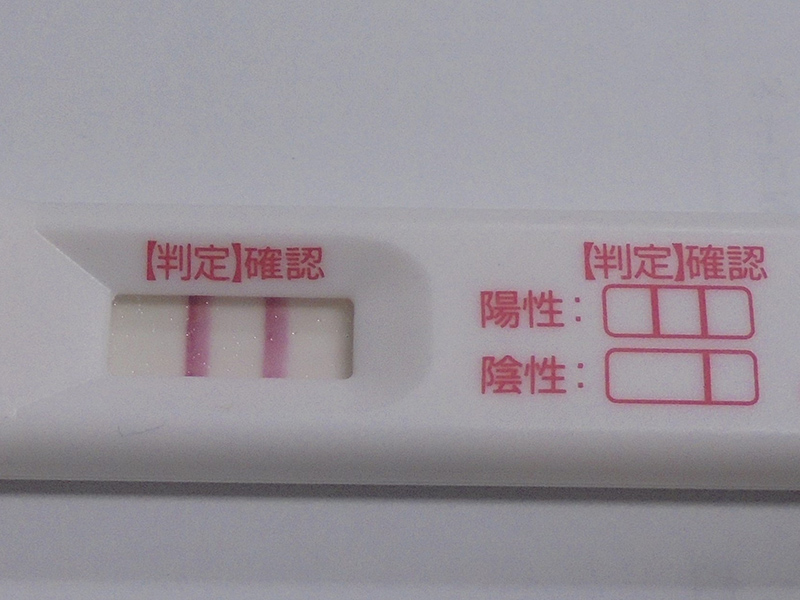 | 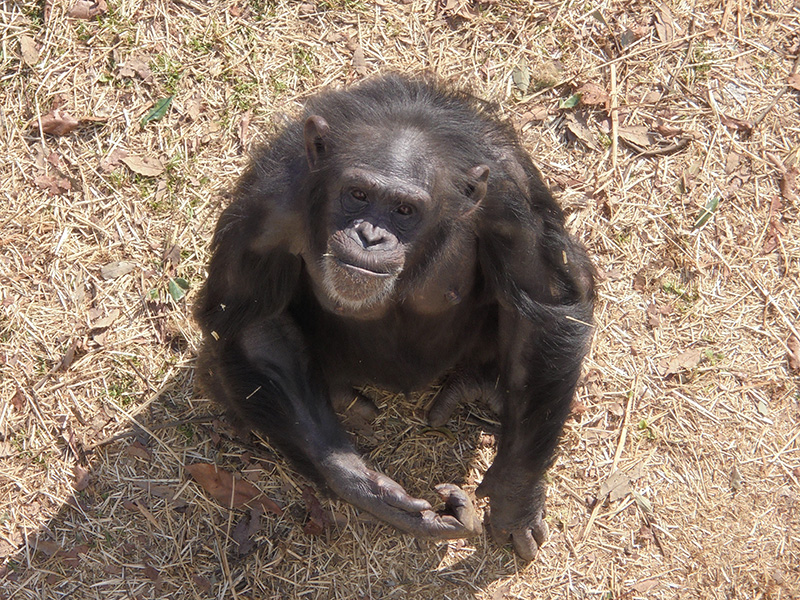 |
| My pregnancy was confirmed in November 2021 using a human pregnancy test. | Mikan is pregnant. Her belly has started to get a little rounder.
(Date of photo: February 15, 2022) |
[Tama Zoo, Tama Zoological Park]
◎Related News
・
We are working towards artificial insemination for Chimpanzee (October 21, 2016)
・
Thank you, Sazae Chimpanzee. (July 7, 2017)
・
Sperm preservation and artificial insemination efforts: From Wildlife Conservatio Center Laboratory (December 13, 2019)
・
We have successfully performed artificial insemination on Chimpanzee. (February 24, 2022)
(February 25, 2022)