When a species reproduces only during a specific season, it is called "seasonal breeding." Japanese Macaque are seasonal breeders. Wild Japanese Macaque are widely distributed throughout the Japanese archipelago, so there is variation in the birthing period depending on their habitat, but they generally give birth between April and June.
Tama Zoo houses a population of these birds that originated from Shodoshima Island, and births are concentrated in April and May. Since the gestation period is approximately six months, the peak breeding season for this group is around October and November.
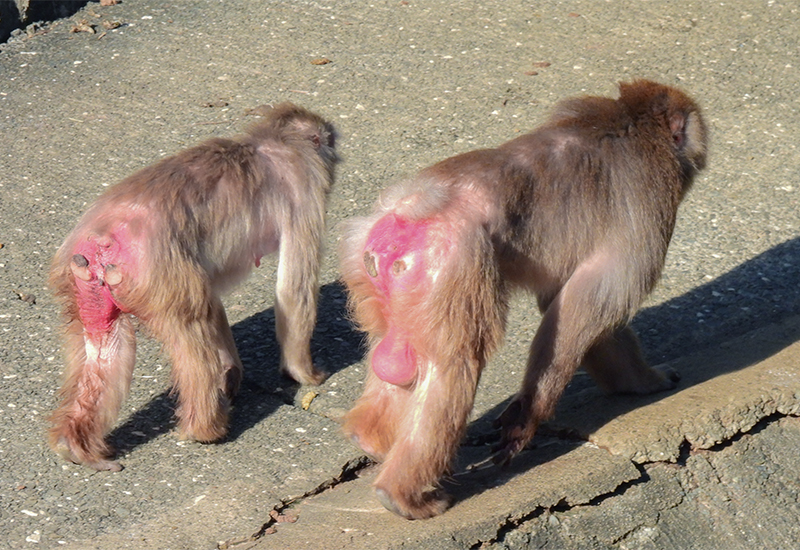
Males and females during the breeding seasonMany animals, including mammals, have separate sexes, and they have a social structure where males and females choose partners they find attractive and mate to reproduce. For monkeys as autumn arrives, the greatest concern is the presence of the opposite sex, which is essential for the survival of their species.
In the summer of 2025, Tama Zoo also experienced a prolonged heatwave. As September began, even amidst the heat, the maximum temperatures recorded by the thermometers in the animal enclosures gradually decreased, and by mid-September, we humans, as biological beings, could clearly feel the change of seasons towards autumn. The 63 monkeys living on the monkey mountain also seemed to sense the coming of autumn, and began preparing for the seasonal breeding season that is genetically inherent in Japanese Macaque species.
Japanese Macaque, due to their physiological and ecological characteristics, become capable of mating and pregnancy from approximately September to December. As September approaches, the monkeys' bodies and behavior gradually begin to change. Males raise their shoulders and tails, their faces and buttocks turn reddish, and their seminal vesicles swell to the size of chicken eggs as their testicles fall out.
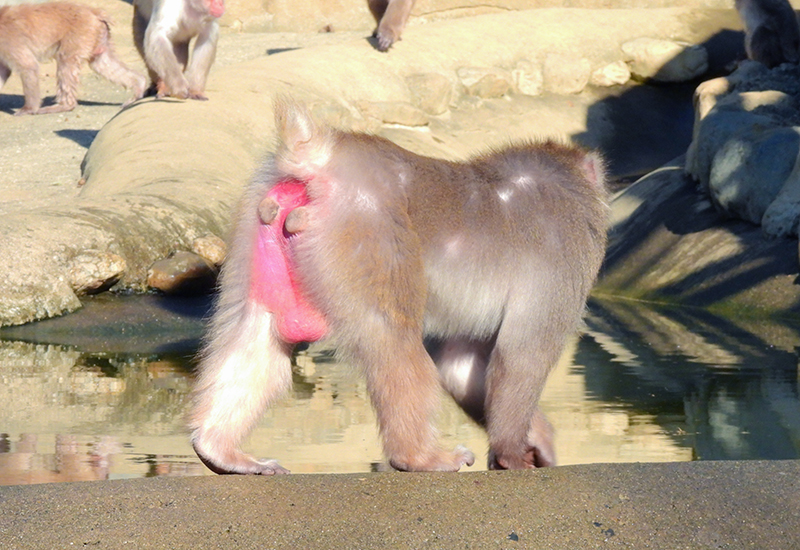
Male during the breeding seasonLike the males, females also develop reddish faces and hindquarters, and due to hormonal changes, they intermittently emit calls characteristic of the breeding season. In wild monkey watching, the autumn breeding season is a good time to observe monkeys as their presence is easily confirmed by their noisy calls, tree-shaking by males, and behaviors such as females attracting the attention of males and males chasing them.
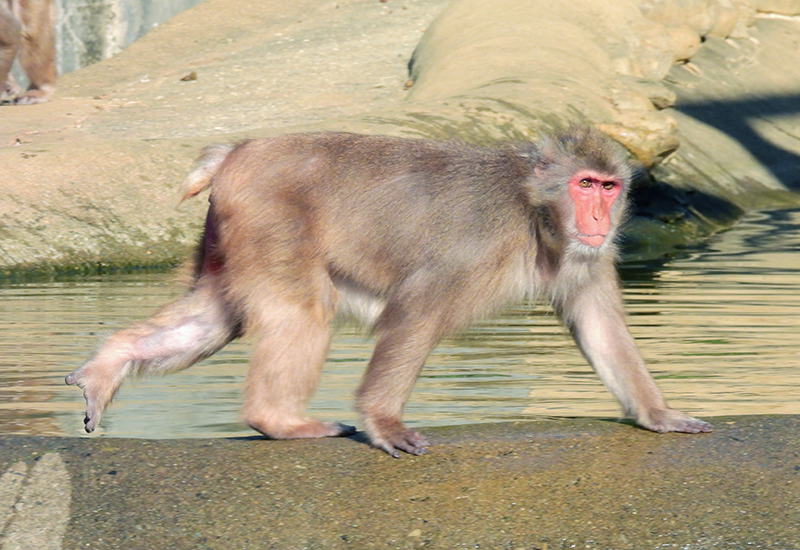
female during breeding seasonFemales that mate during this period will give birth to babies in the spring after a gestation period of approximately six months. Giving birth in the spring is of great significance to Japanese Macaque species. This is because it coincides with the season when the growth of plants, such as grasses, flowers, tree seeds, fruits, leaves, bark, flowers, flower buds, and leaf buds, which are the monkeys' main food source, begins.
During the autumn breeding season, fights break out between males and even among females. This is influenced by the fact that monkeys who are interested in the opposite sex grow closer to each other, and their desire to breed intensifies. Observe the dynamic social dynamics of the monkey troop on the mountain, imagining how this Japanese Macaque behavior, including the fighting, leads to births in the spring.
[Tama Zoo Tama Zoological Park]
◎Related articles
・
The lives of Japanese Macaque macaques—using the behavior of the male "Seta Shijimi" as a clue. (October 6, 2019)
(October 10, 2025)