At Tama Zoo, in cooperation with the Ministry of the Environment's project to protect and breed Crested Ibis, they have received Crested Ibis from the Sado Crested Ibis Conservation Center and are raising them in a non-public area.
In 2022, Crested Ibis being kept at the zoo bred, and in July, we announced that four chicks had successfully grown up, stating
, "Four crested Crested Ibis have left the nest in 2022." Among them was the first time since Tama Zoo began keeping Crested Ibis ibises that the parents alone had to take care of the chicks.
hatching And grew up (naturally hatched)
Breeding chicks There are individuals that do this.
Our zoo has been raising Crested Ibis since 2007, and we have raised 83 chicks so far. However, none of them have survived without the assistance of animal keeper. This is because the parent birds sometimes peck at the eggs just before the chicks hatch, preventing them from hatching, or they are unable to be fed after hatching, or their digestive tracts become blocked when they are fed pebbles.
The pair that successfully achieved natural hatching and raising of chicks this time is the CH pair. Both the male and female are young, at 4 years old. In their previous two breeding attempts, they were unable to achieve natural hatching and raising of chicks because they pecked at the eggs or were unable to feed the hatched chicks. This year, before the breeding season began, in September of last year, they were moved from their usual 45㎡ cage to a cage twice the size, 90㎡, and entered the breeding season.
Egg-laying began on March 21st, and hatching started on April 18th. We monitored them and saw that neither parent was pecking at or discarding the eggs as they were trying to hatch. On the morning of April 19th, the first egg hatched successfully, a natural hatching success. We continued to monitor them, but since we didn't see any feeding, we collected the chicks on April 21st. The next day, April 22nd, the second egg hatched, and this time the parents fed them properly. Then the third egg hatched, and we were able to see the parents feeding the two chicks. The two chicks' necks were still wobbly and their requests for food from their parents were weak, but the parents' feeding gradually became more consistent.
However, we can't relax yet. In the past, we've seen other pairs where the parents gave their chicks large amounts of sand after they started feeding, causing blockages in their digestive tracts. The suspected cause was that the parent birds were feeding their chicks the sand they ate to digest the loaches they were eating. So this year, we limited the amount of loaches we gave the parents, and the chicks did not suffer from indigestion and successfully fledged in early June.
The success of this natural hatching and raising of chicks is partly due to the inherent qualities of this pair, but also to the fact that the room was made larger, creating an environment where the male and female parents could spend their time freely, and the amount of loaches given as food was reduced. The chicks born and raised in Tama will be moved to the Sado Crested Ibis Center and will be considered for release into the wild. We hope that the day will come when the first individuals raised through natural hatching and rearing in Tama will be released into the skies of Sado.
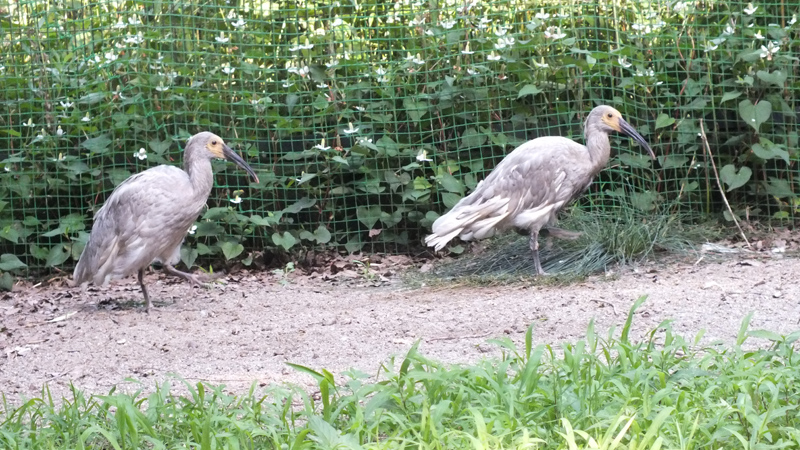
A chick that has just left the nest
(Date of photo: June 17, 2022)
[Video] Record of raising Crested Ibis ibises (no sound)[Ishii, Tama Zoo Wildlife Conservatio Center]
(September 23, 2022)