On January 11, 2022, a female black-faced Black-faced Spoonbill died in the black-faced Black-faced Spoonbill enclosure, a non-public enclosure at Tama Zoo. This bird had been kept at Tama Zoo since 1989, when the breeding of Black-faced Spoonbill began, and based on the color of its leg band, animal keeper it was dead.
green They called him "."
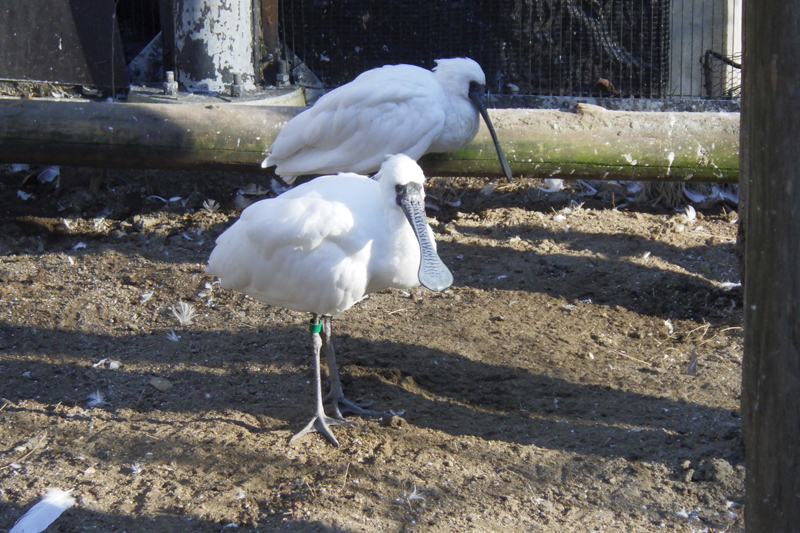
"Midori" (foreground) one week before her death.
(Date of photo: January 4, 2023)Midori was captured on the Korean Peninsula in 1987 and kept at Korea University in Kodaira City, Tokyo. Later, in 1989, another female,
orange They came to Tama Zoo from Korea University along with [name of animal]. Since then, we have continued to cooperate with Black-faced Spoonbill University in the breeding and rearing of Black-faced Spoonbill. Upon arrival, they entered Crested Ibis enclosure, which is home to many other Crested Ibis, and afterwards spent time with the other black-faced spoonbills and many other Crested Ibis that arrived after Midori.
Midori's first successful breeding was in 1996, when she raised three chicks. This was the world's first successful breeding of a Black Black-faced Spoonbill in captivity. Over the next 19 years, she successfully bred many times, with her last successful breeding occurring in 2015. That year, she laid three eggs, only one of which was fertilized, but it developed successfully.
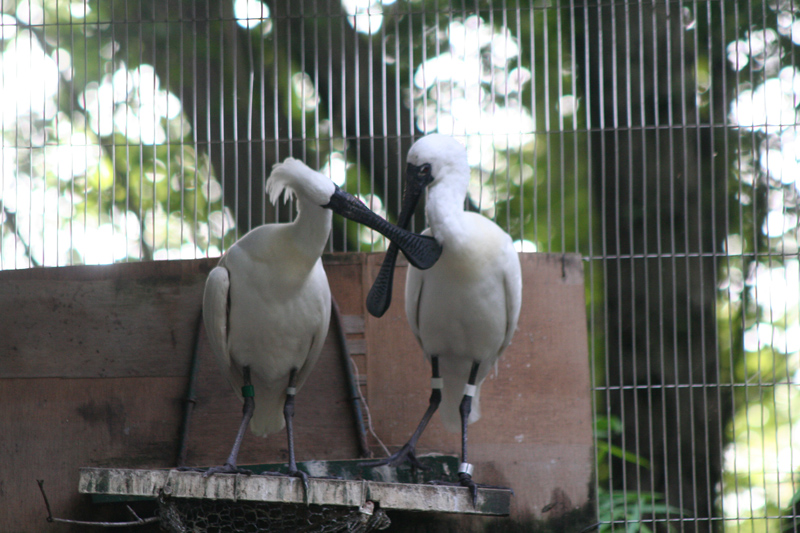
When they were breeding, with their mate (green on the left)
(Date of photo: June 27, 2012)From around 2017, it began spending more time on the ground, and its wing joints stiffened, preventing it from fully spreading its wings, making it unable to fly up to the perches located high up. However, it continued to live peacefully in the ground area, using the perches available on the ground, alongside other flightless birds that had been rescued in the wild with broken bones.
From 2019 onwards, it began to spend more time resting on the ground during the summer months, but considering that it is a flock-living bird, we continued to keep it in the same location. Similarly, in 2022, it rested for long periods during the summer and molting took a long time, but once it got cooler, it would leisurely come and eat when we brought it food.

Around the time she started spending time on the ground (Midori is 31 years old. Midori is in the foreground)
(Date of photo: February 7, 2019)From around December 2022, its movements gradually slowed down, and it began to spend most of the day resting. We confirmed its death on the morning of January 11th. We were surprised because it had come to eat small fish the day before. The cause of death was a head contusion. Since it couldn't fly or run fast, it's unlikely that it hit something, but its heart was also weak, so it may have stumbled and bumped into something.
Last year, 2015, was the year that the last chick Midori left behind grew up and successfully bred for the first time. It felt as if she had witnessed the continuation of life before passing away to heaven. 35 years old is the longest lifespan recorded for Black-faced Spoonbill. Thank you, Midori. You did a great job for 35 years.
[Ishii, Tama Zoo Wildlife Conservatio Center]
(February 3, 2023)