Following on from the previous article, I'll continue to introduce what you can see from the "Catwalk" at Tokyo Sea Life Park. What will you see this time?
• "
What can be seen from the 'catwalk'—the tools of animal keeper"
animal keeper is walking around with a bucket. The bucket contains fish food. It contains various kinds of food, such as Japanese Carpet Shell, sakura shrimp, horse mackerel, and squid. The aquarium uses a total of about 30 different kinds of food. Not only are there many types, but the size of the food also varies. From whole fish about 15 centimeters long to food cut into pieces just a few millimeters in size, the food is prepared according to the size of the fish's mouth.
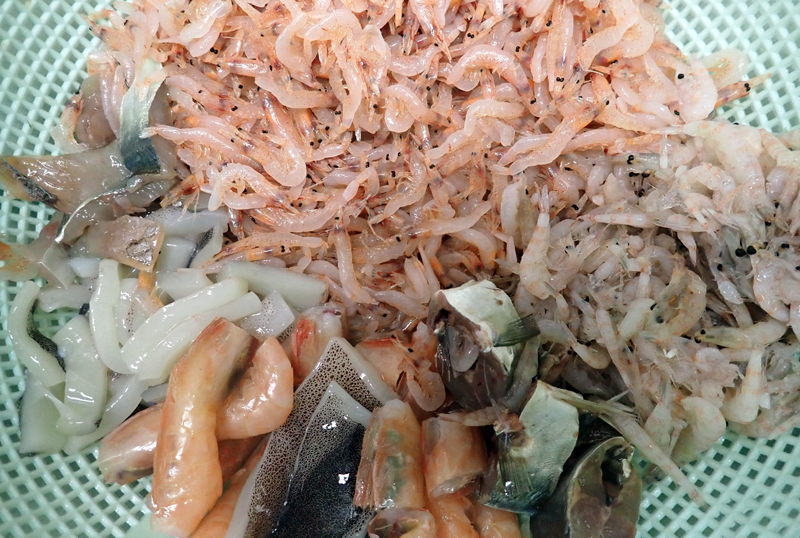 | | 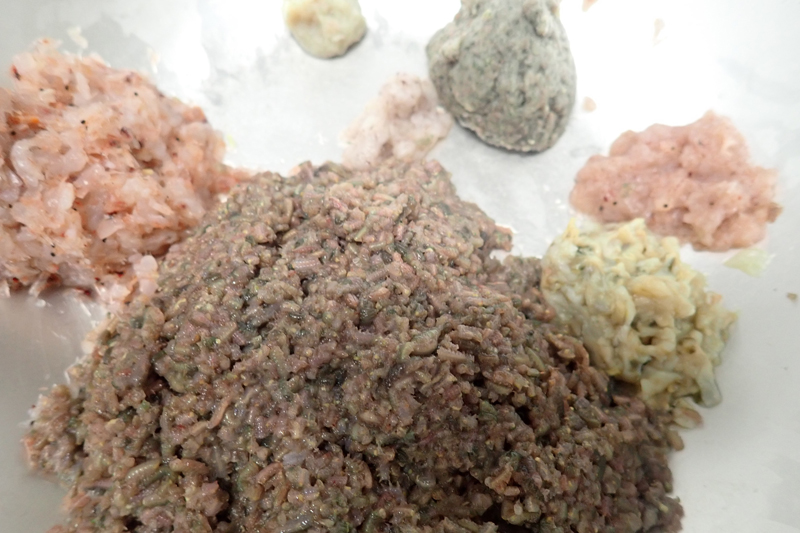 |
| Food used in aquariums. Various types and sizes. |
There's something a little unusually green in the bucket. What could it be? Actually, the aquarium uses komatsuna (Japanese mustard spinach) as food. Many visitors are surprised to see bundles of komatsuna hanging in the tanks. Indeed, komatsuna doesn't grow in the ocean. This komatsuna is given to fish that mainly eat seaweed in the ocean. When properly boiled and softened komatsuna is hung in the tanks, the fish quickly gather around it.
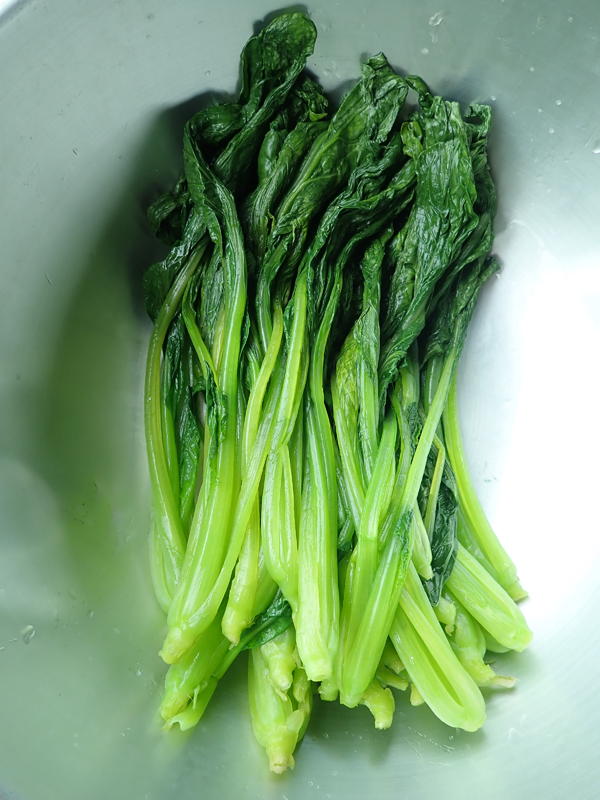 | | 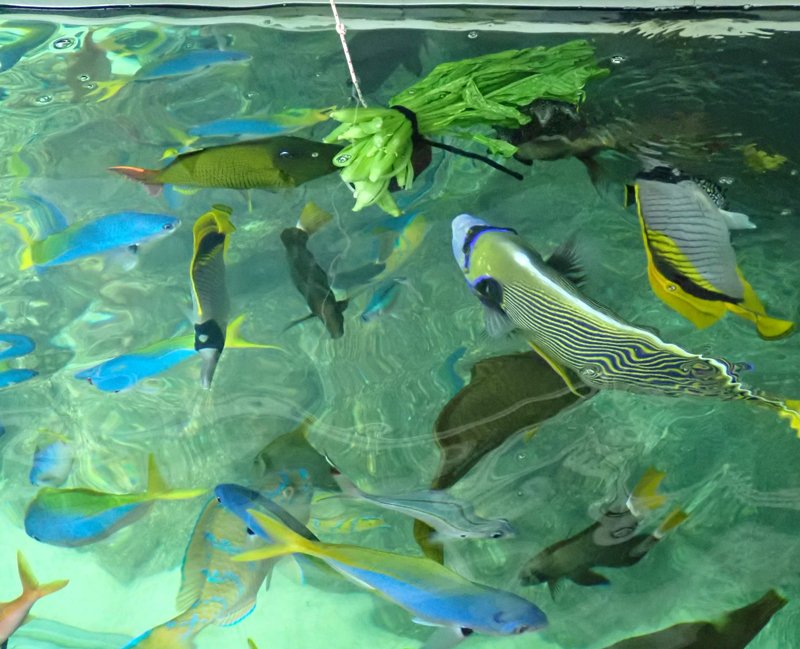 | | 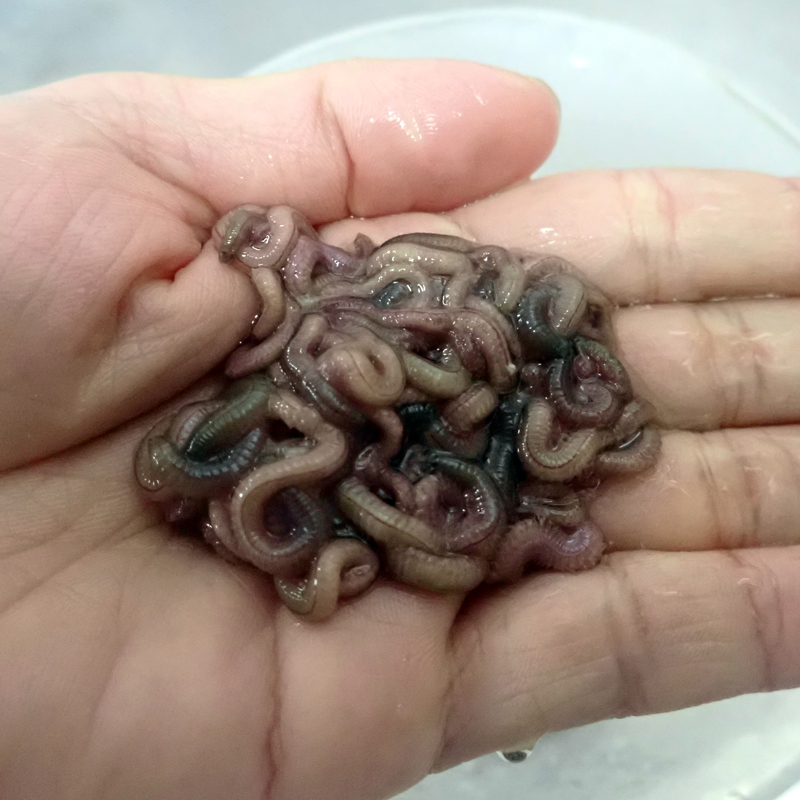 |
| Komatsuna (Japanese mustard spinach) | Hang komatsuna (Japanese mustard spinach) in the tank and feed it to the fish. | Ragworm |
The price and quality of the feed are also important factors. While it's often assumed that animal feed is of poor quality, the feed used in aquariums is fresh enough for humans to eat. Furthermore, the ability to consistently purchase the feed throughout the year is also a crucial requirement.
On the other hand, we also provide bait that humans wouldn't normally eat. For example, polychaete worms. Their wriggling appearance might make them seem like they could be mistaken for earthworms, but they are actually marine creatures. Many people are probably familiar with them as they are used as fishing bait. When we give fish live polychaete worms, which are similar to what fish actually eat, they respond very well.
So, how do they feed the fish with these foods? We'll tell you about that next time in "What You Can See from the Catwalk - Feeding Methods." If you can't wait, please come and see the Catwalk for yourself.
[Sachiko Suzuki, Animal Care and Exhibition Staff, Tokyo Sea Life Park]
(October 12, 2018)