2020 is the Year of the Rat, and the animal of the Chinese zodiac is the rat! Now, everyone, did you know that the sea rat, "海鼠," is pronounced "namako"? Most namako are nocturnal, and it is said that these characters were assigned to them because they crawl around in the sea at night like rats, and their backs resemble those of rats.
So, let me introduce some of the sea cucumbers on display at Tokyo Sea Life Park. First, there's the small red sea cucumber, the Red Chested Sea Cucumber, in the South Africa tank in the "World's Oceans" area.
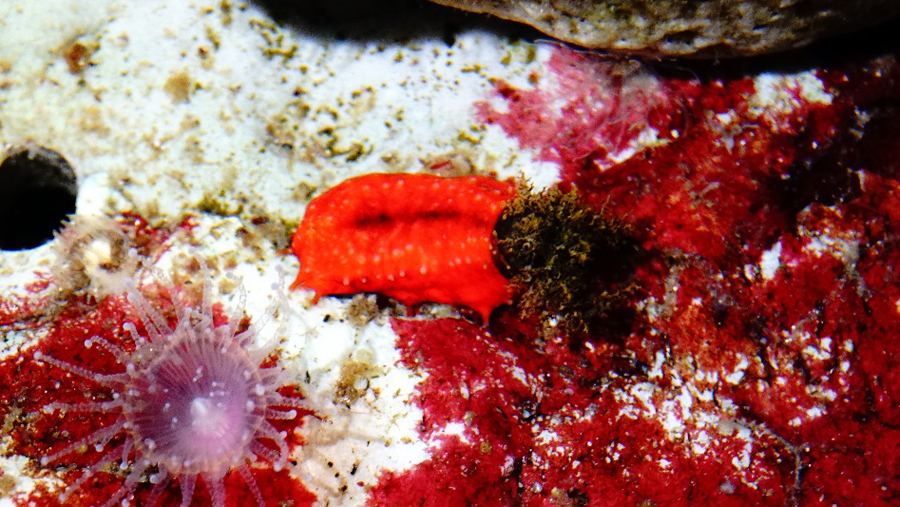
The red chested sea cucumber is a type of sea cucumber called a kinko, and it doesn't move around much. It extends its tentacles, called "tree hands," to catch plankton and organic matter floating in the water, and then brings them to its mouth to eat.
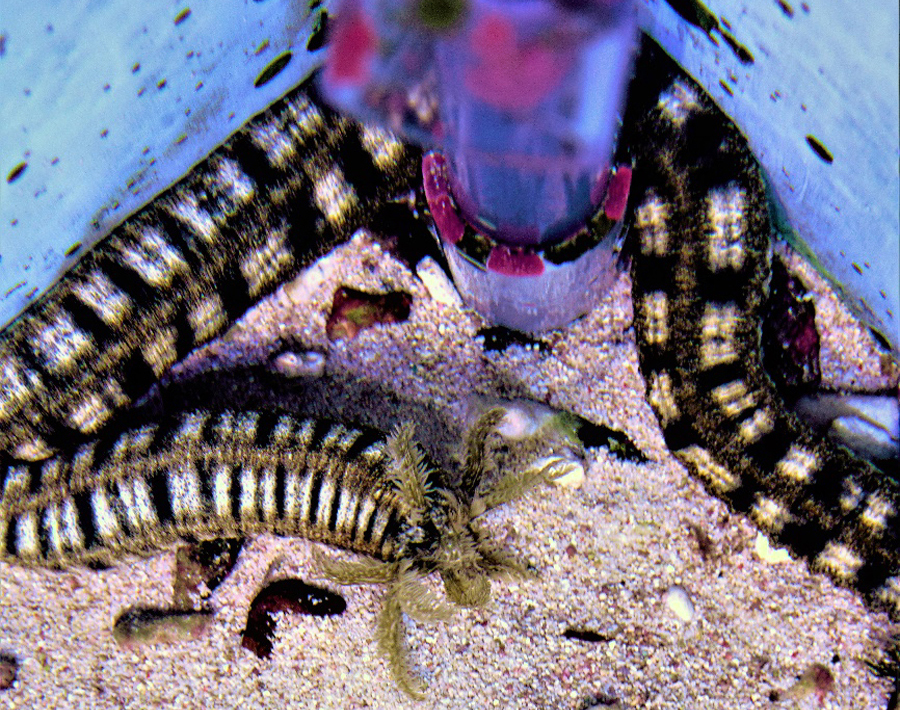
The photo above shows the giant sea cucumber, a new addition to the "Cradle of the Sea" special exhibit in the "Sea of Tokyo" area. Although not visible to the naked eye, its name comes from the fact that the bones on its body surface, called ossicles, are shaped like an anchor. It has a mottled pattern and looks like a sea snake, but it is actually a type of sea cucumber. It is usually about 1 meter long, but can grow to nearly 3 meters.
And finally, when you think of sea cucumbers, many people probably picture the following shape.
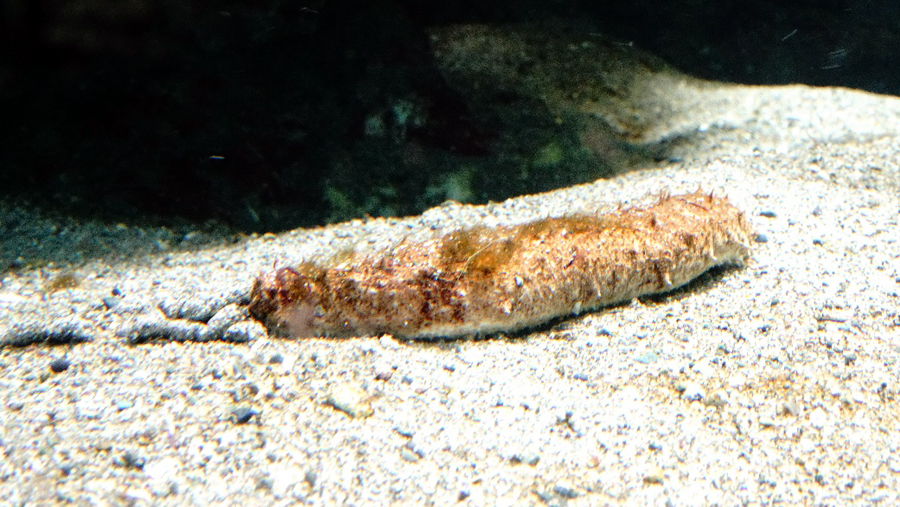
This is a cotton spinner exhibited in the Mediterranean tank in the "World's Oceans" area. Cotton spinners and giant sea cucumbers eat small organisms and organic matter in the mud along with the sand, digest them in their stomachs, and excrete the cleaned sand grains. Looking at the cotton spinner in the photo, you can see it excreting connected grains of sand. Furthermore, they stir up the sandy bottom as they walk around, keeping the surface of the tank bottom clean.
Sea cucumbers eat while walking and clean the bottom of the tank, so they are also called "the ocean's cleaners." For animal keeper, they are a very welcome presence as they keep the bottom of the tank clean.
In addition to the three species introduced here, Tokyo Sea Life Park displays a variety of sea cucumbers in many tanks. As we enter the New Year of the Rat, why not go and look for these "sea rats"?
[Tokyo Sea Life Park]
(January 3, 2020)