Have you ever wondered about the names of living things? Many living things have Japanese names, but in the field of science, scientific names are used as universally recognized names.
This year's zodiac animal is the rat. One of the creatures at Tokyo Sea Life Park with a rat-related name is Spot-fin Porcupinefish. Spot-fin Porcupinefish is a fish that grows to about 70 centimeters in length and is widely distributed in tropical and subtropical seas all over the world.
The Japanese name is said to derive from its mouse-like face. While Spot-fin Porcupinefish is the Japanese name for the species, its scientific name is
Diodon hystrix. According to international rules, the scientific name of a species consists of two words: the genus name followed by the species name.
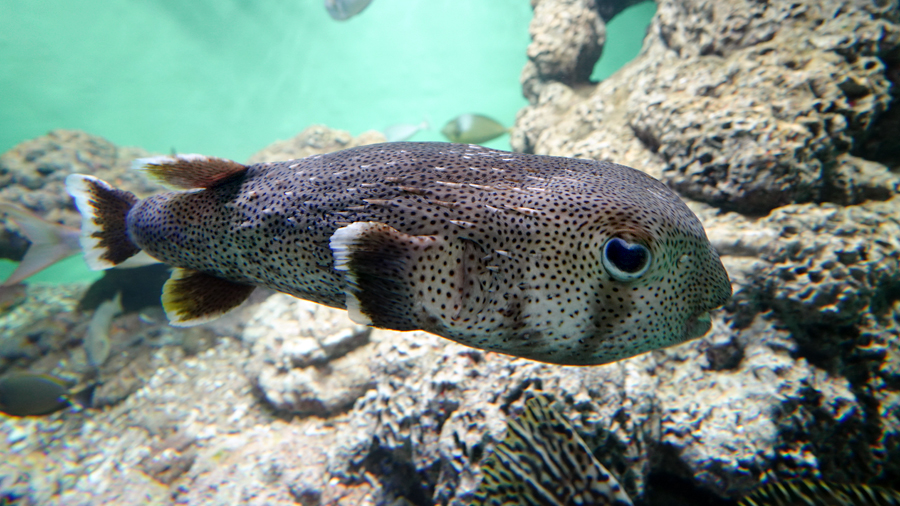
Spot-fin PorcupinefishThe genus name
Diodon is derived from the Greek words "di-" (two) and "-odon" (tooth), meaning "two teeth." The species name
hystrix refers to a rodent, a porcupine, which has many spines on its back. So, the scientific name of Spot-fin Porcupinefish could be interpreted as "a porcupine-like creature with two teeth."
As its genus name suggests, Spot-fin Porcupinefish is characterized by having two plate-like teeth, one on its upper jaw and one on its lower jaw. It uses these teeth and powerful jaws to crush and eat crustaceans and mollusks, shell and all. When it senses danger, it inflates its body, causing the spines all over its body to rise, and as its species name suggests, it takes on the appearance of a porcupine to protect itself.
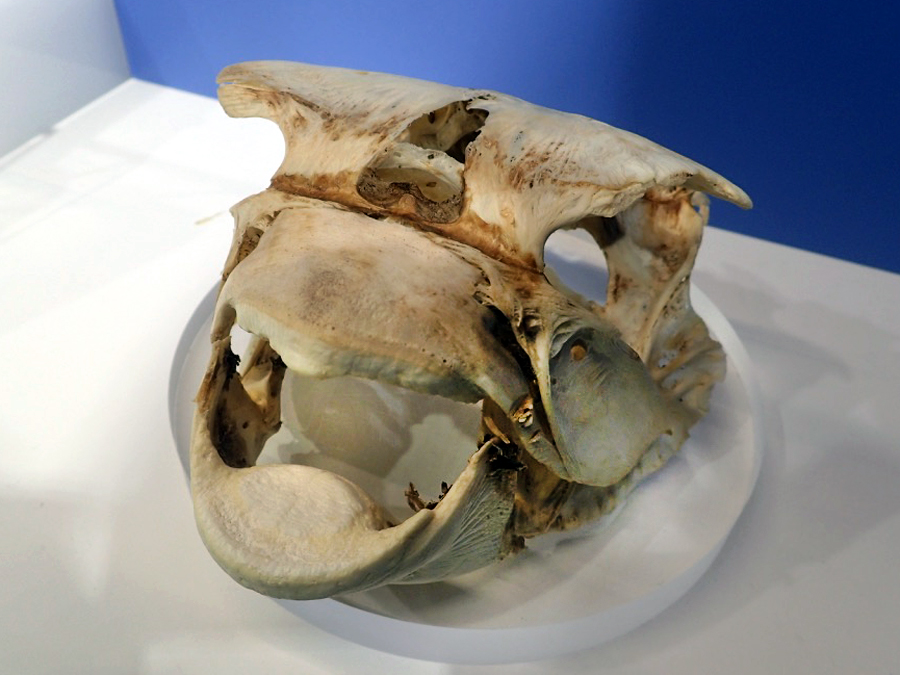 | | 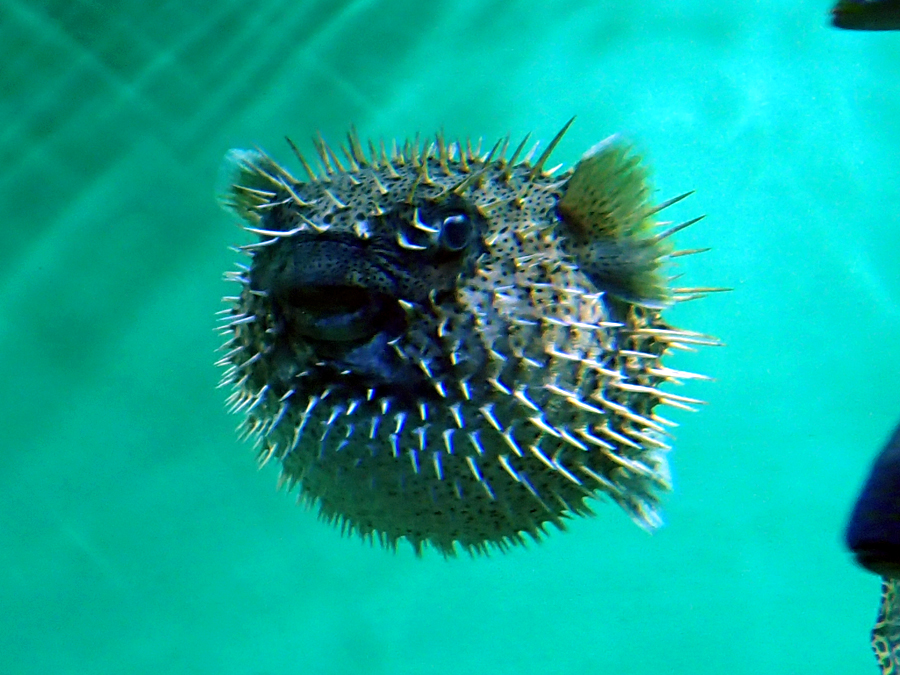 |
| A skeletal specimen of Spot-fin Porcupinefish. It is characterized by its plate-like teeth. | Inflated Spot-fin Porcupinefish |
Scientific names, written in foreign languages, may seem daunting at first. However, since scientific names are derived from the morphological and ecological characteristics of an organism, the place where it was first discovered, and the name of its discoverer, deciphering their meaning can provide an opportunity to learn more about the organism.
At aquariums, species labels with the Japanese and scientific names of the creatures are posted around the tanks. Not only can you learn the names of the creatures, but researching their origins can lead to a deeper understanding of them.
[Tokyo Sea Life Park]
(January 17, 2020)