Ueno Zoo, Tama Zoo Tokyo Sea Life Park, and Inokashira Park Zoo annually solicit research reports on the animals and creatures they house and exhibit. Zoos and aquariums, which keep and display a diverse range of animals, are ideal places to observe animals firsthand and explore their mysteries. This project was started with the aim of letting junior high and high school students experience the joy of observing animals, and in its fourth year, we received over 790 submissions.
From the research reports submitted, we selected three works from the junior high school division and one from the high school division as the annual best works, and six works from the junior high school division as honorable mentions.
Furthermore, we have established a new "Unique Award" this year to recognize reports with unique themes, and we have selected two entries from the junior high school division to receive this award, as detailed below.
Four works selected as the best works of the year (titles omitted).
"Why do Spiny Red Gurnard walk? - Analysis of free ray movement patterns and comparison with other organisms -"Tomoki Ashiya (2nd year high school student, Tokyo Metropolitan Shinjuku Yamabuki High School)
The contents of the research report are available here (PDF).
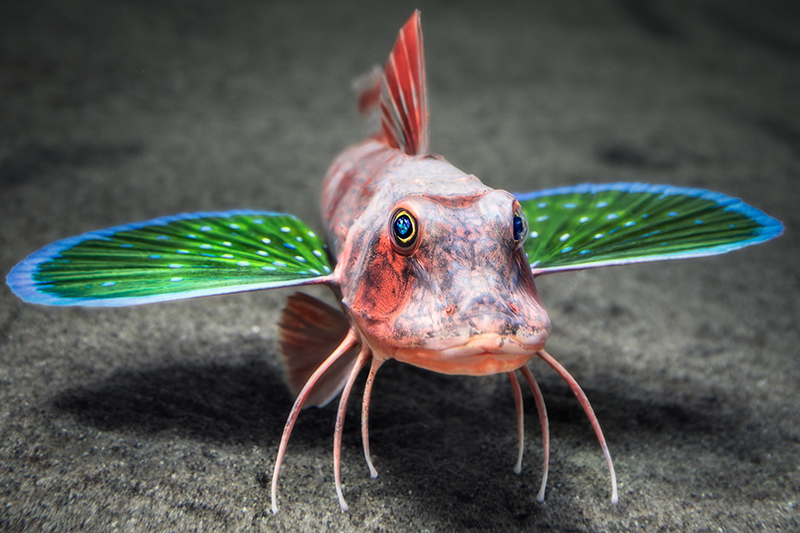
Spiny Red Gurnard[Selector's Comments]
Until now, the number of entries from high school students has been small compared to those from junior high school students, and no high school student had ever been selected as the best entry. This time, Ashiya's work became the first to win an award from a high school student. We had to consider the difference in level between high school and junior high school students, but Ashiya's report first caught our eye with its well-organized, book-like design. Of course, that wasn't all; she noticed that Spiny Red Gurnard uses its free soft rays like legs, and logically demonstrated that there are differences in movement other than moving forward along the seabed, such as turning, taking off, landing, and exploring. Furthermore, she compared the leg movements of various animals using the same method and even considered them from an evolutionary perspective. In her final summary, she cited the latest genetic-level research that is not available at aquariums, and discussed the possibility of discoveries that could have a significant impact on biological evolution. We hope that she will pursue a related research field and produce results that can contribute to aquarium exhibits.
"The relationship between the feet and swimming style of Little Grebe"Yui Otawara (1st year junior high school student, Tokyo Denki University Junior High School)
The contents of the research report are available here (PDF).
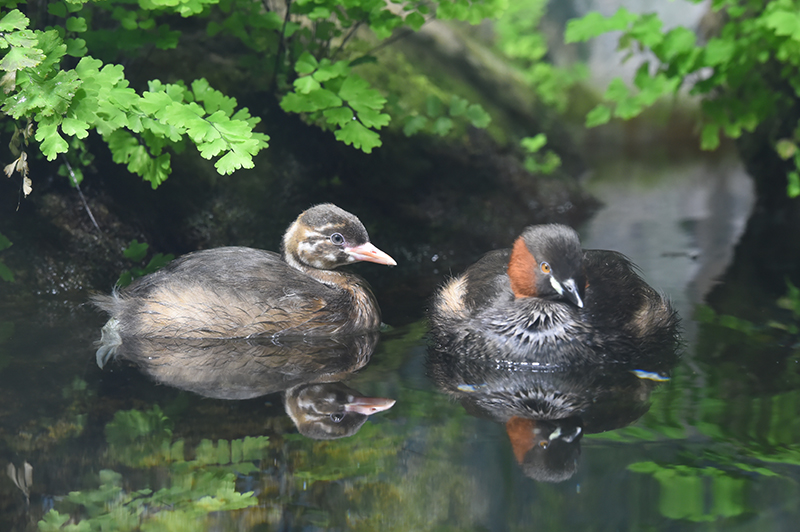
Little Grebe[Selector's Comments]
Ms. Otawara has been gathering and compiling information about Little Grebe she encountered at Inokashira Park Zoo, following her interests as she went. It's almost as if she's surfing the internet, but her knowledge isn't gained through mouse operations or screen touches; she's actually observed live Little Grebe right in front of her and recorded it by drawing many illustrations on paper. I'm personally impressed that she visited the zoo at least twice to observe the grebes and that she revised her illustrations herself while referring to literature. There is still room for improvement in the structure of the report and the data analysis. I hope she continues her research while cherishing her enjoyment of observing living creatures. If you're going to use Inokashira Park Zoo as your setting, I recommend observing both the captive grebes and the wild ones living in Inokashira Pond.
"Shoebill Observation Compilation ~Do Shoebill Not Move...?~"Minami Kimura (3rd year junior high school student, Showa Women's University Affiliated Showa Junior High School)
The contents of the research report are available here (PDF).
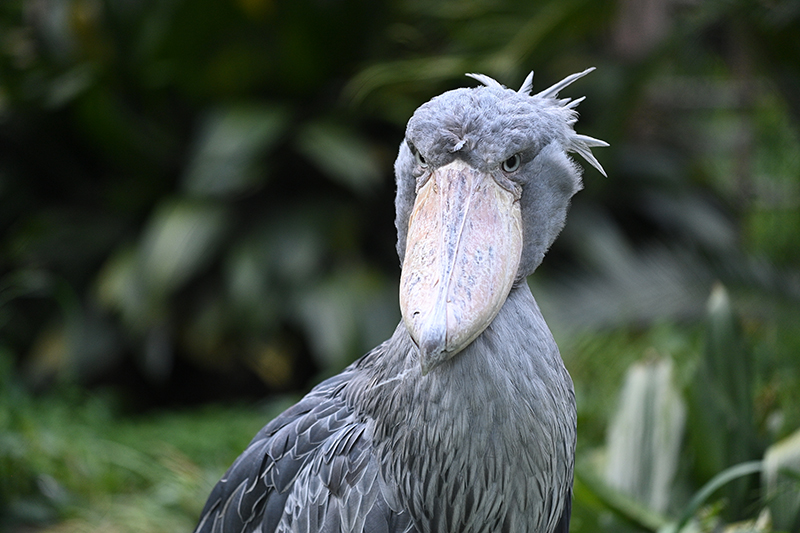
Shoebill[Selector's Comments]
Following its selection in 2022, Ms. Kimura's report has been chosen as the best work of the year for the second time. Starting with observations at Ueno Zoo, which earned her the first award, her second year's observations at Chiba City Zoological Park involved tracking a different individual to resolve questions raised at the first year. Her third year's observations went beyond the simple question of "do Shoebill move or not?", classifying and recording various behaviors. In addition, she conducted further observations and interviews to resolve questions that arose during her analysis, resulting in a rich and insightful report. While Shoebill are relatively familiar in Japan, their numbers in zoos worldwide are not large. This is due to the harsh conditions faced by wild Shoebill and the difficulty of breeding them in captivity. We hope that Ms. Kimura will continue to be an active supporter of Shoebill species.
"Differences in Giraffe behavior patterns depending on their living environment."Haruto Watari (1st year junior high school student, Chuo University Affiliated Junior High School)
The contents of the research report are available here (PDF).
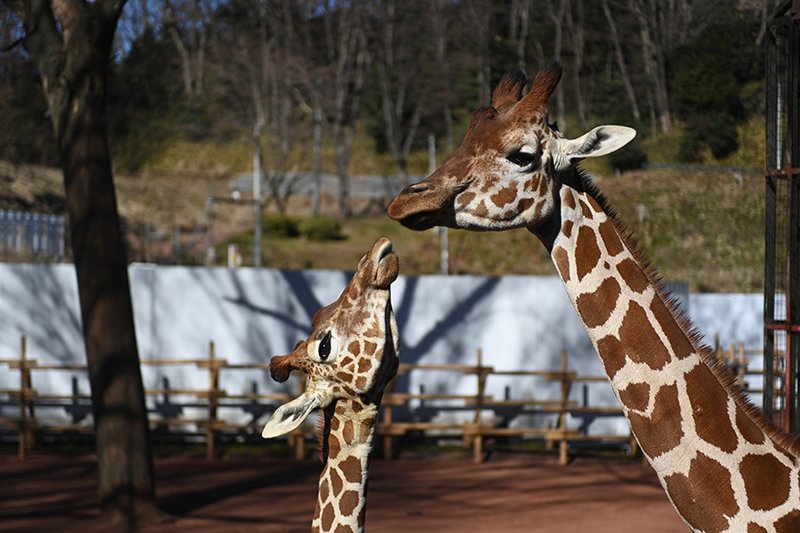
Giraffe[Selector's Comments]
This report compares the behavior of young Giraffe at Tama Zoo (group keeping) and Ueno Zoo (small-group keeping). This is a difficult topic, and any clear differences found would be extremely interesting. Mr. Watari continuously observed and recorded the behavior of one Giraffe throughout the entire time it was on public display at each zoo, from opening to closing. This must have been a tremendous challenge for him, having just entered junior high school. As we expected, the data from this study was still too weak to link the differences in the two giraffes' behavior to their respective environments, but through observation, we were able to discover the individuality of each giraffe. Not limited to these two, continuing to observe individual Giraffe may deepen our understanding of their lives and ultimately reveal differences between zoos.
Encouragement Award: 6 entries (titles omitted)
"I, a non-swimmer, explore the secrets of Little Grebe diving."Aki Iwamatsu (1st year junior high school student, Tokyo Metropolitan Oizumi High School Affiliated Junior High School)
"Behavioral observation of Japanese Squirrel "Ema Shimada (1st year junior high school student, Tokyo Jogakkan Junior High School)
"Observation of the Tsushima Marten: 'Athletic abilities like an Olympic athlete'"Airi Takahashi (3rd year junior high school student, Shotoku Gakuen Junior High School)
"The Ecology of Masked Palm Civet "Haruka Nishiwaki (2nd year junior high school student, Bunrin Junior High School)
"The secret behind the skillful and mysterious movements of Blue-and-yellow macaw "Mizuki Hasegawa (1st year junior high school student, Chofu Municipal Sixth Junior High School)
"Observing your dominant foot (the foot you use first)"Mirai Yano (1st year junior high school student, Bunrin Junior High School)
Unique Award: 2 entries (titles omitted)
"The relationship between the cuteness of animals and their characteristics"Ritsumi Nakagawa (1st year junior high school student, Tokyo Metropolitan Oizumi High School Affiliated Junior High School)
"Are Red-crowned Crane cranes laid-back?"Shie Yamamoto (2nd year junior high school student, Fujimigaoka Junior High School)
We are currently accepting submissions for the "Zoo and Aquarium Report Challenge" research report this year as well (
see details for the 2025 call for submissions). If you have any questions regarding tips for observing animals or how to write a report, please contact us by email. We also provide support for submissions made as school assignments.
Contact email: edu-center@tzps.or.jp
(March 15, 2025)