In the "Ogasawara Sea 4" tank in the "Tokyo Sea" area, we are exhibiting two green sea turtles that were born on Haha-jima Island in the Ogasawara Islands. We previously introduced these two green sea turtles in an article titled
"Green Sea Turtles - Feeding Techniques are Crucial for Their Growth!"
This July marks one year since hatching. The cub now weighs approximately 4 kg and its shell is about 30 cm long, and it is on display in a large tank where other fish swim.
We measure the length of the shell and the weight of the green sea turtles once a week. When we studied the growth rate of green sea turtles that we previously kept at the aquarium, we found that they grew faster than individuals at other zoos and aquariums. Based on that, we decided to review the amount, type, and proportion of food we give them in order to help them grow at a more appropriate rate.
Green sea turtles are omnivorous for about a year after hatching, mainly eating jellyfish and crabs. Once they reach a weight of over 4.5 kg, they gradually become herbivorous, mainly eating seaweed, seagrass, and algae. When they first arrived at the aquarium, they were given animal-based food equivalent to 10% of their body weight, but from December of last year, we started giving them plant-based artificial food and gradually reduced the amount of food given to prevent them from growing too quickly. Then, from July of this year, we increased the proportion of plant-based artificial food to 2% of their body weight and started giving them komatsuna (Japanese mustard spinach), giving them 3% of their body weight in that amount.
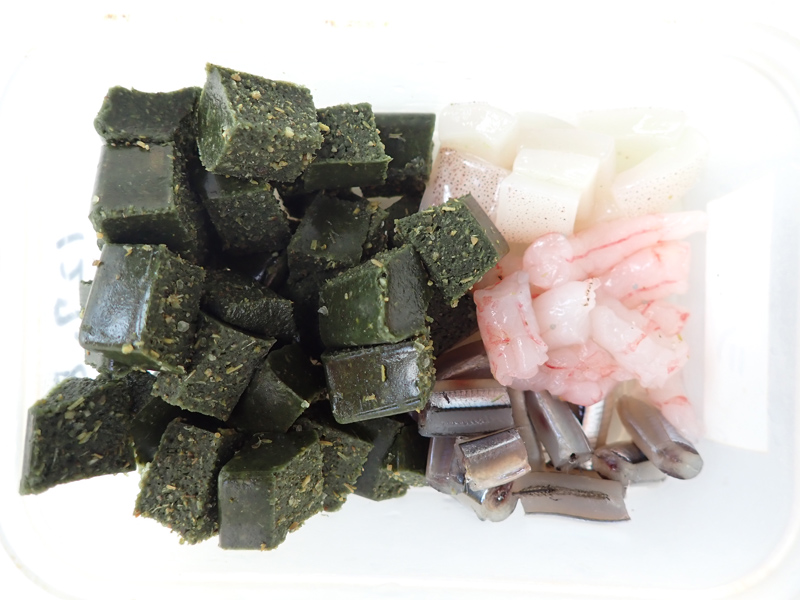
Green sea turtle food: plant-based artificial feed, squid, sweet shrimp, sardinesAlso, to prevent the fish in the tank from taking the food, we put the prepared food in a cage so that the turtles can eat it all. At first, we had to catch the sea turtles and put them in the cage, but they gradually learned that they would get food if they went into the cage, and now they go into the cage on their own.
The two green sea turtles seem to have different eating preferences, and sometimes leave behind foods they don't like, such as sardines, artificial food, and komatsuna (Japanese mustard spinach). So, we've been experimenting with the order in which we give them their food, such as giving them the foods they don't like first and then giving them other foods after they've finished eating the others.
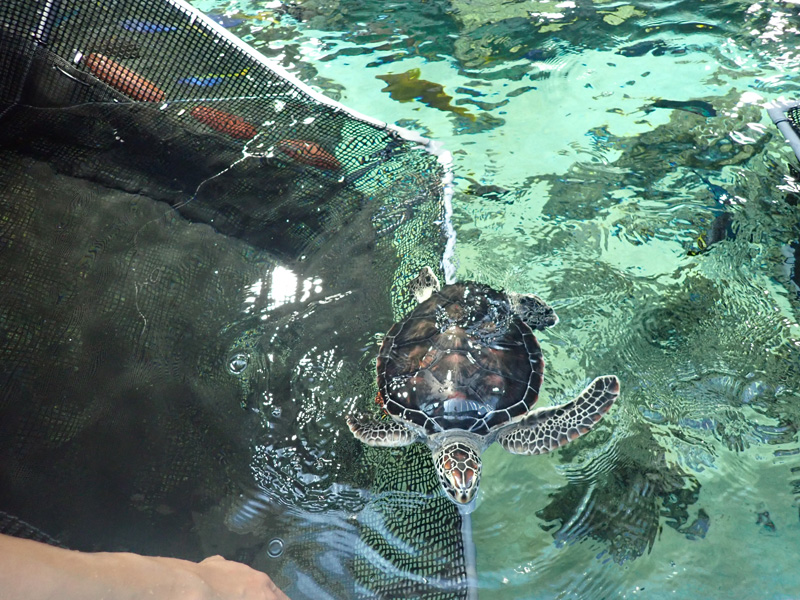 | 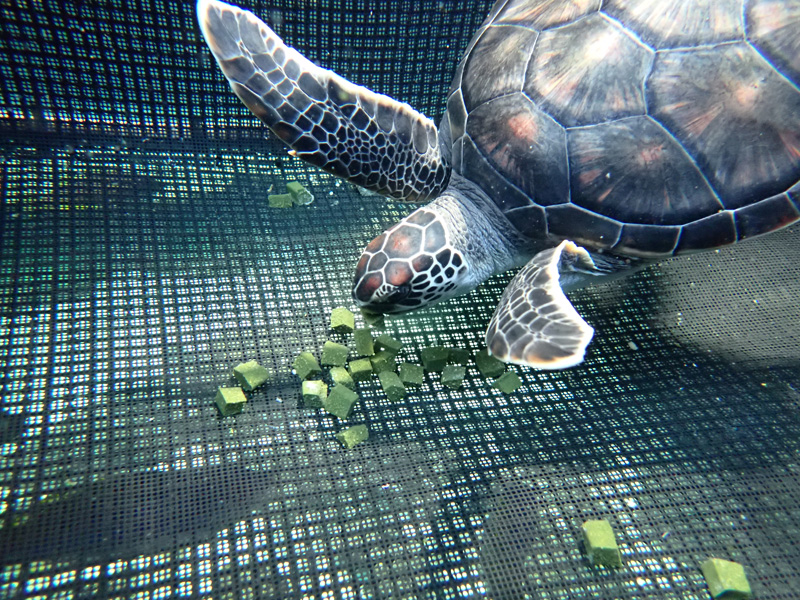 |
| Green sea turtle enters cage on its own ① | Green sea turtle eating plant-based artificial food in a cage (2) |
When observing the green sea turtles in the tank, we used to see them mostly swimming in the shallows or resting on the artificial rocks, but since August, we've been seeing them diving to deeper parts of the water more often. Their growth rate remains stable, so it seems that the improvements to their diet are having an effect.
Please come to Tokyo Sea Life Park and see the two fish swimming powerfully in the tank.
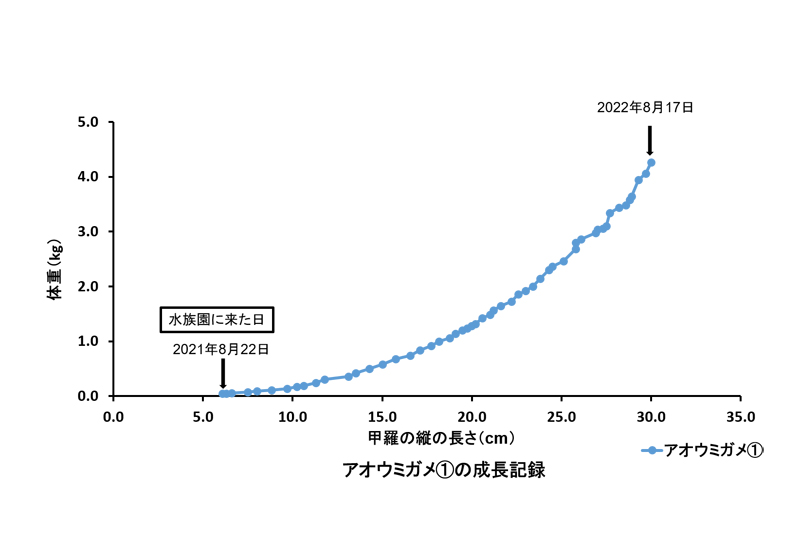 | 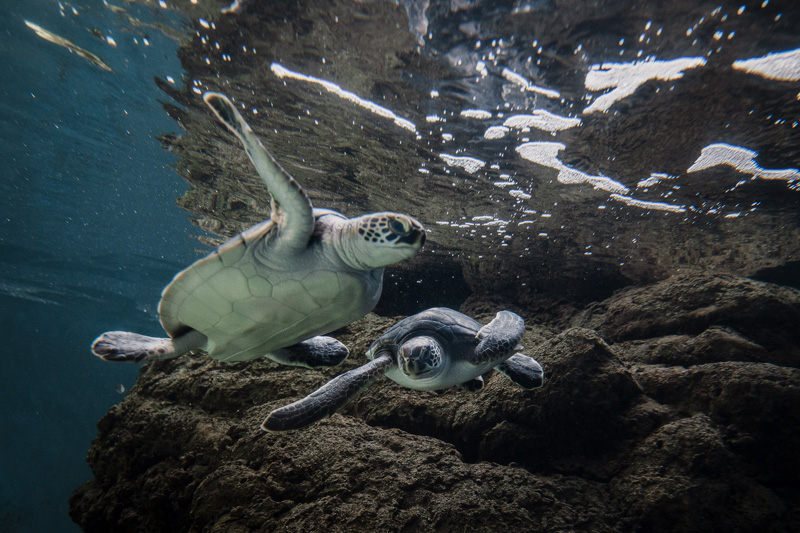 |
| A Green Sea Turtle's One-Year Growth Record | Green sea turtles swimming in a tank
(Left: Green sea turtle ①, Right: Green sea turtle ②) |
[Tokyo Sea Life Park]
(August 26, 2022)