As you descend the escalator from the glass dome of Tokyo Sea Life Park, the first thing that catches your eye is the "Coral Reef Sea" tank. This tank displays coral from Nishinoomote City, Tanegashima Island, which was collected with special permission from Kagoshima Prefecture. The coral cultivated in this tank will be displayed in an even larger tank at the new aquarium, scheduled to open in 2028.
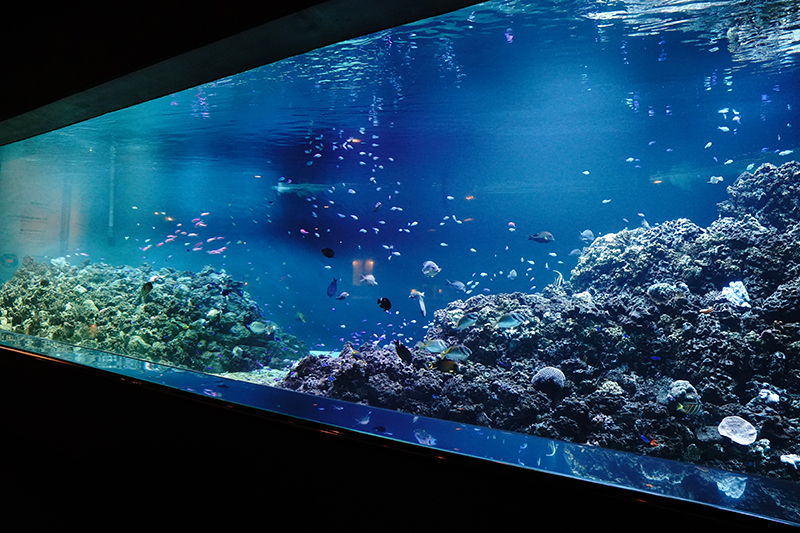
The "Coral Reef Sea" tank in the "World's Oceans" area.The "Coral Reef Sea" tank underwent extensive renovations in September 2024, including removing all the marine life, modifying the artificial rocks, adding water flow piping, and circulating the water with freshwater before switching back to seawater. Gradually increasing the number and variety of fish species while monitoring the tank's condition, it now displays 17 species and approximately 1,000 fish.
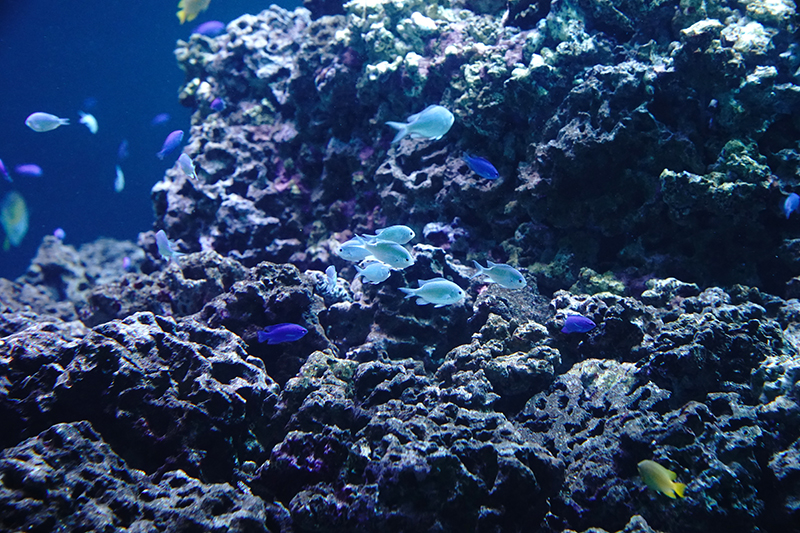
Colorful damselfish fish in blue, light blue, yellow, and other colors.These many beautiful fish are kept not only to create the rich landscape of coral reefs, but also for a more important purpose. That purpose is to create a food source for corals that is closer to their natural state by keeping fish and corals in the same tank. Corals have a symbiotic relationship with tiny algae called "zooxanthellae," and they grow mainly by receiving nutrients produced by the zooxanthellae through photosynthesis. In addition to this, corals catch and eat small animals, bacteria, and floating organic matter with their tentacles.
This aquarium hasn't been inhabited for very long, so there aren't enough small animals or bacteria to serve as food for the corals yet. Therefore, we're hoping that the fish will release organic matter in the tank through their feces, which will then serve as food for the corals. In other words, the fish's mission, as mentioned in the title, is to "eat well and produce plenty of waste in the aquarium."
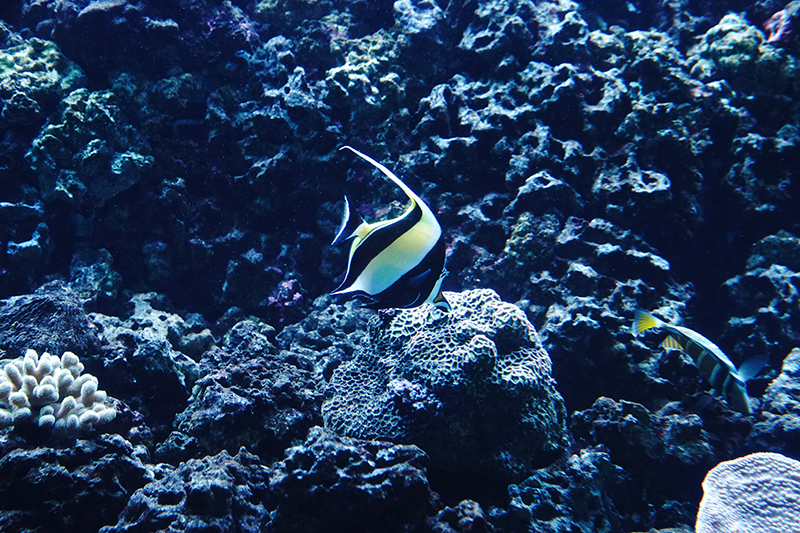
Pay attention not only to the colors but also to the patterns of the fish.The sight of colorful fish swimming around is the perfect start to your enjoyable journey at the aquarium. Why not take a closer look and observe them carefully, remembering that these fish not only create a rich coral reef exhibit, but also play an important role in the tank's ecosystem?
[Kanna Hirota, Animal Care and Exhibition Staff, Kasai Tokyo Sea Life Park]
◎Related articles
・
New tank "Coral Reef Sea" now open! (July 14, 2022)
・
Regarding the reopening of the "Coral Reef Sea" tank exhibit and future plans (September 25, 2024)
(October 10, 2025)