Wild Eurasian Otter have multiple resting places within their home range, and they rest in different locations from day to day. At Inokashira Park Zoo, they sometimes rest on the soil or fallen leaves, but they primarily use two resting places: a burrow made of rocks and a wooden nest box. However, the wooden nest box had become quite old after being exposed to the elements for many years, so it has now been replaced with a new one.
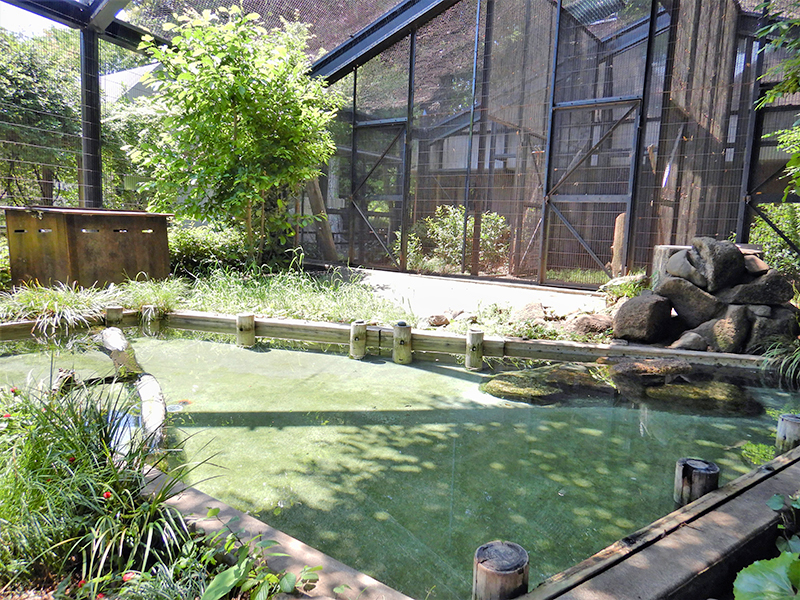
The current exhibit area. There is a burrow made of rocks on the right and a wooden nest box on the left.
Improvements added to the new beehive
When replacing the nest boxes, we consulted with a facility staff member who specializes in carpentry and incorporated several innovative ideas.
To make it easier for visitors to observe the inside of the nest box and to keep it hygienic, we have made the acrylic panels on the sides of the nest box removable for washing. Otters are nocturnal, so they spend most of the daytime sleeping in their resting places. Previously, one side of the nest box facing the viewing walkway was made of acrylic so that visitors could observe the inside of the nest box up close, but the problem was that it would quickly get dirty and make observation difficult. Eurasian Otter go into the water, and when they come out of the water, they have a habit of rubbing their bodies on the ground to groom themselves, so the acrylic panels inevitably get dirty.
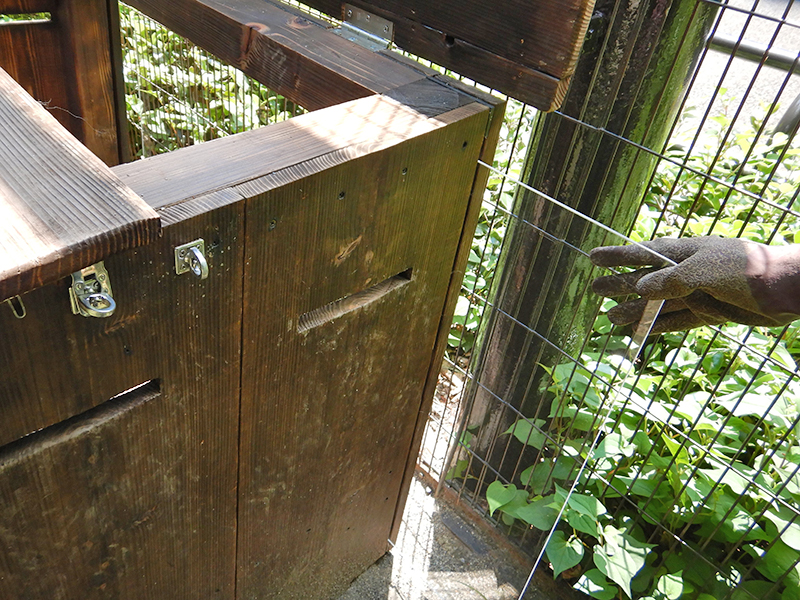
The acrylic panels on the sides of the nest box can be removed for thorough washing.We also made improvements to the retractable roof that animal keeper used to check on the animals inside. Eurasian Otter sometimes climb on top of the nest box, so the roof was already made sturdy, but it was very heavy and sometimes difficult to work with when it was open. This time, the central part of the roof opens like double doors, so the weight to open it has been halved, making it easier to work with. On the other hand, there is a possibility that Eurasian Otter may push up the roof from the inside, so we have made it possible to securely fasten it with a lock when not in use.
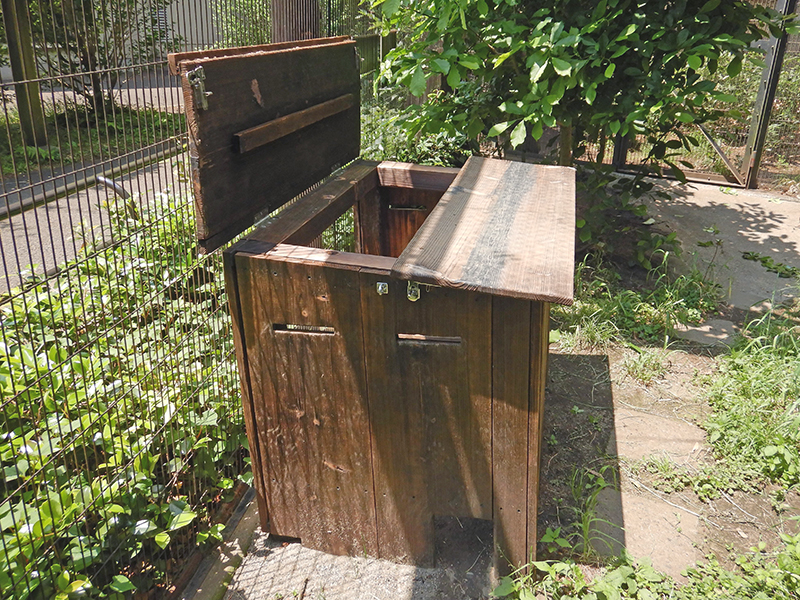
The roof appears to be half open.
When we put the completed nest box into the exhibition area...
[Video] A bird carefully inspects a nest box it's seeing for the first time.While wary of the large object that suddenly appeared, the otter slowly closed the distance, carefully observing its surroundings. Since Eurasian Otter are very cautious, I figured it would take some time before it used the nest box, so I decided to wait patiently while observing its behavior.
Day 1
There are footprints on the outside of the nest box, but no signs of anyone having entered it.
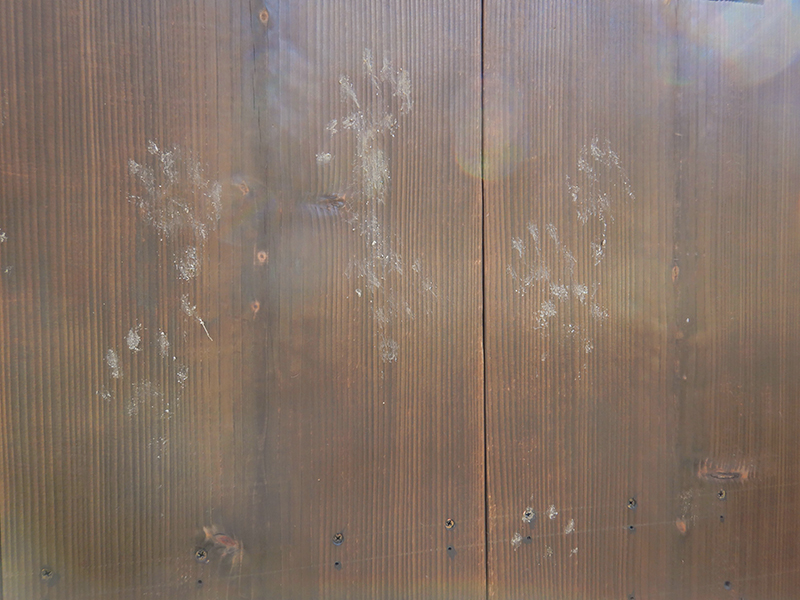
Day 2
The number of footprints on the outside of the nest box is increasing.
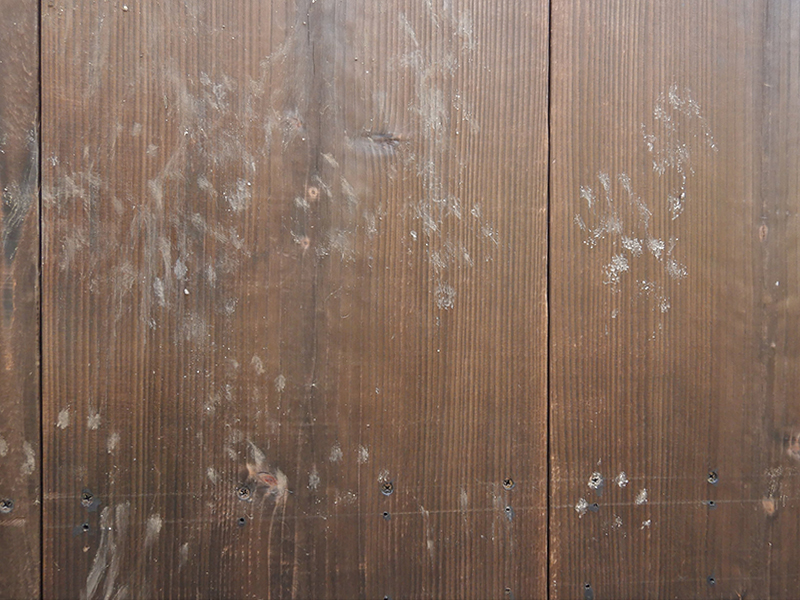
Day 3
Footprints were found inside the nest box. It seems someone went inside during the night, but we couldn't see them resting there during opening hours.
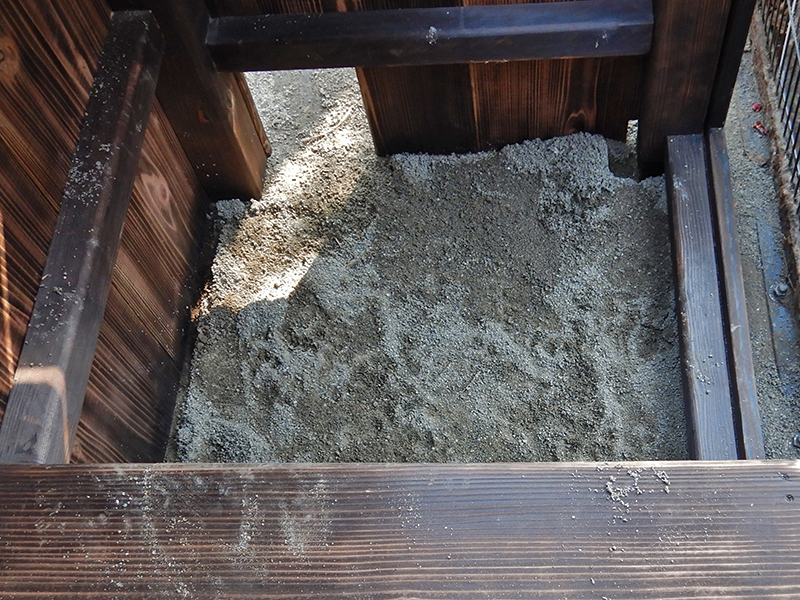
after that……
While anxiously waiting for the day they would naturally enter the nest box, and while thinking about the next way to guide them in, a week passed...
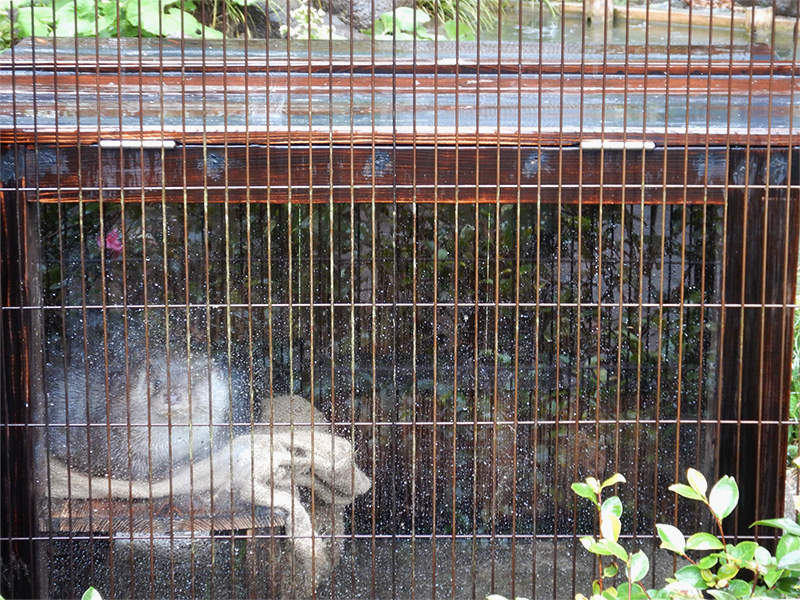
We were able to confirm that they were resting inside the nest box!
They continued to use the nest box afterward, and it seems they have come to feel safe resting inside it. However, depending on their mood, they sometimes rest in the new nest box, and other times they rest in the rock burrow as before, or on the soil or fallen leaves. It appears they are using multiple resting places, similar to how they live in the wild.
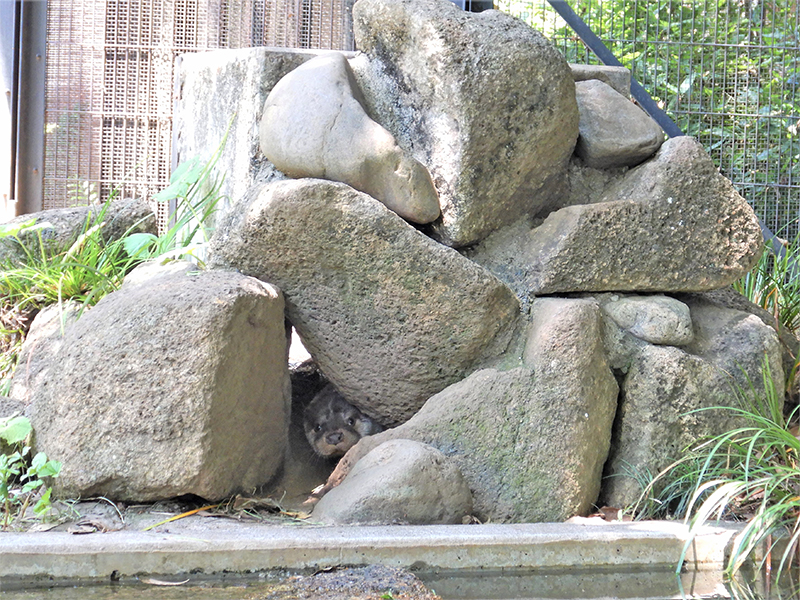 | 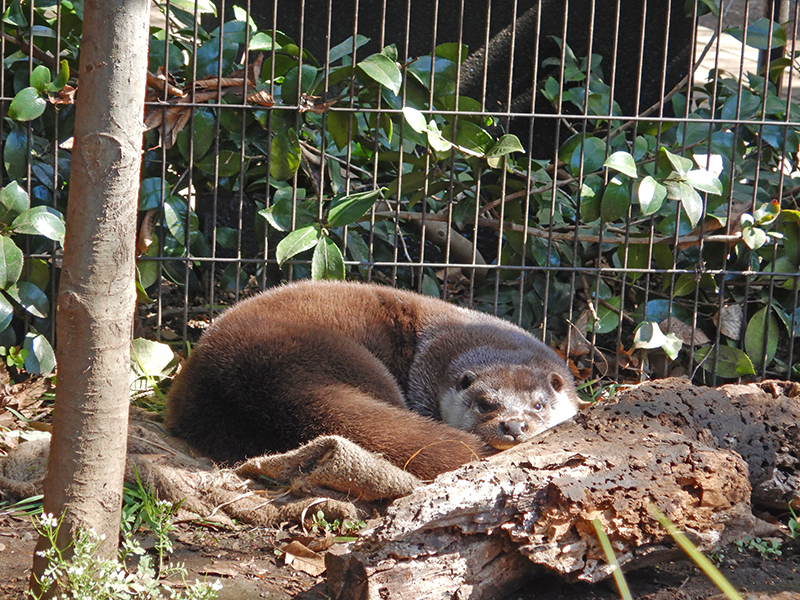 |
| Rock burrow | The sight of them resting on the ground. |
Points of observation
Unfortunately, you won't be able to observe Eurasian Otter when they're resting in their rock burrows. In that case, try observing them again at a different time after a while. They become particularly active around feeding time, making it easier to observe them moving around and resting in their nest boxes.
And when you see them resting in their new nest box, be sure to take a close look at their body structure. You'll surely discover features that make otters perfectly suited to living near water, such as their dense fur that prevents their body temperature from dropping in the water, their many whiskers that are sensitive to the flow of water, their small ears that offer less resistance in the water, and the webbing between their front and hind feet.
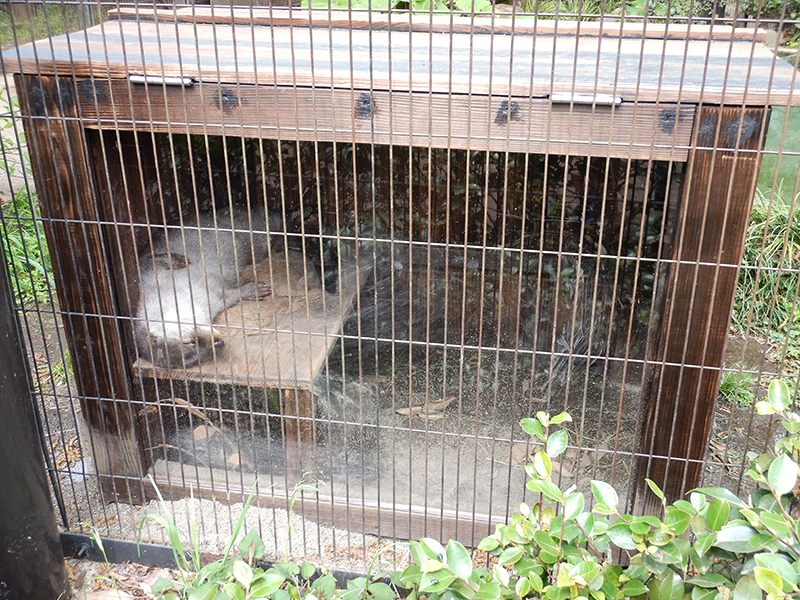
They seem to be resting in their new nest box.[Inokashira Park Zoo Zoo]
(May 27, 2023)