How are you all doing in this continuing heat? Although autumn has officially begun, it's still the height of summer in August, and when I'm cleaning the penguin pool at Inokashira Park Zoo, I sometimes get asked questions like this by visitors.
"Is that a baby penguin?"
"What happened to that penguin!?"
Here is the penguin.
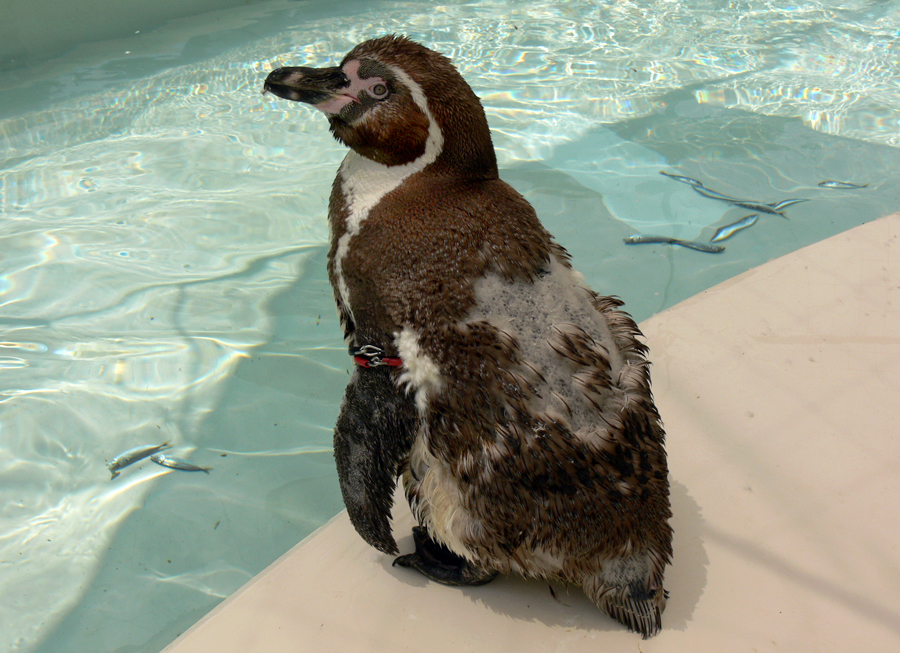
Photo 1: Humboldt Penguin with fluffy feathers.It certainly looks different from Humboldt Penguin we usually see. Penguins go through a period called "molting" once a year, when all of their feathers are replaced. There are various theories as to why molting occurs, but in the case of penguins, it is thought that as their feathers get old, their waterproofing properties, which are important for diving, weaken.
This molting process is actually quite strenuous for penguins. This is because, during molting, penguins' water resistance is significantly reduced, making it difficult for them to swim properly, and they avoid entering the water. However, their diet consists of fish that swim in the ocean. If they can't swim, they obviously can't eat.
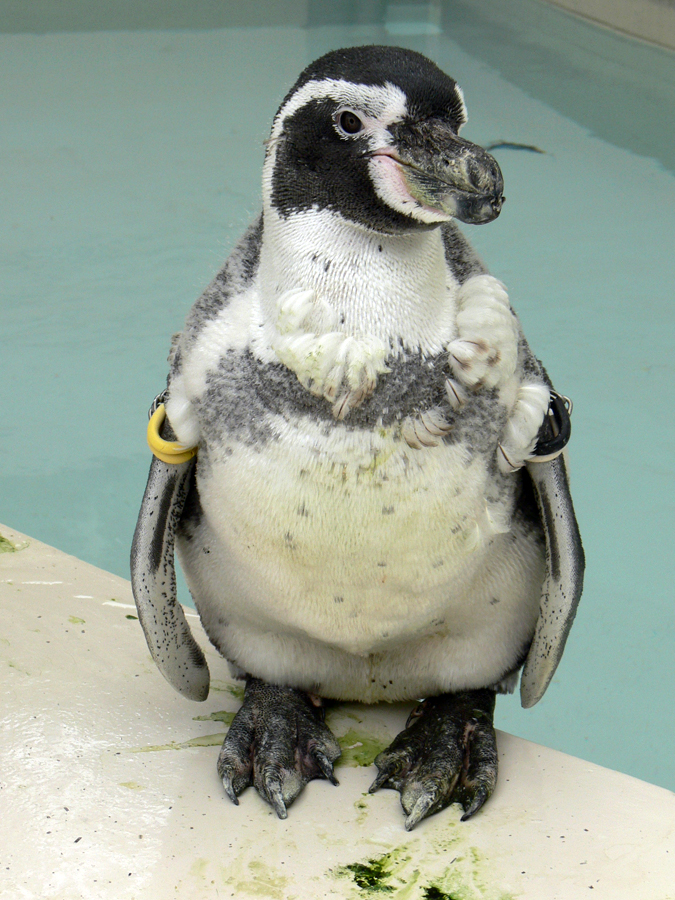 | | 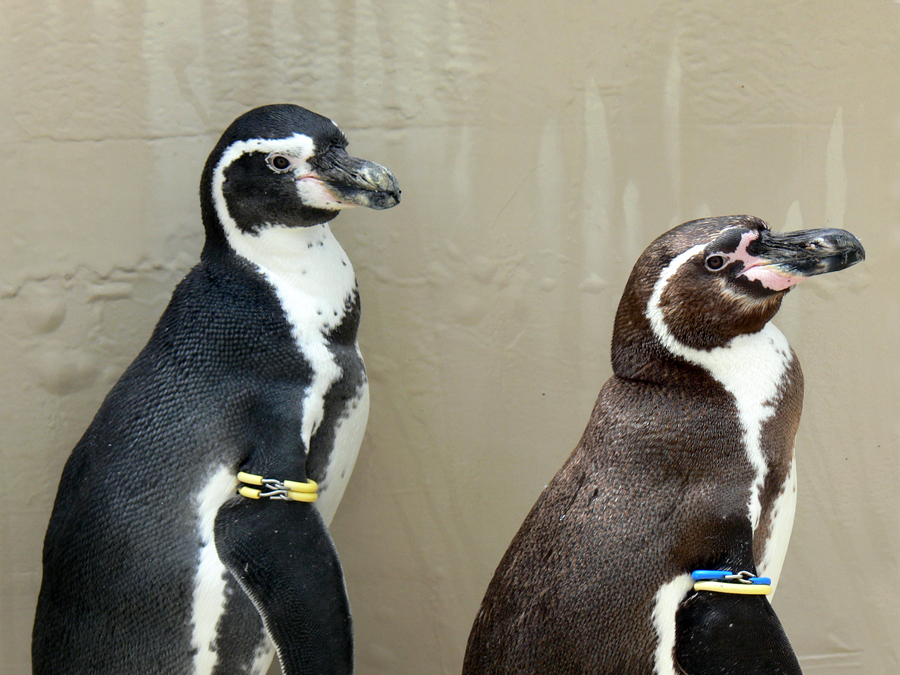 |
| Photo 2: Molting will be finished soon. | Photo 3: Left: Individual that has finished molting; Right: Individual that has not yet started molting. |
Therefore, penguins before molting eat two to three times the normal amount of food to store up plenty of fat. Then, when molting begins, they basically don't eat anything during that time and spend their time still to conserve energy (although some individuals do eat).
If you compare them, you'll see that the feather colors are different (Photo 3). The beautiful black and white feathers seem to have turned a little brown after a year.
While there are individual differences, molting usually finishes in about two weeks. As of August 15, 2016, there is one individual that has not yet started molting. It may have started by the time this article is published, but this is a chance to see a penguin before and after! Please take a look and compare them.
[Inokashira Park Zoo]
(August 27, 2016)