Harvest Mouse is the smallest of all mice in Japan, measuring about 5-7 cm in length and weighing only 6-10 g, about the same weight as a 500 yen coin. The habitat of Harvest Mouse is a grassy area densely covered with reeds, which is part of its name.
"Kaya" is a general term for grasses such as Japanese pampas grass and Japanese laurel, and can be commonly seen on riverbanks and fallow fields. Even in kayahara (fields of reeds) where reeds grow so densely that it is difficult for people to enter, Harvest Mouse can live by wrapping its tail, which is longer than its body, around the grass, and by using its light weight to move freely on the narrow grass that other mice cannot climb.
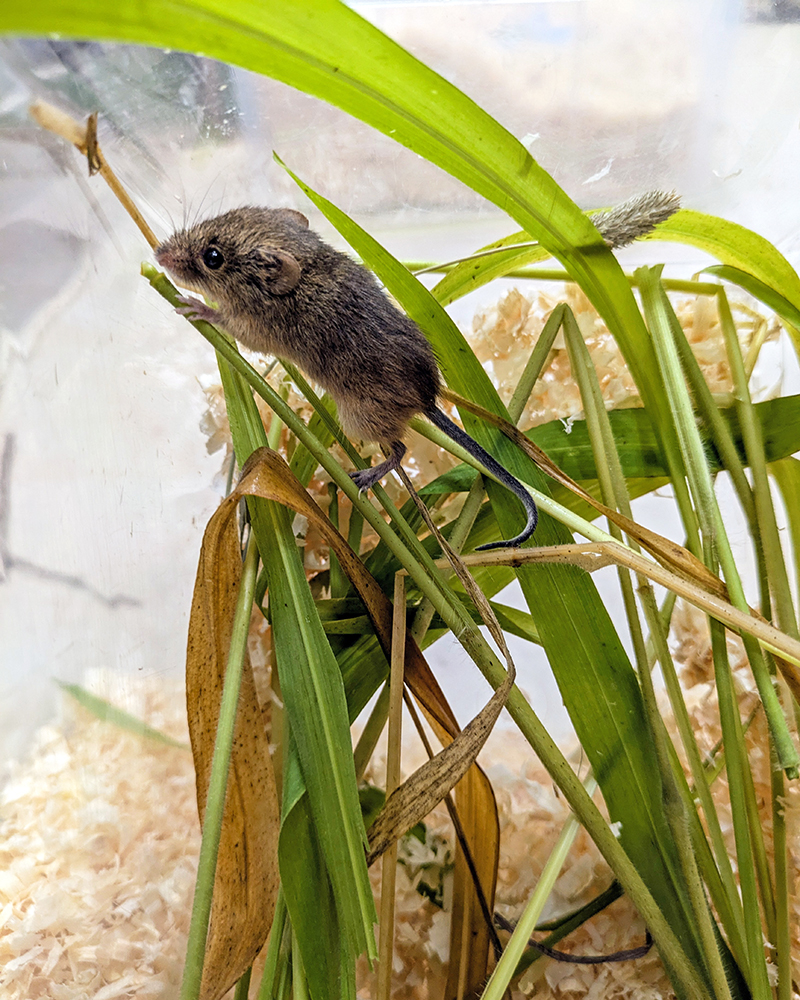
Harvest Mouse moving across the grass.At Inokashira Park Zoo Zoo, to recreate the actual habitat of the pampas grass, the leaves and stems of the grass that grew abundantly in the park during the summer are cut and placed in the exhibit. While naturally growing pampas grass retains its leaves for a long time, cut grass quickly wilts. Therefore, the hard stem portion is gathered in the center, and the leaves are wrapped around it to prevent it from losing its shape.
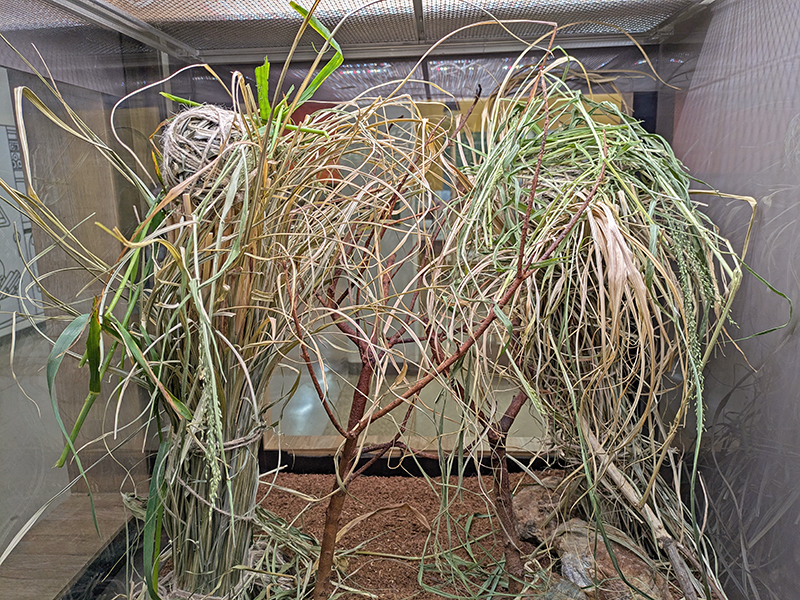
An exhibition inspired by ChiharaFurthermore, Harvest Mouse also use grass to build their nests. These are palm-sized, round nests called "spherical nests," built about 1 meter above the ground. The outer layer is roughly woven grass, while the inner layer near the center is made of finely shredded, softer grass, creating a double-layered structure.
At Inokashira Park Zoo, they make homemade ball nests for individuals that aren't good at building them themselves, and so that the mice can rest immediately after the original nests are collected and cleaned. The structure is simple: a tennis ball is partially hollowed out and grass is wrapped around it. Although it's an artificial object, Harvest Mouse don't seem wary of it, and they have actually bred there, with their offspring sometimes seen peeking out of the nest.
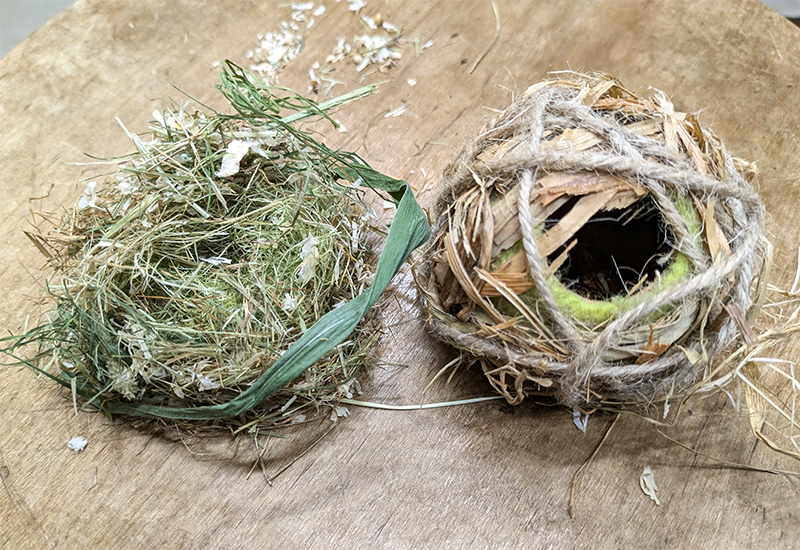 | 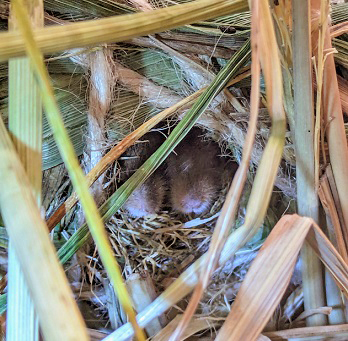 |
| Left: Original sphere nest, Right: Artificial sphere nest | The nose is sticking out of the artificial bulbous nest. |
In addition to Harvest Mouse, our zoo also keeps other species such as Japanese Grass Vole, which lives in burrows in the ground, and the tree Small Japanese Field Mouse, which can climb trees. Please observe them and pay attention to their different lifestyles.
[Inokashira Park Zoo Zoo]
(November 2, 2024)