Inokashira Park Zoo has been participating in
Tsushima Leopard Cat cat conservation and breeding project, a joint initiative of
Japanese Association of Zoos and Aquariums and the Ministry of the Environment, since 2006. In our June 2018 article, "
For Tsushima Leopard Cat animal keeper, 'Feces' are Important!!", we shared some of the everyday tasks of animal keeper, but the information that can be obtained from feces is not limited to hormones related to reproduction.
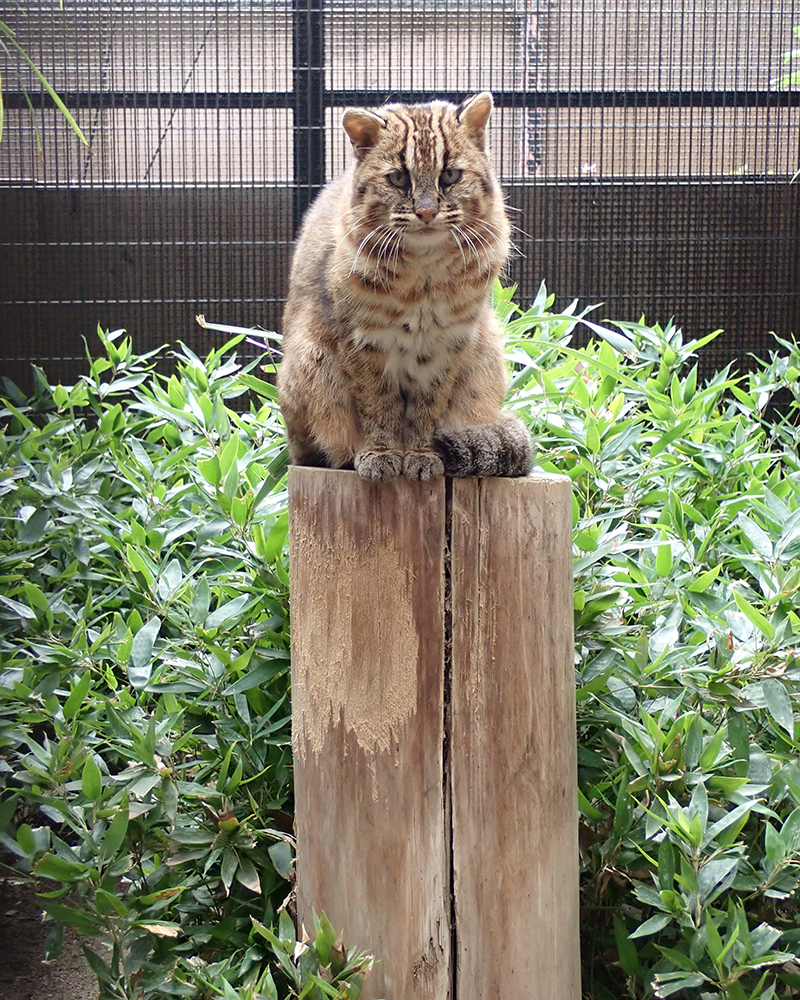
Fuyuto (male), Tsushima Leopard Cat cat being kept in a restricted area.animal keeper meticulously check the color, shape, smell, and contents of the animals' droppings during cleaning, striving to maintain their health every day.
The photo shows the feces of wildcats that have eaten bamboo leaves growing in their enclosure. They eat grass to groom themselves or to expel hair from their bodies along with their feces if they ingest any hair from prey. Many people are familiar with "cat grass," where domestic cats eat grass, but wildcats exhibit similar behavior. Although it's just feces containing leaves, it's useful for understanding their physical condition and reveals that the wildcats were searching for grass.
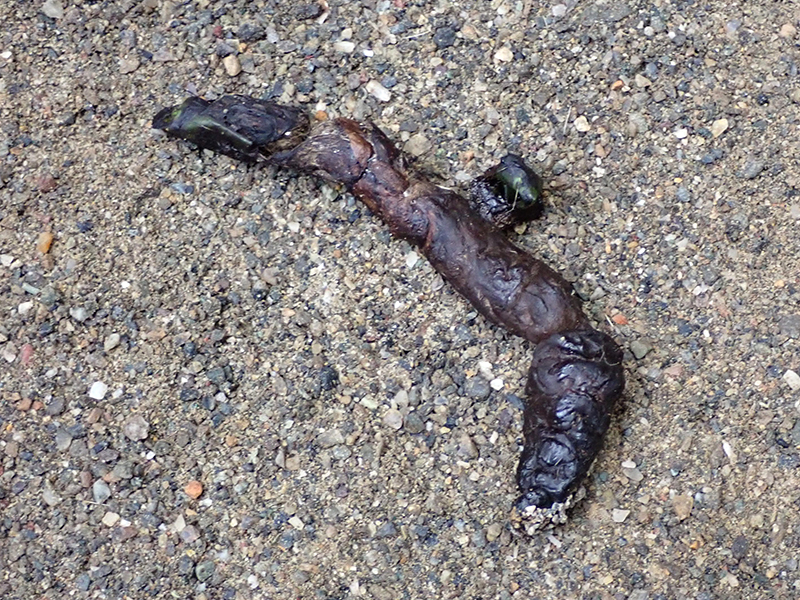
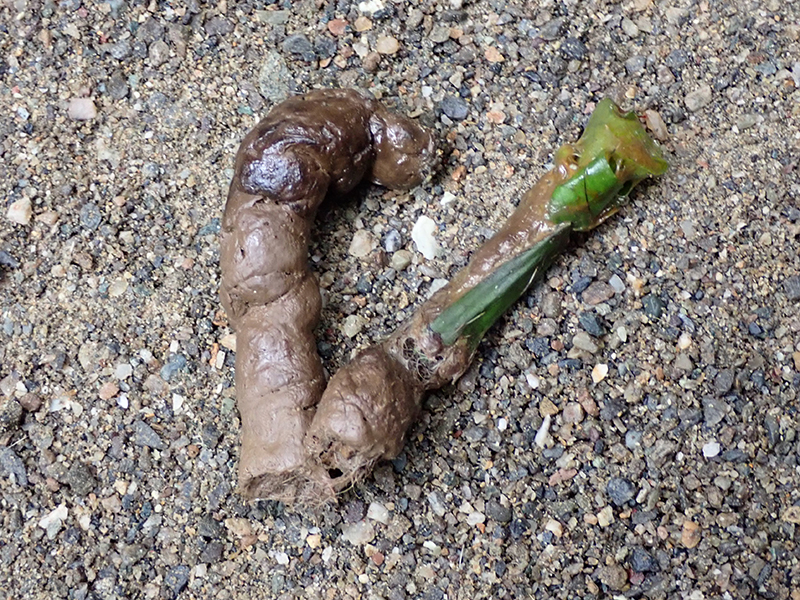
Feces of Fuyuto Tsushima Leopard Cat catAt the cultural park, the cats are fed a set amount of horse meat, chicken heads, mice, and cat food each week, with their calories carefully adjusted. However, wild cats mainly hunt mice and moles, and sometimes eat insects, birds, snakes, and frogs. What they eat becomes nutrients, and eventually the rest becomes feces.
In the wildcat enclosure (on the monkey mountain side)
where the three Amur Leopard Cat siblings born in 2023 are kept, the important droppings are often found in front of a large glass window. So today, let's take a close look at what their droppings look like.
The wildcat animal keeper 's animal diary... "A message from the droppings."
[Inokashira Park Zoo Animal Care and Exhibition Staff, Karasawa]
(November 21, 2024)