Inokashira Park Zoo keeps two red-Red-crowned Crane in its aquatic animal enclosure and one in the zoo's large enclosure. In mid-August, the Red-crowned Crane-crowned cranes in the aquatic animal enclosure molted. So, let's talk about the feathers of Red-crowned Crane and other birds.
There are several types of feathers, and each has its own role.
First, feathers can be broadly divided into two types: "contour feathers" and "downy feathers." Contour feathers are characterized by having a central shaft called a "feather shaft," and include the "flight feathers" and "tail feathers" that make up the wings. Flight feathers are further divided into three types: "primary flight feathers," "secondary flight feathers," and "tertiary flight feathers," and they are essential for flight.
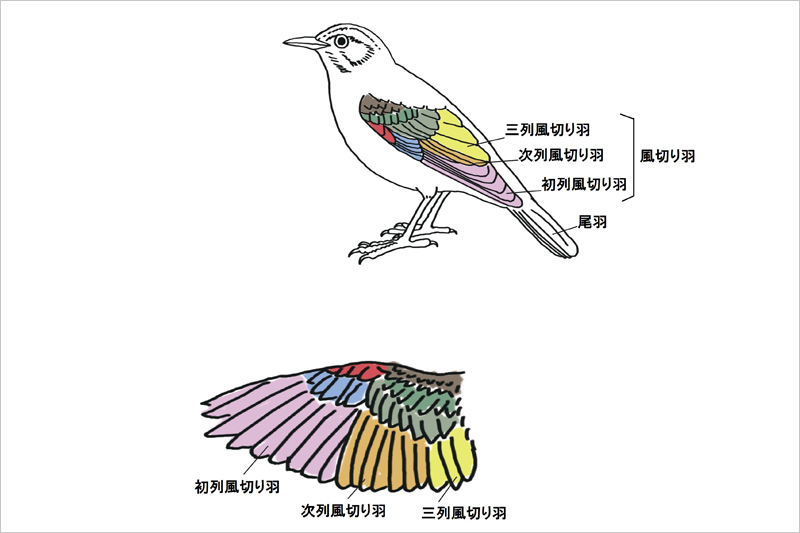
Names of feathersOn the other hand, down feathers grow close to the skin and are characterized by their fluffy, cotton-like texture. In English, they are called "down," and they have excellent heat retention properties, playing a role in protecting against the cold.
Feathers are important to birds. Therefore, birds frequently bathe and preen their feathers, always taking care of them. However, even with daily preening, feathers gradually become damaged, so they undergo periodic molting. Molting is the process where old feathers fall out and new ones grow in their place. The timing of molting varies depending on the bird species; some molt only once every few years, while others molt several times a year. During molting, the flight feathers, which are crucial for flight, also fall out.
Red-crowned Crane generally molt every two years, around July or August, when the breeding season ends. During this time, Red-crowned Crane flight feathers fall out all at once, and they are temporarily unable to fly until new feathers grow back.
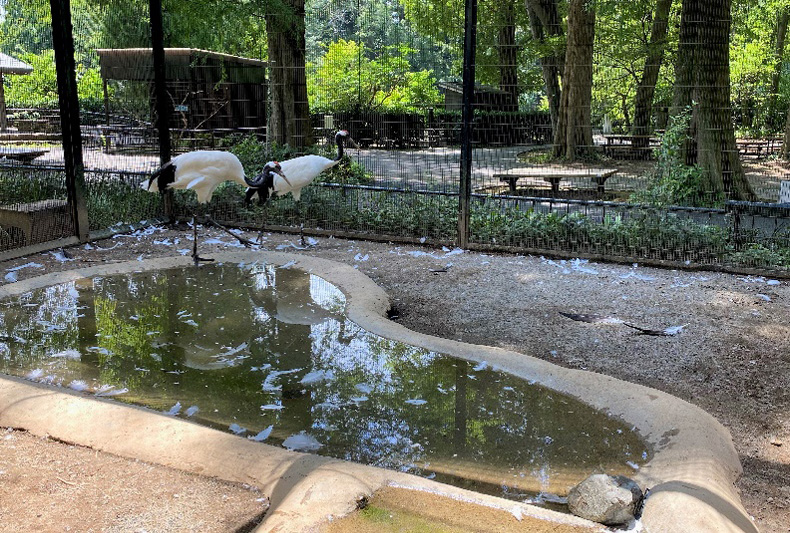
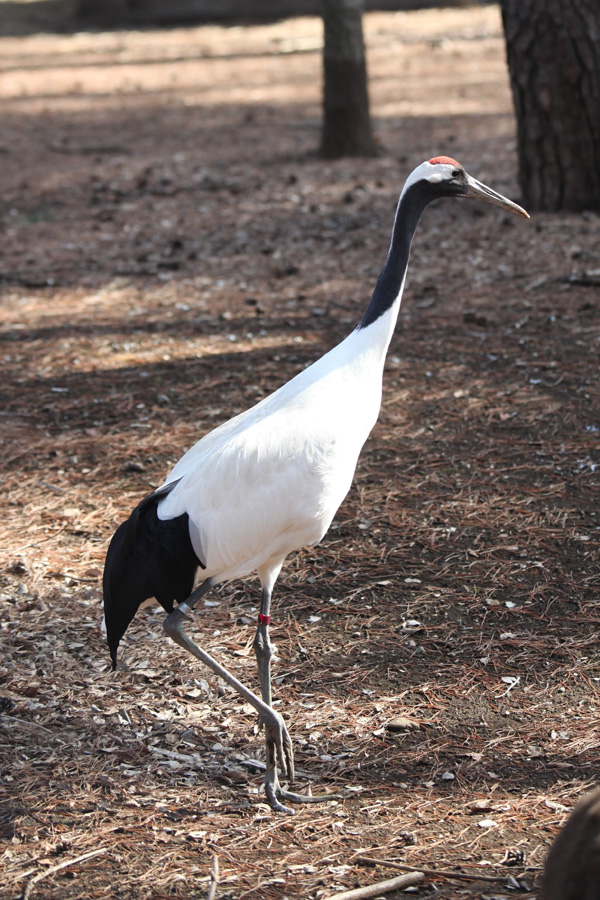
A view of the enclosure during molting. This is how many feathers are shed in just one day.Because the wings are folded at the waist, when you see Red-crowned Crane crane from behind, the black feathers look like tail feathers, but they are actually tertial flight feathers that grow at the base of the wings. There are also black feathers in the secondary flight feathers, but if you compare them, you'll notice that their shape is slightly different.
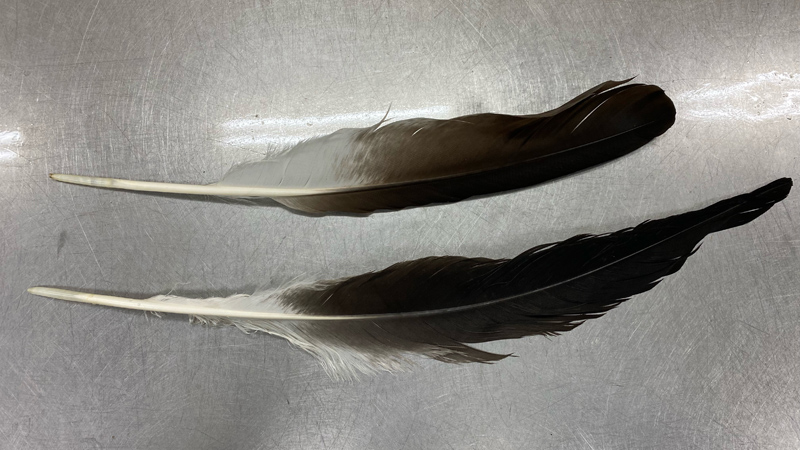
The top shows the secondary flight feathers, and the bottom shows the tertiary flight feathers.During molting season, the black flight feathers also fall out, so the tail feathers, which are usually hidden by the overlapping flight feathers, become clearly visible, and you can see that the tail feathers are white and surprisingly short.
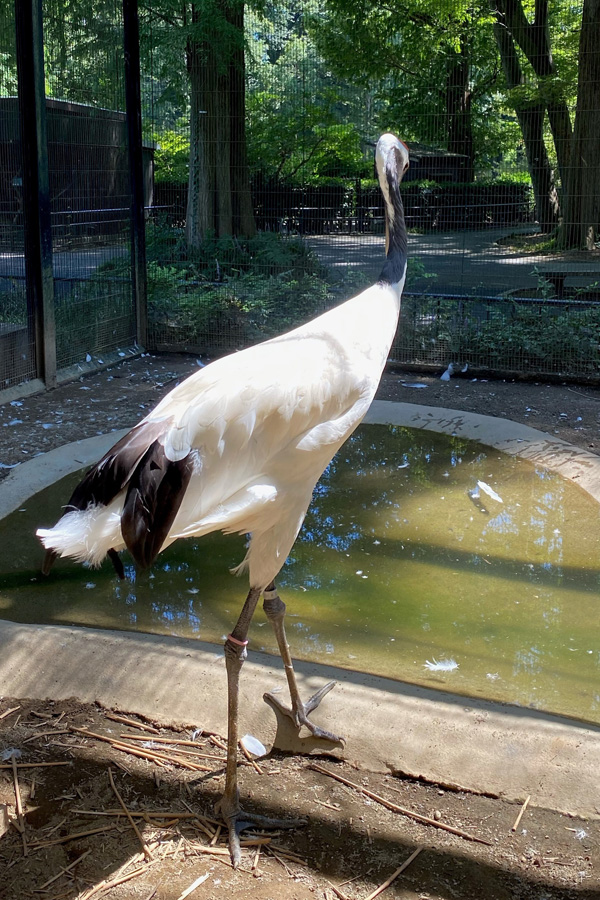 |  |
| Molting | After molting
*This is a different individual from the one on the left (molting). |
The two red-Red-crowned Crane kept at the aquatic animal park molt in different years, so you can see one of them molting each year. When you visit, please be sure to pay attention to the birds' feathers.
[Sakura Murakami, Animal Care and Exhibition Staff, Inokashira Park Zoo Aquatic Life House]
(September 25, 2021)