Inokashira Park Zoo currently exhibits six Ijima's Copper Pheasant three males and three females. One of the females is a young bird, less than a year old. This time, we will introduce the process of artificial rearing of this female from chick to young bird.
The zoo is working on artificial breeding of Ijima's Copper Pheasant. In 2024, two of the five eggs placed in the incubator hatched on May 12th, two hours apart. Normally, individuals are identified by their birth date and size. However, it is not possible to determine the sex of a Copper Pheasant just by looking at it immediately after it hatches, and these chicks were born on the same day and were almost the same size. Therefore, they drew a horizontal line with a colored pen on the leg of the chick that hatched first and referred to it as "the one that hatched first" and "the one that hatched later" to distinguish them.
Newly hatched chicks learn through a process called "imprinting," recognizing the first moving object they see as their parent. Normally, the parent is the individual that laid the egg, but in the case of chicks hatched in an incubator, imprinting occurs with the person caring for them or other chicks nearby. In this case, the first chick was imprinted on a human, while the later chick was imprinted on the first chick.
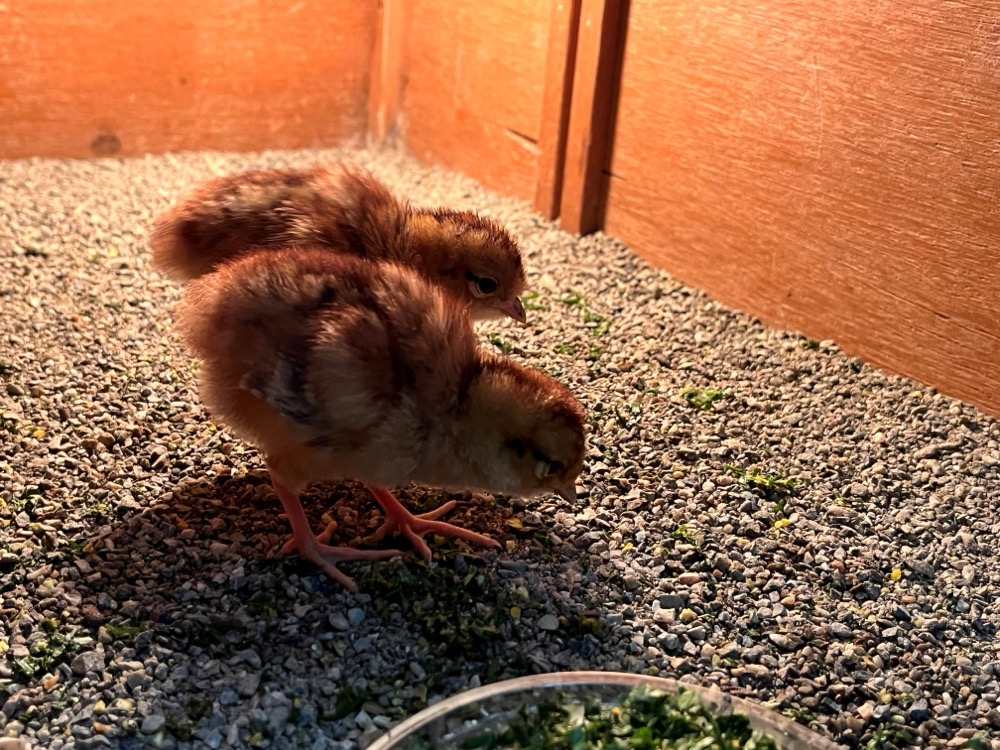
Day 3 after hatchingWild Copper Pheasant, within half a day of hatching, desperately follow behind their parents. Therefore, believing that sufficient exercise and muscle development are necessary even in captivity, we moved them from the brooding box to a large exhibit area with perches at about one month old, allowing them to exercise in as spacious an area as possible to stimulate their muscles and legs. In captivity, exercise is easily restricted, and if they eat too much, they can gain too much weight, become unable to support their bodies, and their legs may spread abnormally, making it impossible for them to stand. Also, if the nutrition provided is unbalanced, they may die from malnutrition. We carried out artificial rearing with the utmost care to prevent such problems.
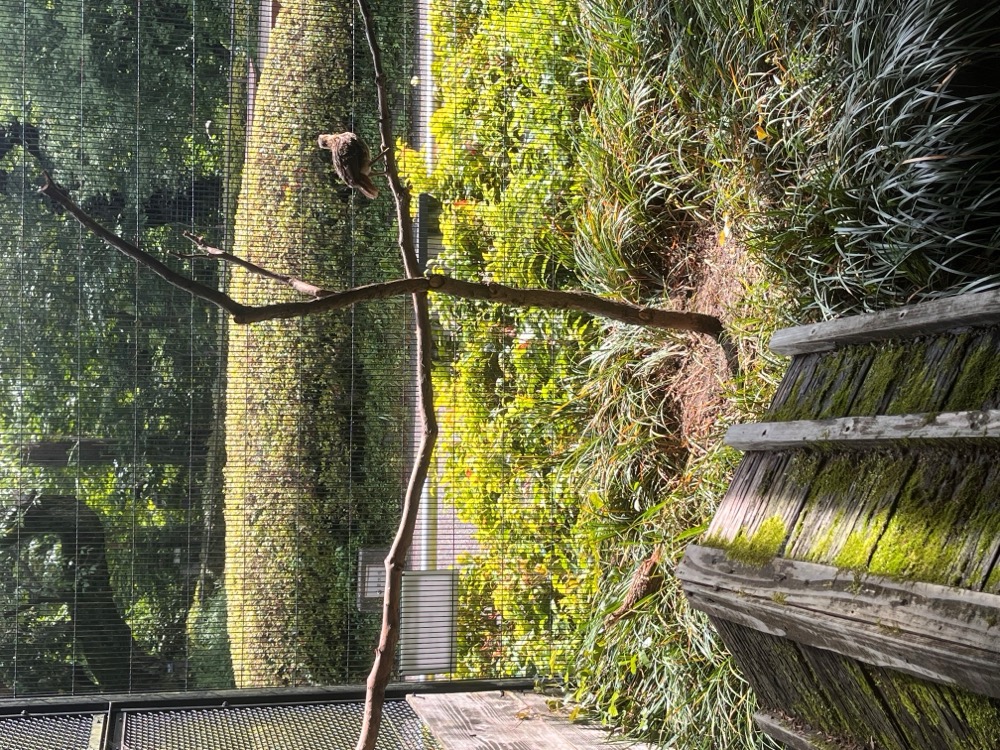
Approximately 45 days after hatchingIt is said that the sex of Copper Pheasant becomes apparent from its appearance around two months of age, and these chicks were no exception. As the days went by, their individual characteristics became apparent, and we were able to confirm that the one born first was male and the one born later was female. Both chicks continued to grow well, but when they were a little over three months old, the male was startled by something at night and hit his head. Despite our best efforts to treat and care for him, he unfortunately passed away.
After the male left, the female became more wary and ate less, which caused some concern, but as time passed, her condition stabilized and she grew up safely. She weighed 23g at birth, but now, 10 months later, she has grown to about 700g, almost the same as an adult, and looks very secure. This young Copper Pheasant is on display in the second cage from the left in Copper Pheasant exhibit. Please come and see her healthy growth!
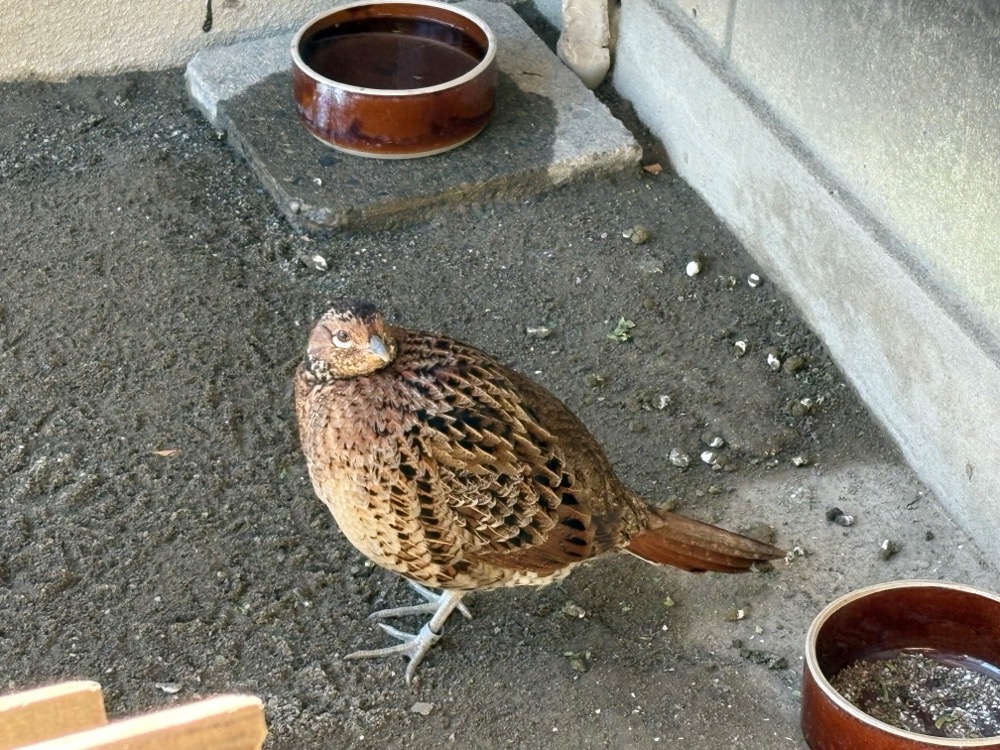
Current appearance of the young birds[Inokashira Park Zoo Animal Care and Exhibition Staff - Terahara]
(March 21, 2025)