At the zoo, you can learn more about the lifestyles of different creatures by comparing them. You can compare animals to each other, or it can be interesting to compare them to us humans.
At Inokashira Park Zoo, three species—Masked Palm Civet, martens, and Eurasian Otter—live in adjacent enclosures. Each enclosure is equipped with burrows and nesting boxes to provide them with a safe and comfortable resting place. Unlike humans, they are nocturnal, so during the day, you'll often see them resting in their resting places.
Observing them reveals that each of them uses their resting place in slightly different ways. Let's take a look at them one by one.
In the case of Masked Palm Civet
In the wild, Masked Palm Civet use tree hollows in old trees or holes in rock crevices as burrows.
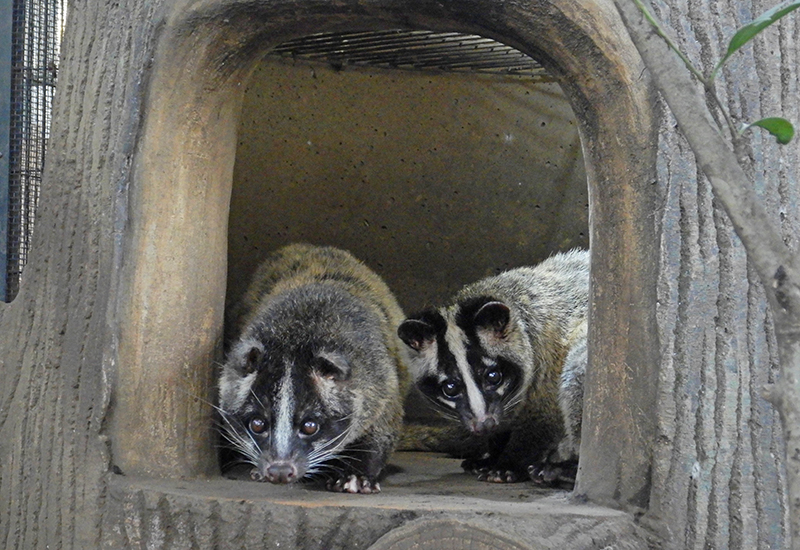
You can see two masked Masked Palm Civet at Inokashira Park Zoo. Both are elderly males, turning 21 this year, and they often rest together in the resting area, not only on cold winter days but also on hot summer days.
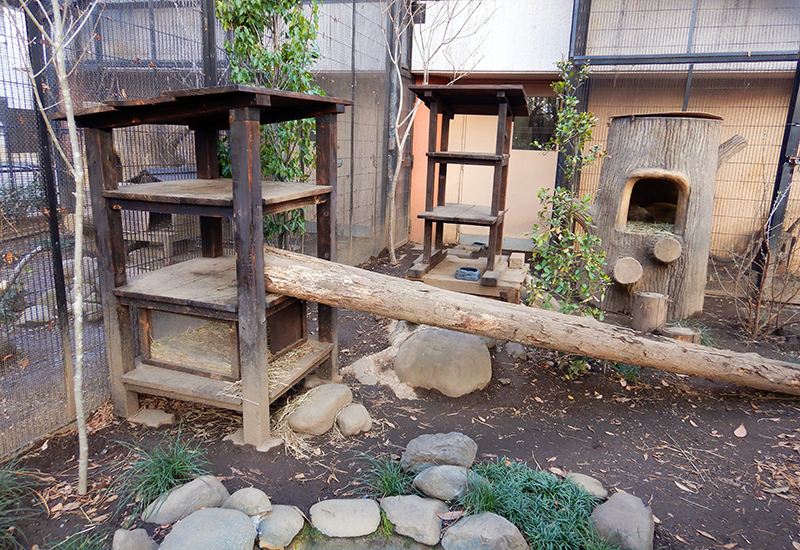 |  |
Masked Palm Civet exhibit
The resting places are in the tree in the back right and the nest box in the front left. | Masked Palm Civet in a resting place |
When I enter the exhibit area in the morning to clean and take a peek at them sleeping, I often find them sleeping with their poop and pee in their beds (!). From a human perspective, you might think, "They poop in their beds and then sleep like that!"
However, from Masked Palm Civet, a resting place enveloped in its own scent might be the perfect bed where it can sleep peacefully. Not only that, but it could also serve to let other masked Masked Palm Civet know that this is its home when it goes out at night.
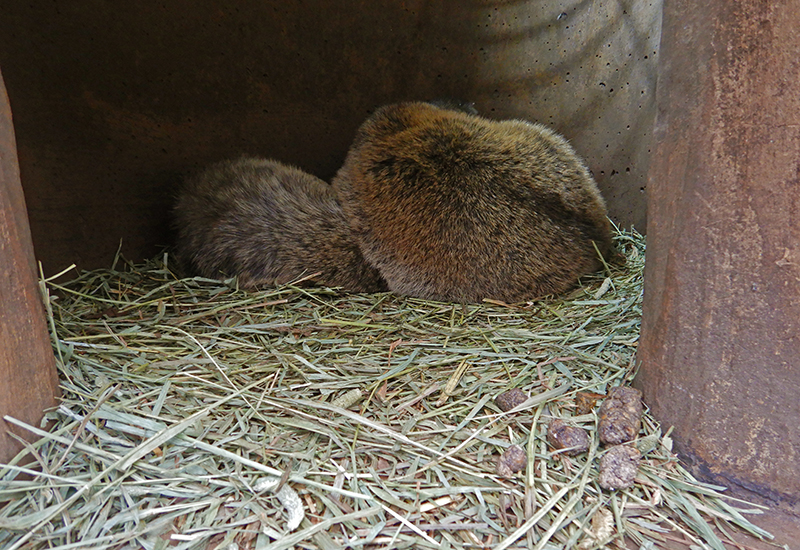
Masked Palm Civet sleeping deep inside its burrow, with droppings lying at the entrance.As mentioned earlier, Masked Palm Civet at Inokashira Park Zoo is elderly, and as its mobility declines, it may find it troublesome to go outside to defecate. However, since wild masked Masked Palm Civet have been known to enter the attics of houses and defecate and urinate there, this behavior may be considered common among Masked Palm Civet.
In the case of Ten
For martens, with their slender bodies that easily lose heat, warm resting places are crucial for surviving the cold winter. In the wild, they are thought to rest in tree hollows, gaps between fallen logs, holes in the ground, and cracks in rocks.
At Inokashira Park Zoo, hay is placed in the marten nest boxes during the winter. As a result, the martens stop using the nest boxes they had been using all along and begin to rest every day in the boxes with hay.
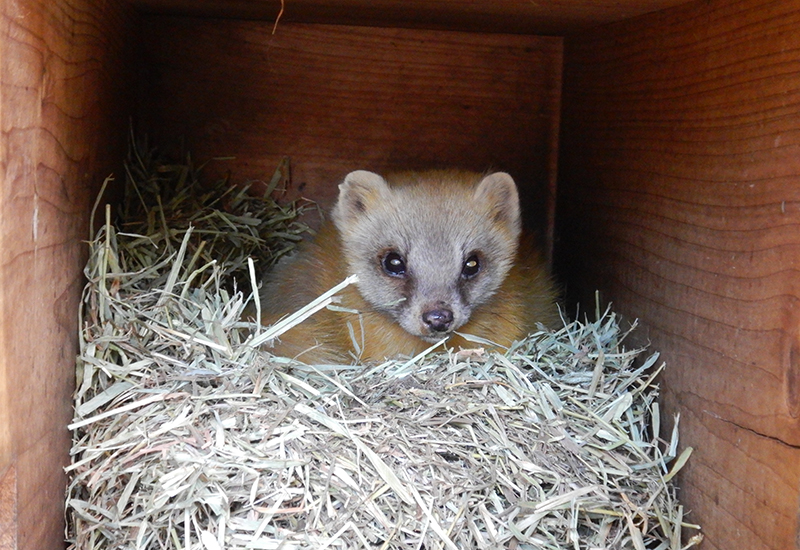
Japanese Marten resting on hayFrom observing the marten, I thought, "It seems that in winter it prefers to use a nest box filled with hay, but it doesn't seem to bring in plants to make a bed for itself..."
However, this winter, when we planted new plants in the exhibit area, we observed some interesting behavior. The martens were breaking off pieces of the new plants and bringing them into their nest boxes. We don't see this all the time, but it was a new discovery that martens sometimes do this.
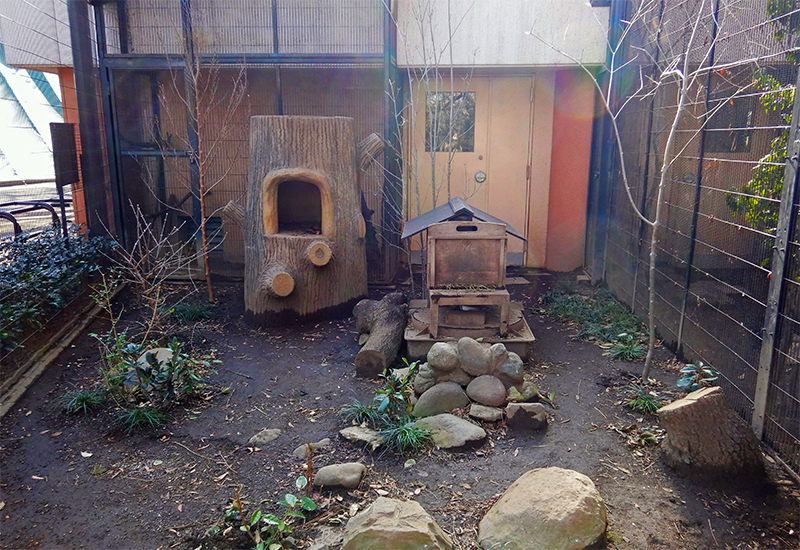 | 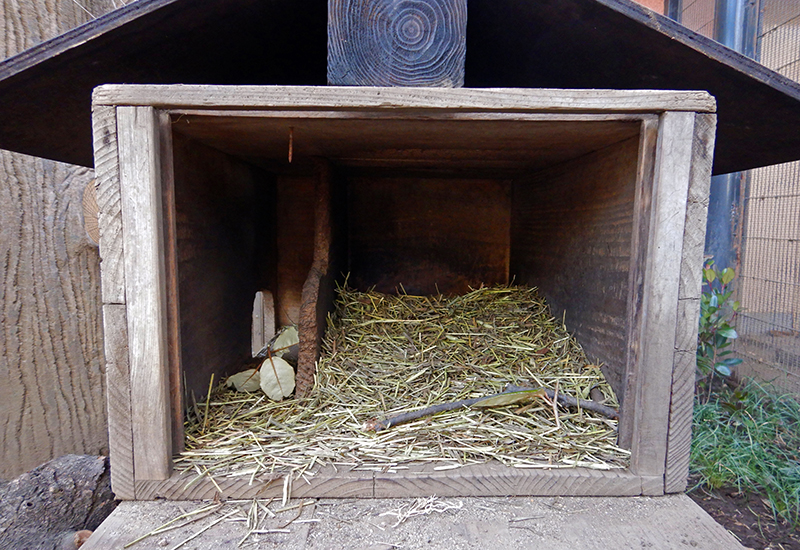 |
| New plants have been planted in Japanese Marten exhibit. | A Japanese Marten nest box into which plants were introduced. |
In the case of Eurasian Otter
Wild Eurasian Otter seem to have several resting places along rivers, such as crevices in rocks or bushes, and often move between them every few days.
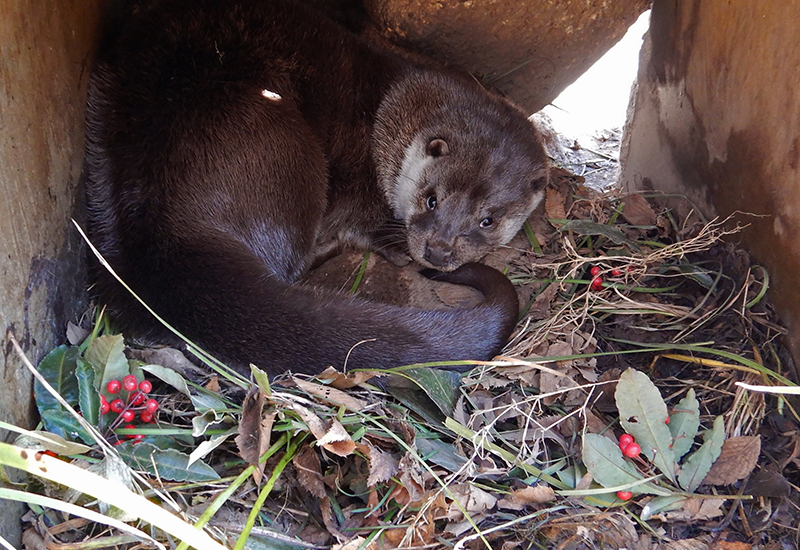
At Inokashira Park Zoo, we have two resting areas for the otters. In winter, fallen leaves, twigs, and burlap (which the zookeepers give them daily) are brought into the resting areas, creating warm beds for the otters. This behavior is not seen during the summer.
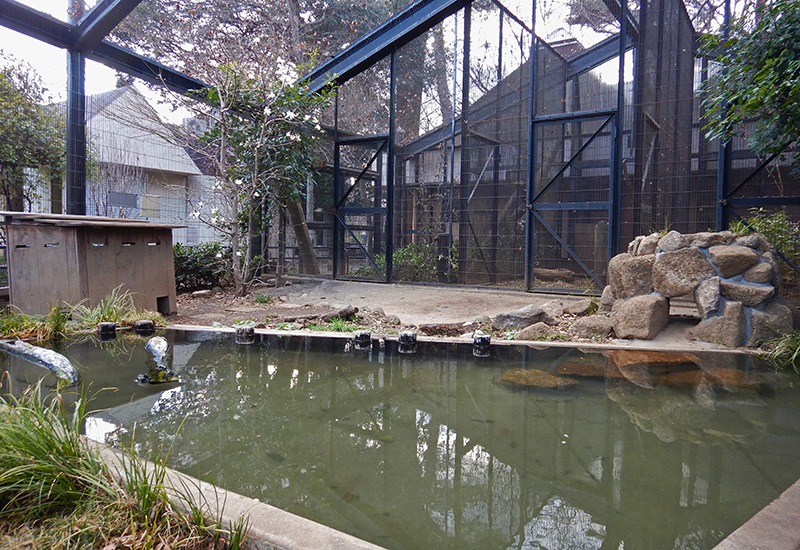 |  |
Eurasian Otter exhibit
The rock pile on the right and the wooden nest box on the left are resting places. | An otter resting on a bed it made itself.
(Taken in winter 2024) |
Of the two resting places, the nest box that allows you to see inside can be observed up close, so please take a peek inside. As the weather gets warmer, the beds will be removed to keep the resting place clean, but as of March 2025, you can see the beds that the otters have made themselves.
A resting posture rarely seen in the wild.
Thus, the use of resting areas seems to vary depending on the species, individual animals, and environment. When you see animals resting in zoos, you may sometimes wish that they would move.
However, it is rare to see such alert creatures resting in the wild as I have introduced here. If you see zoo creatures resting, please imagine why they are sleeping at this time of day, why they feel safe there, what they would do in the wild, ......, and so on.
Inokashira Park Zoo
◎Related Articles
interpoint (interword separation)
A big change! Japanese Marten A Change of Clothes (03/09/2023)
interpoint (interword separation)
The otter's nest box has been renewed! (05/27/2023)
(03/24/2025)