This page contains teaching materials that can be used in the 4th grade elementary school science unit, "Our Bodies and Movement." We have prepared illustrations of the full skeletons of three different animals so that students can compare the bones of humans with those of other animals. Additionally, you can watch videos on YouTube of various animals walking, allowing you to compare their body movements. We hope this will help children discover the similarities and differences between animal and human bodies in an enjoyable way.
[Elementary School Page]We have prepared a worksheet using the teaching materials. The explanation is provided below. You can use the worksheet as is, or you can adapt it to your own needs.
Work objective 1
Understand that while humans and other animals have bones with the same function and the same bone arrangement, differences in bone shape and size result in different apparent absolute joint positions.
Work objective 2
Understand that both humans and other animals have muscles around their bones, and that the areas where muscles are particularly well-developed vary from animal to animal.
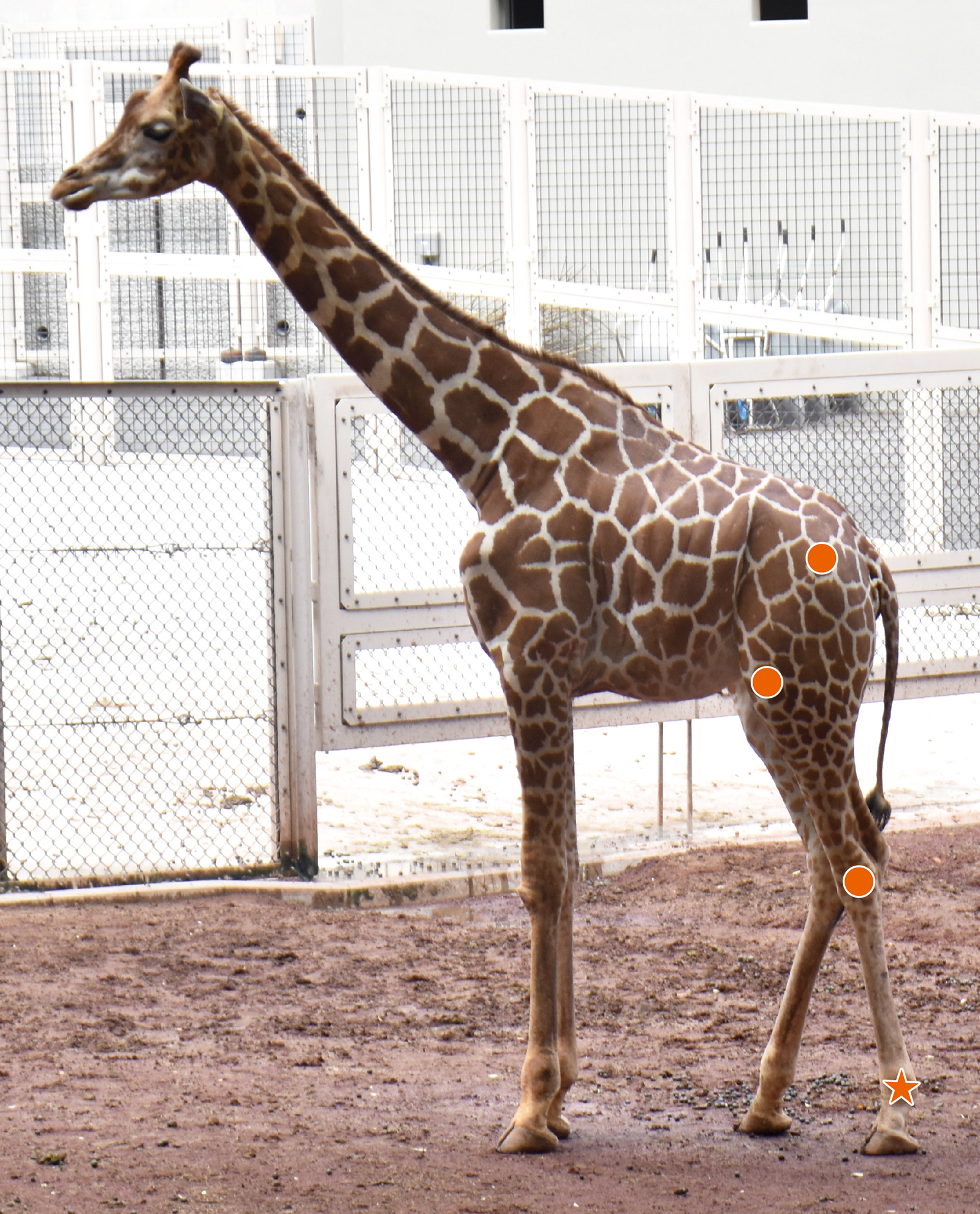
When you watch a video of Giraffe walking, you can see that Giraffe hind legs are as shown in the left diagram.●seal or★You can see that it is bending and stretching at the position of the mark.
●The joints indicated by the marks are, from top to bottom, the "hip joint," "knee," and "back ankle."★While the mark does indeed indicate a joint, this is the joint between the bones of the toes, not the hind ankle. More details will be explained in the next section.
Humans and Giraffe look completely different in body shape, but their bones have many similarities. For example, they both have the skull (the bone that protects the brain), the ribs (the bones that act like a cage protecting the lungs and heart), and the spine (the bone that forms the center of the body). Furthermore, the arrangement of their bones and joints is the same.
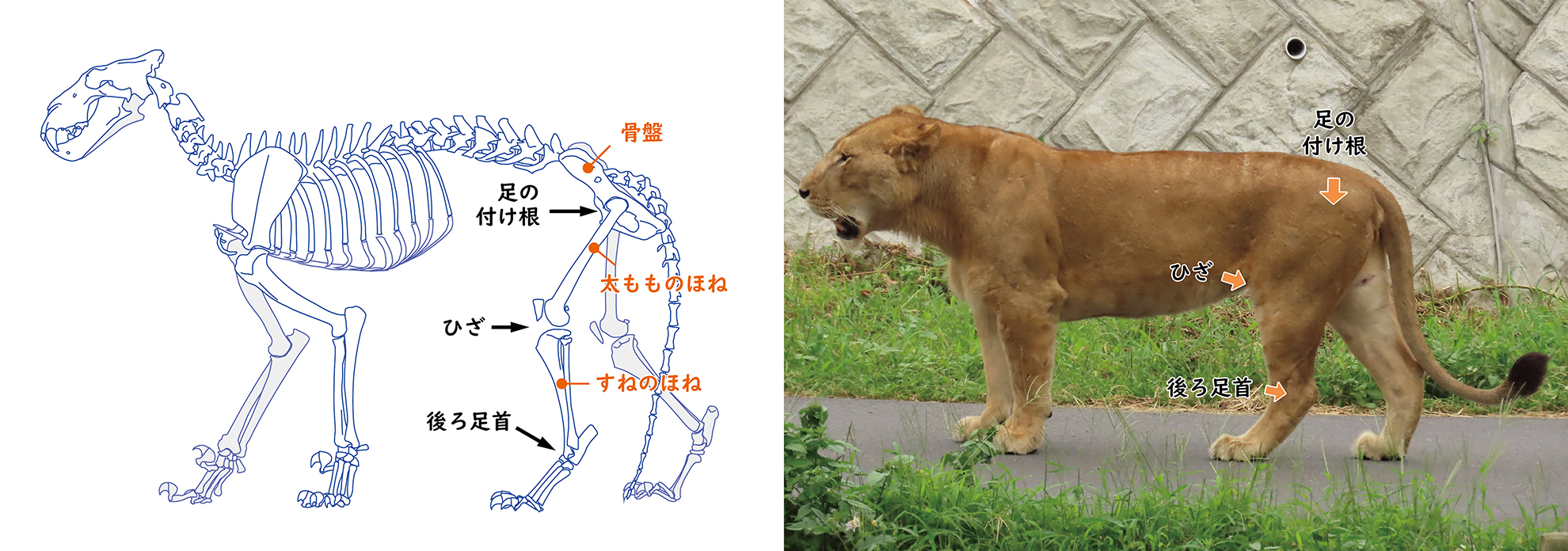
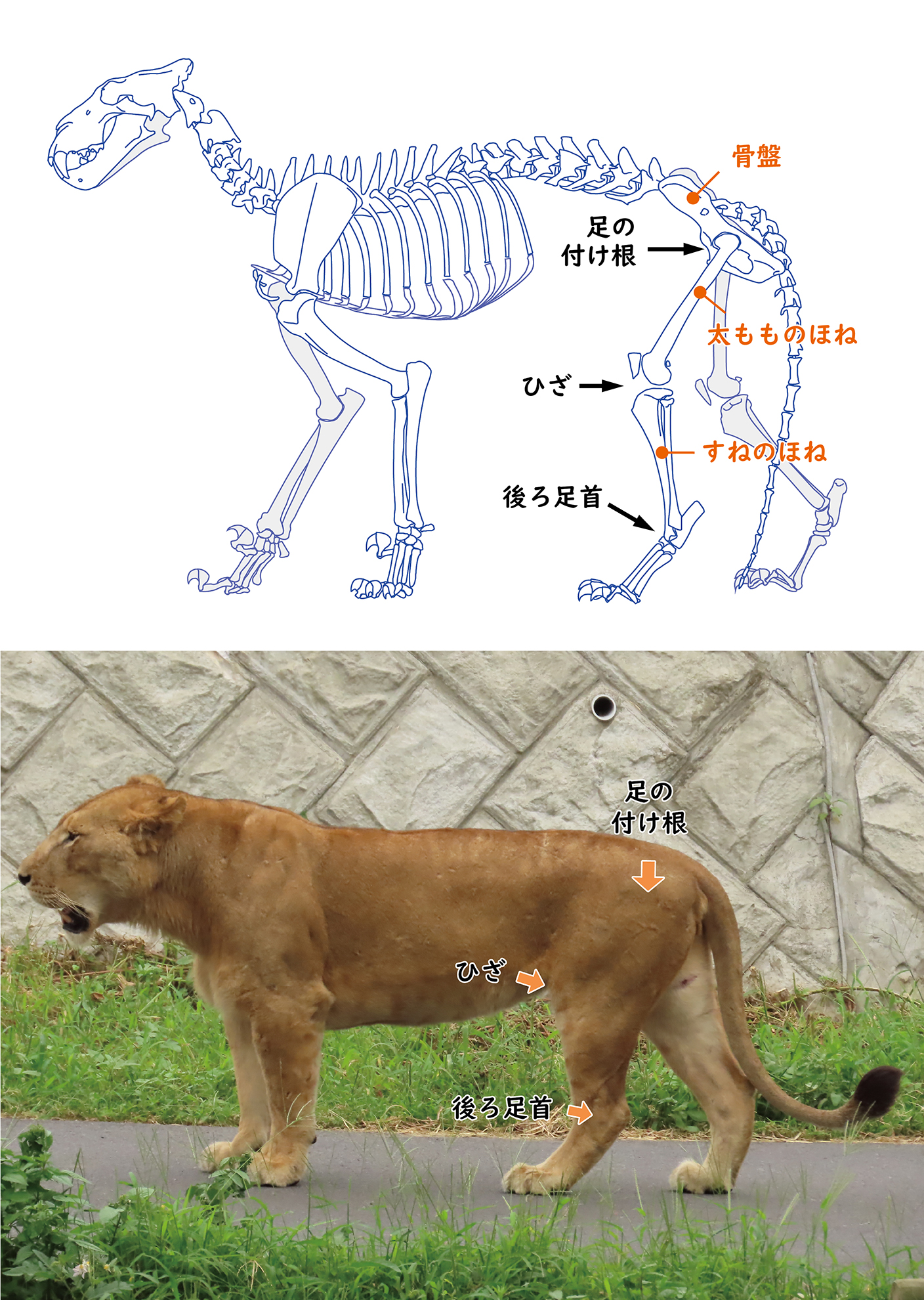
Looking at the torso, the bones after the pelvis are the thigh bone, then the shin bone, and beyond that are the toe bones. The joint where the pelvis and thigh bone meet is the "hip joint," the next joint is where the thigh bone and shin bone meet, that is, the "knee," and the joint after that is the "hind ankle."
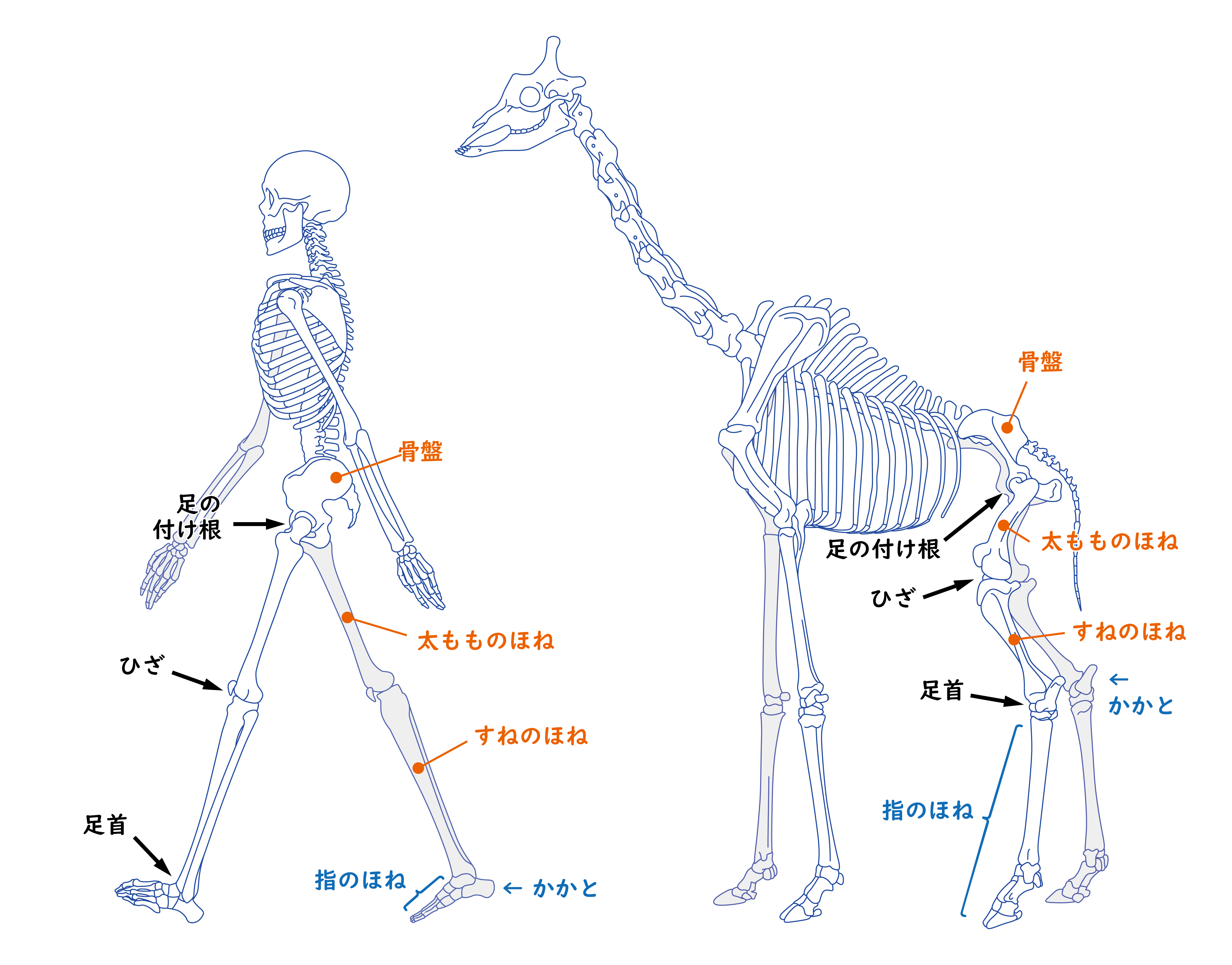
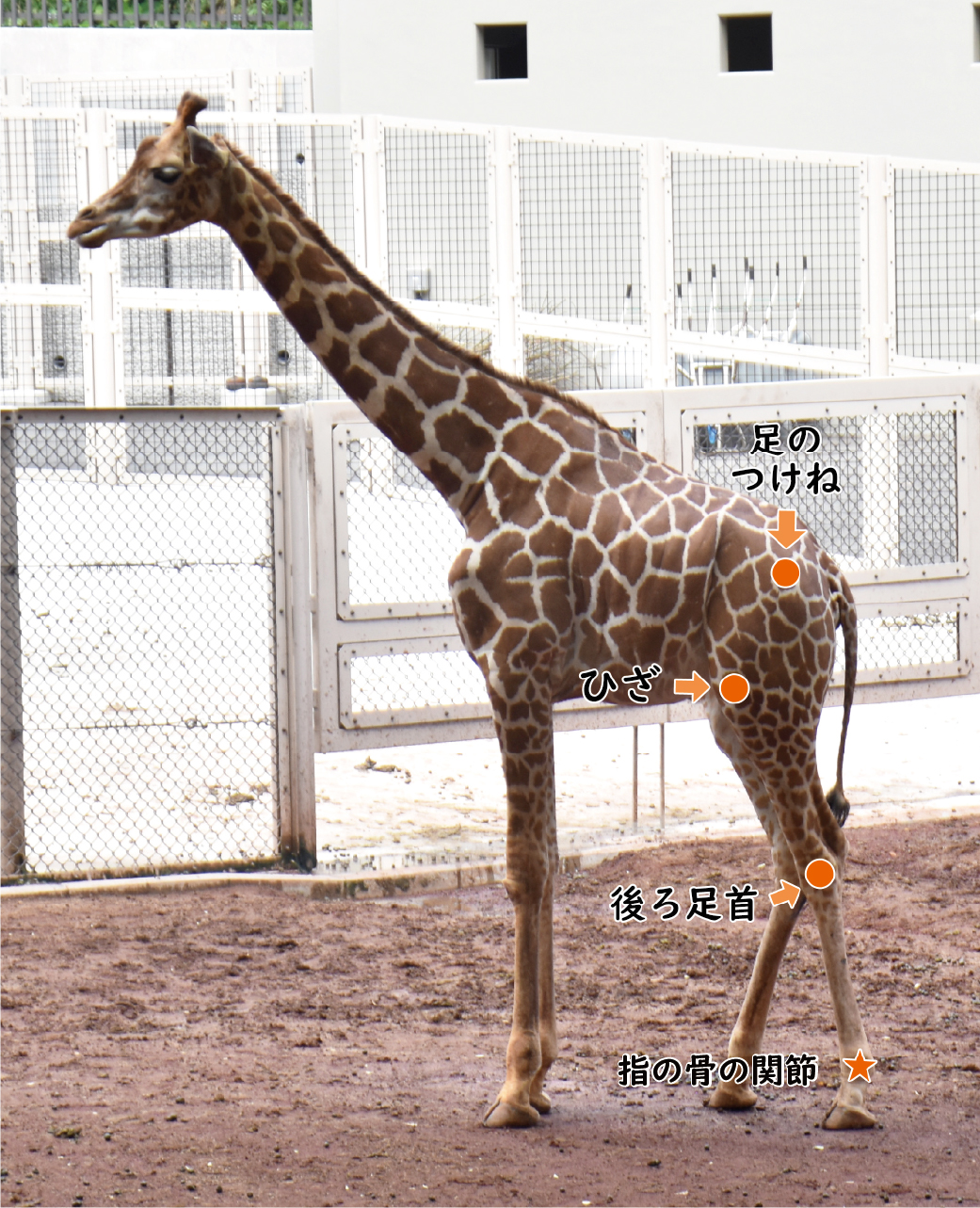
Compare the illustration of Giraffe 's bones with a photograph of Giraffe with the joint locations marked. Looking at the photograph of Giraffe, the locations of the hind leg joints—the base of the leg (hip joint), knee, and hind ankle—are as shown in the diagram on the left.
Actually, the direction in which the knees bend is the same for humans and Giraffe. First, bend your own knees and confirm that they bend forward. Then, if you watch a video of Giraffe walking, you'll see that Giraffe knees also bend forward.
Between the bones and the body's contours are organs, fat, and muscles. Areas where the body's contours are clearly wider than the bones include, for example,
● Abdominal area (because it contains the digestive tract, etc.)
●Around the humerus and femur (because these bones move frequently and have a lot of muscle)
These are just a few examples. Let's also look for other places where the width of the bones and the body contours differ significantly.*Educational materials: GiraffeSee also.
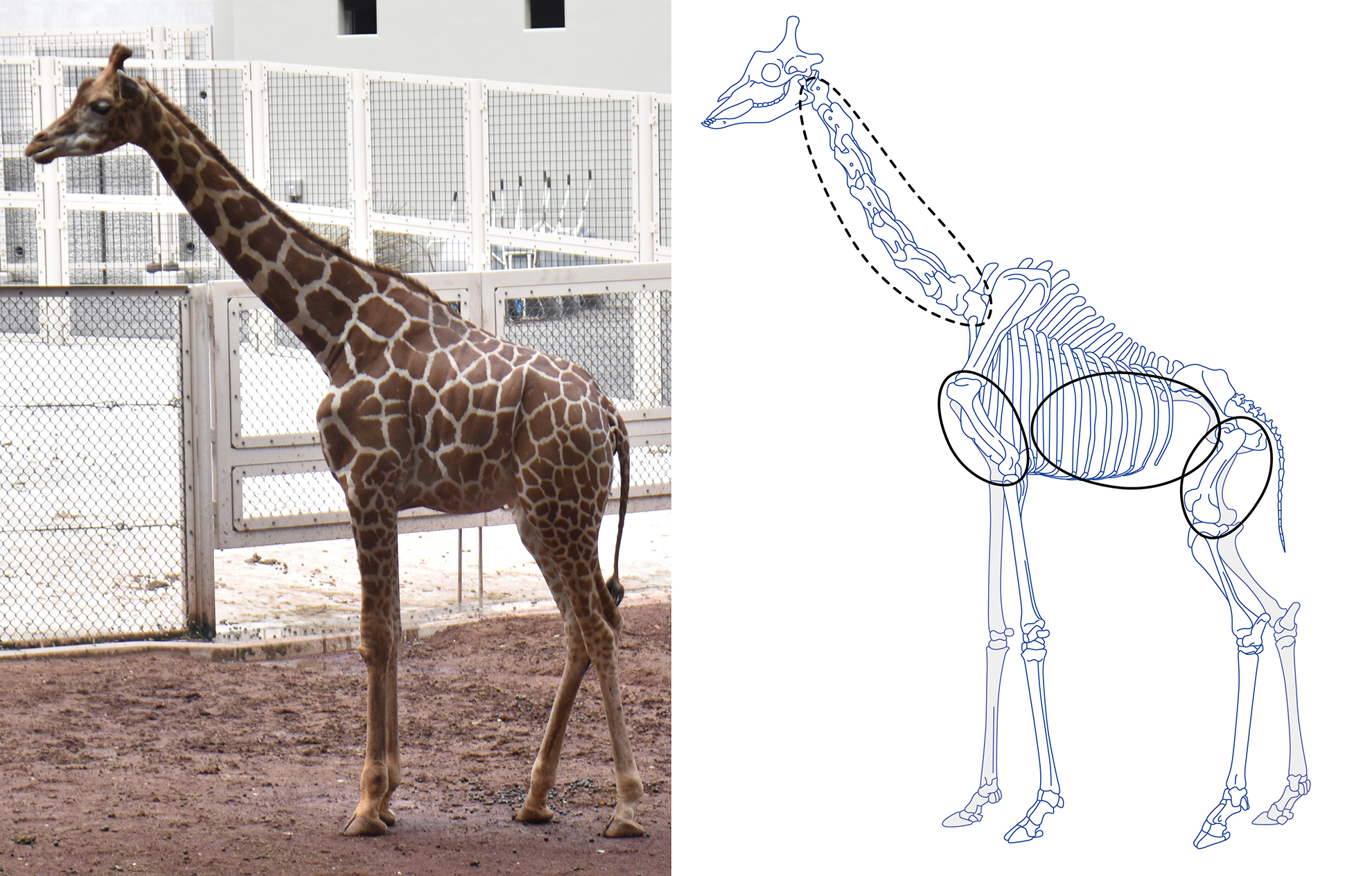
[Joint Location]
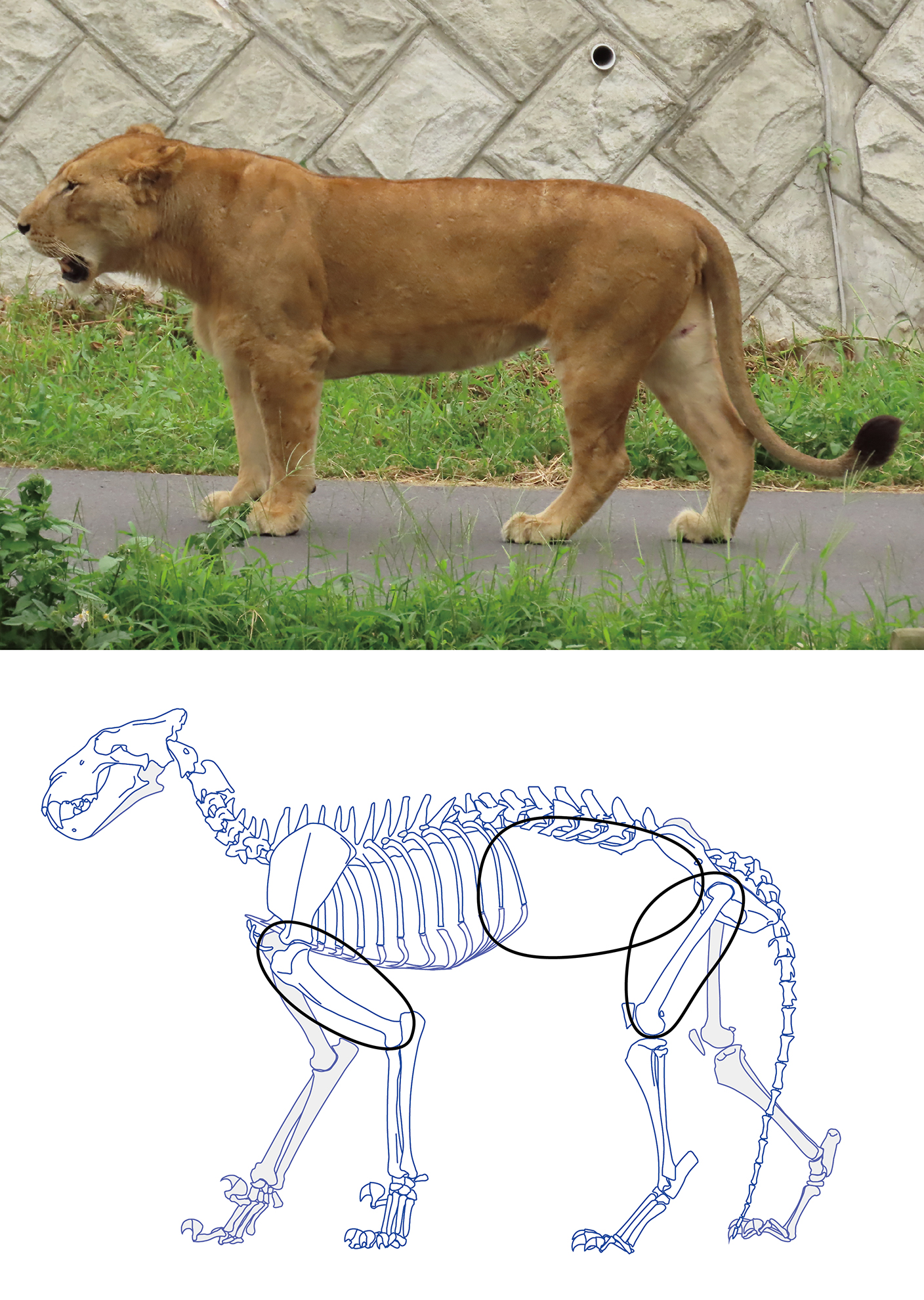
Lion, too, have the same arrangement of bones and joints as humans and Giraffe.
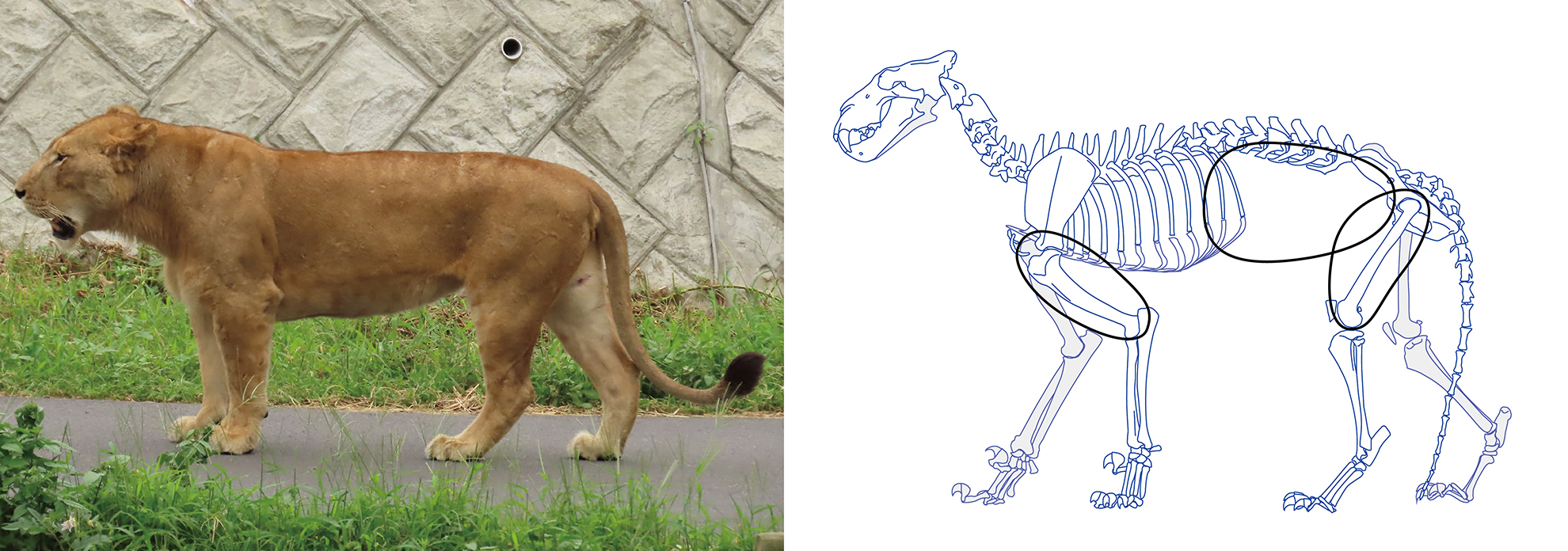
[A place with a lot of muscle or where internal organs are located]
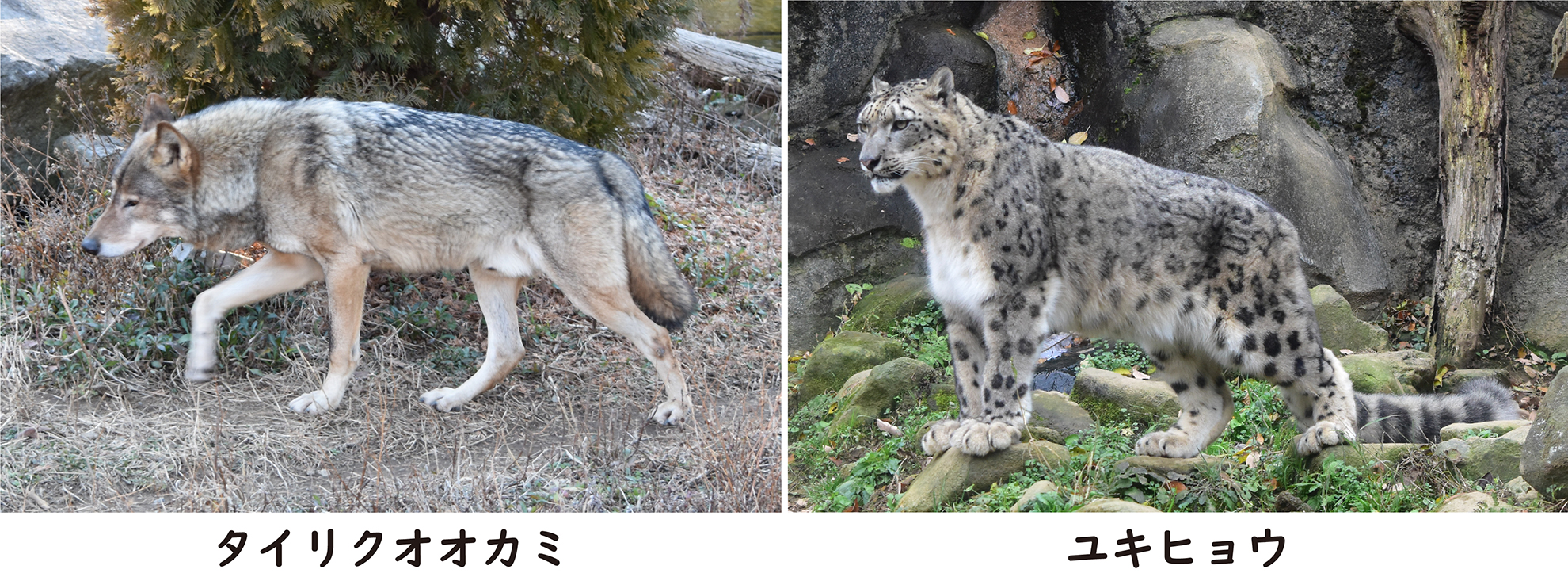
Because meat is easily digestible, carnivorous animals have short digestive tracts. Therefore, carnivorous animals tend to have relatively slender waists.*Educational materials: LionSee also.
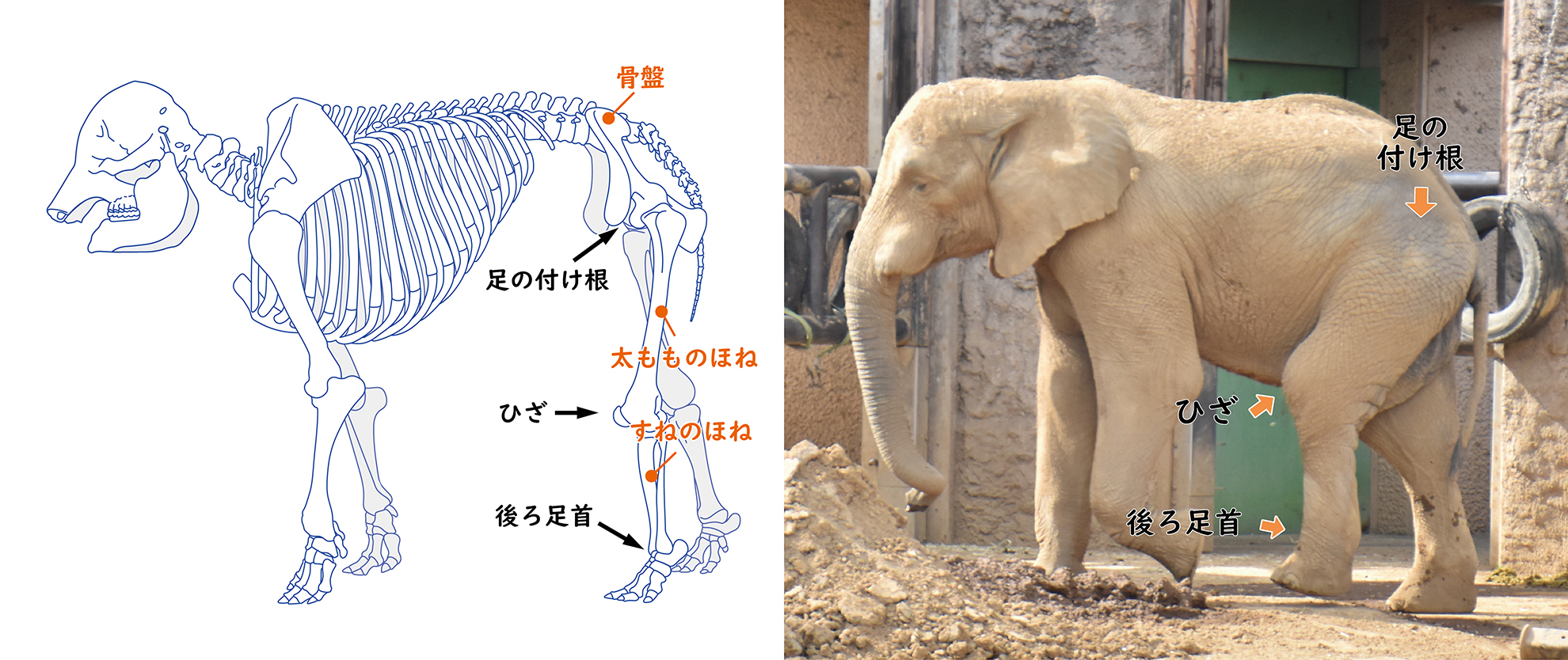
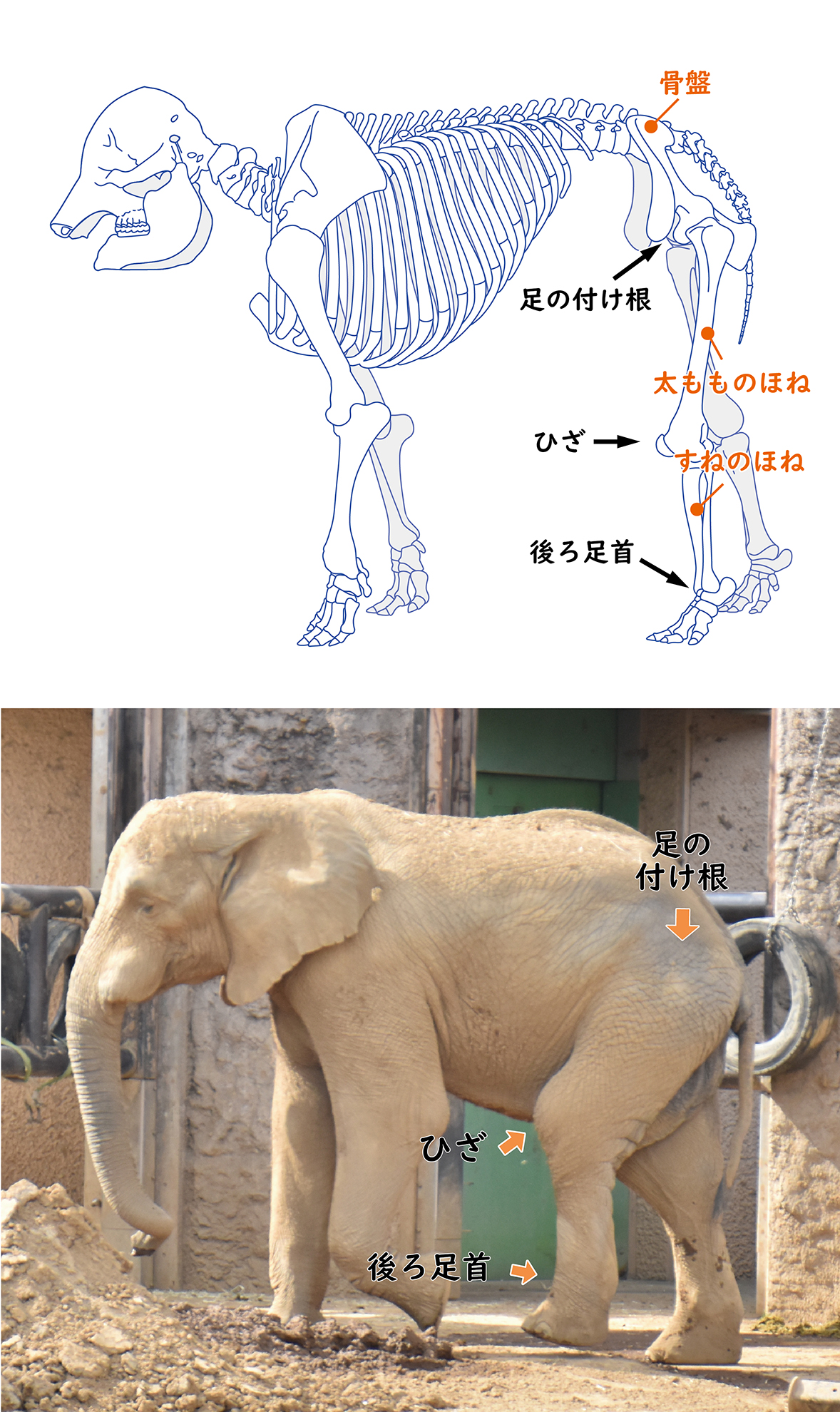
[Joint Location]
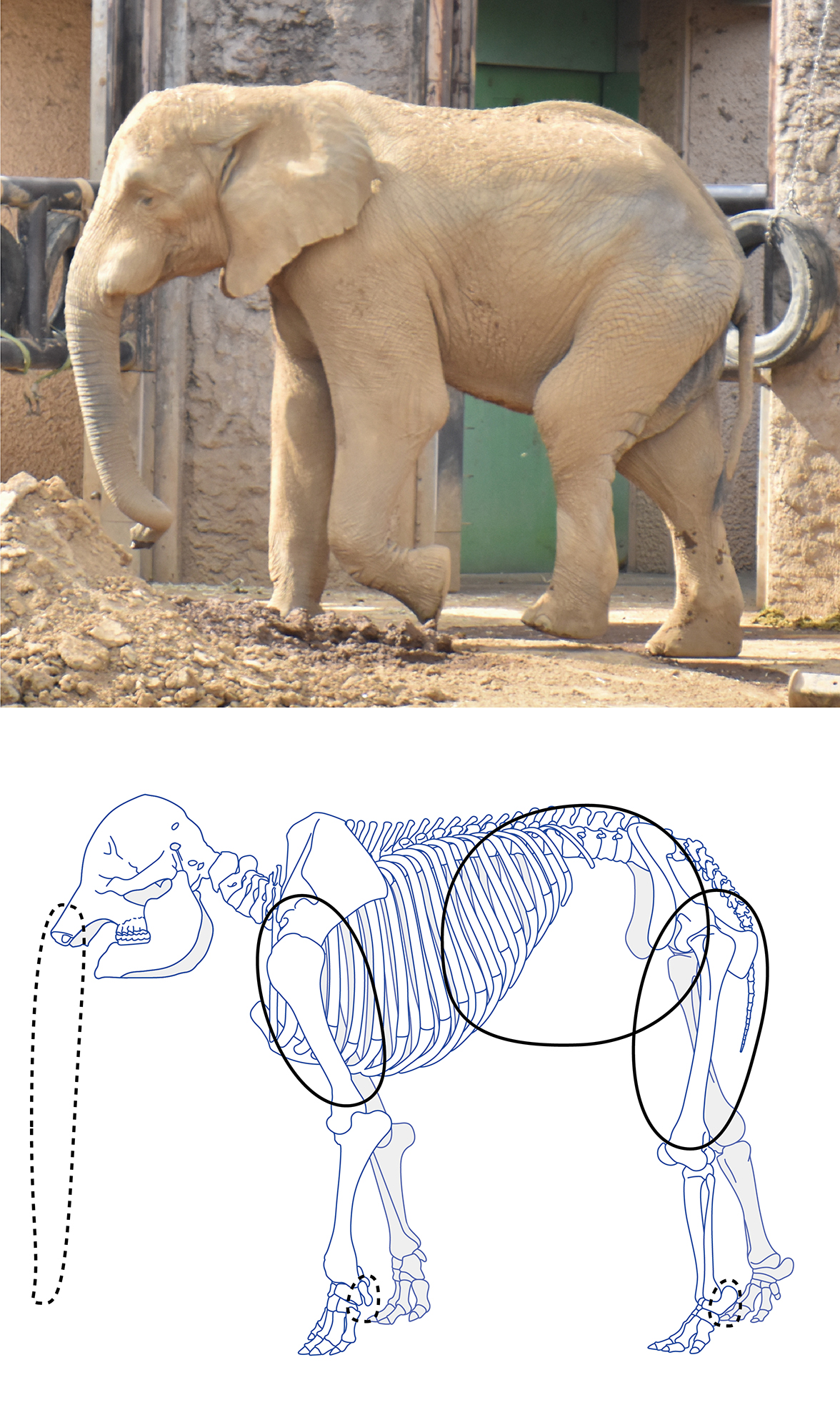
The arrangement of bones and joints in African Bush Elephant is the same as in humans and Giraffe.
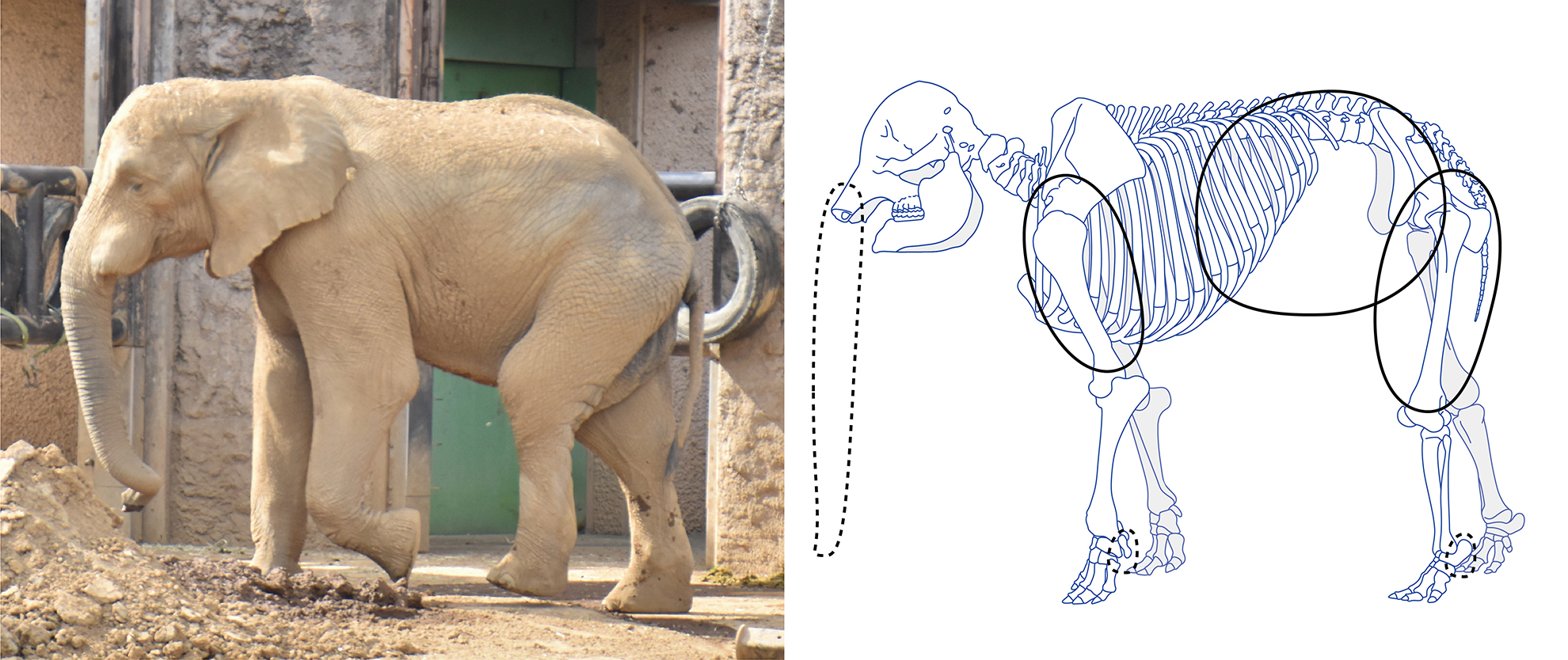
[A place with a lot of muscle or where internal organs are located]
Because leaves and grass are difficult to digest, herbivores need long digestive tracts. The reason why animals that eat a lot of plants have protruding bellies is because they have long digestive tracts.*Educational materials: African Bush ElephantSee also.
[Advanced: How animals stand]
Unlike humans, Lion and Giraffe do not place their heels on the ground when standing. There are three patterns of how animals stand, and each is suited to different movements.
① laminar
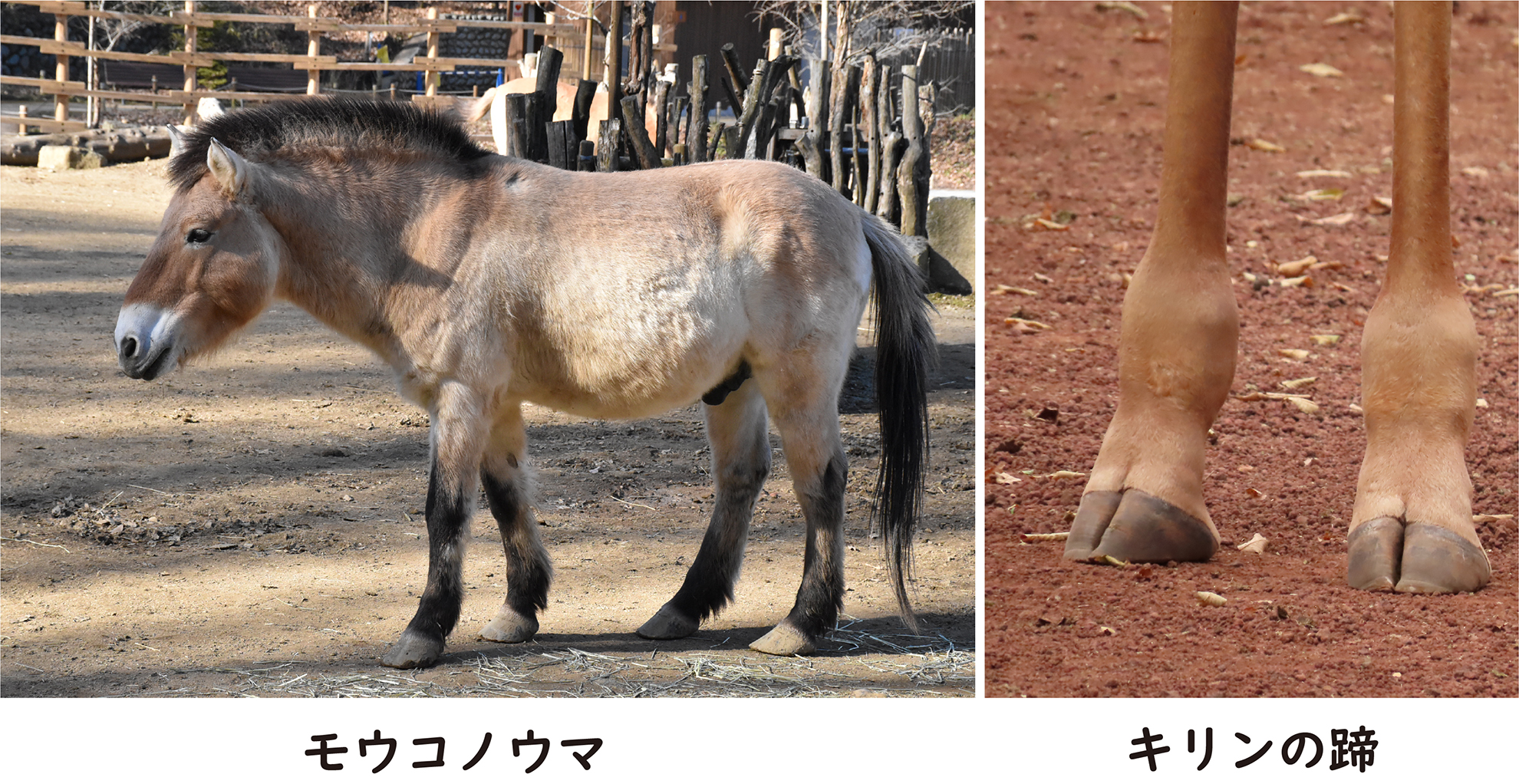
Only the tips of the toes touch the ground. Because the heels are lifted, the legs appear longer, making this the most suitable stance for running fast. This stance is common in herbivores such as Giraffe, Goat, goats, sheep, and Domestic Horse, and is advantageous for escaping predators. Because this stance puts a lot of strain on the toes, they are protected by claws (hoofs) that surround the toes.
② subgrade
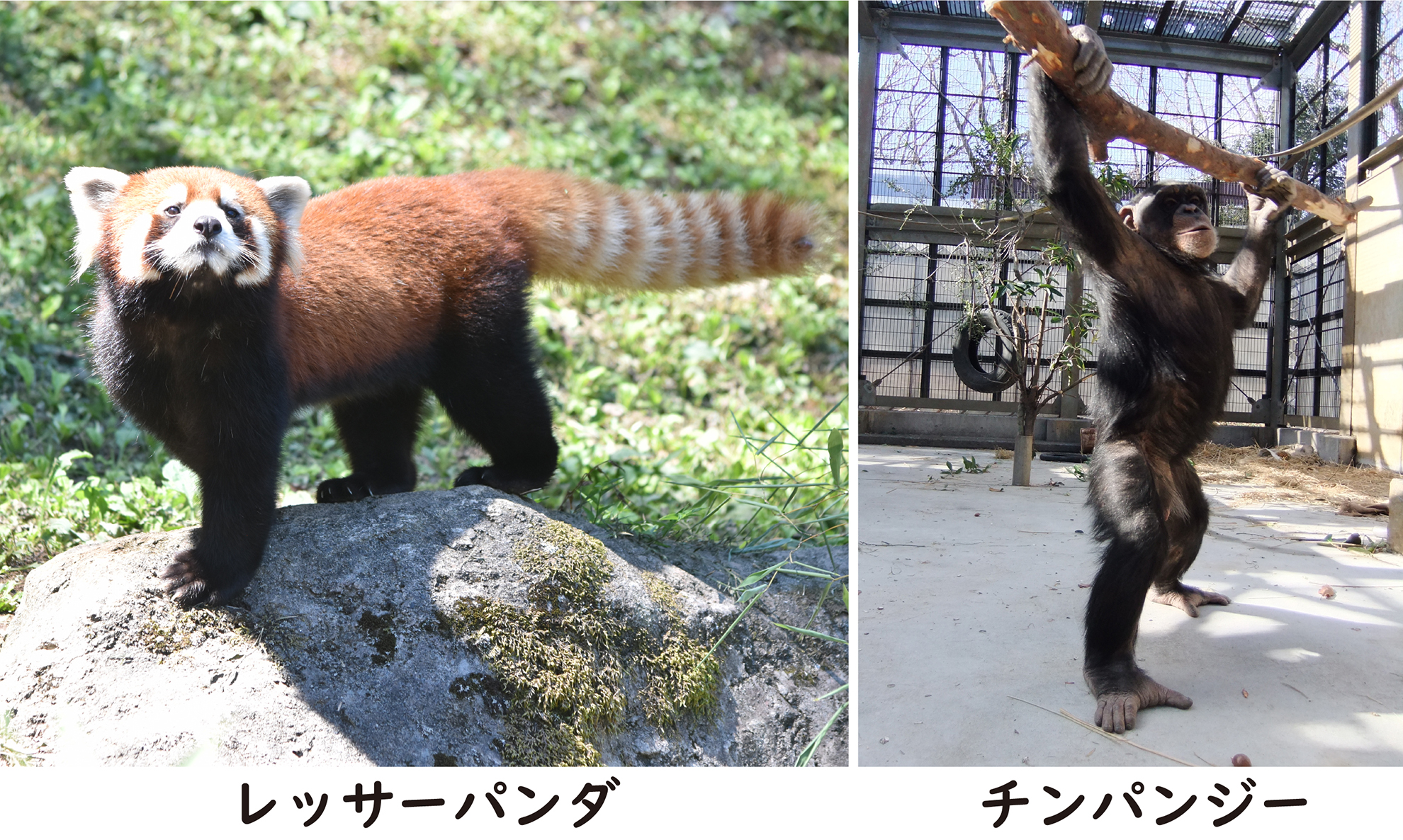
The heels are placed on the ground. This is the way humans normally stand. It is the most stable stance. They can stand on their two hind legs and use their front paws to grasp food or branches. Humans, Chimpanzee and other primates, as well as Red Panda and bears, stand in this position.
③ directionality
The entire toe, from the base to the tip, touches the ground. This is an intermediate form between the ungulate (ungulimaginous) and plantigrade (plantigrade) forms. It is common in carnivorous animals such as cats and dogs. It offers greater stability than when only the tips of the toes touch the ground (ungulate), and is suitable for moving through complex terrain.